The global assistive listening industry is undergoing its most significant wireless transformation in two decades. With Bluetooth LE Audio and Auracast™ broadcast audio rapidly expanding across public venues, consumer electronics, and healthcare ecosystems, hearing aid distributors face a pivotal inventory decision: transition product portfolios toward next-generation wireless architectures or risk holding obsolete legacy stock.
Among all acoustic form factors, Receiver-in-Canal (RIC) devices have emerged as the primary commercial vehicle for LE Audio adoption. Below is a practical procurement and market-readiness guide explaining what Auracast means for regional distributors, pharmacy chains, and private label brands—and how to evaluate LE Audio RIC hardware for upcoming purchasing cycles.
As airports, theaters, places of worship, and home televisions deploy Auracast transmitters to replace aging telecoil (T-coil) induction loops, end-users increasingly view Auracast compatibility as a baseline requirement rather than a luxury add-on.
Understanding Bluetooth LE Audio and Auracast Broadcast Technology
Unlike traditional Classic Bluetooth—which was engineered primarily for point-to-point audio streaming and required proprietary protocols (such as MFi or ASHA) to preserve battery life—Bluetooth LE Audio introduces an open, standardized, ultra-low-power wireless framework:
- LC3 Codec Acoustic Efficiency: The Low Complexity Communication Codec (LC3) delivers superior audio clarity at roughly half the bit rate of legacy SBC codecs, dramatically extending daily battery runtime in miniature hearing housings.
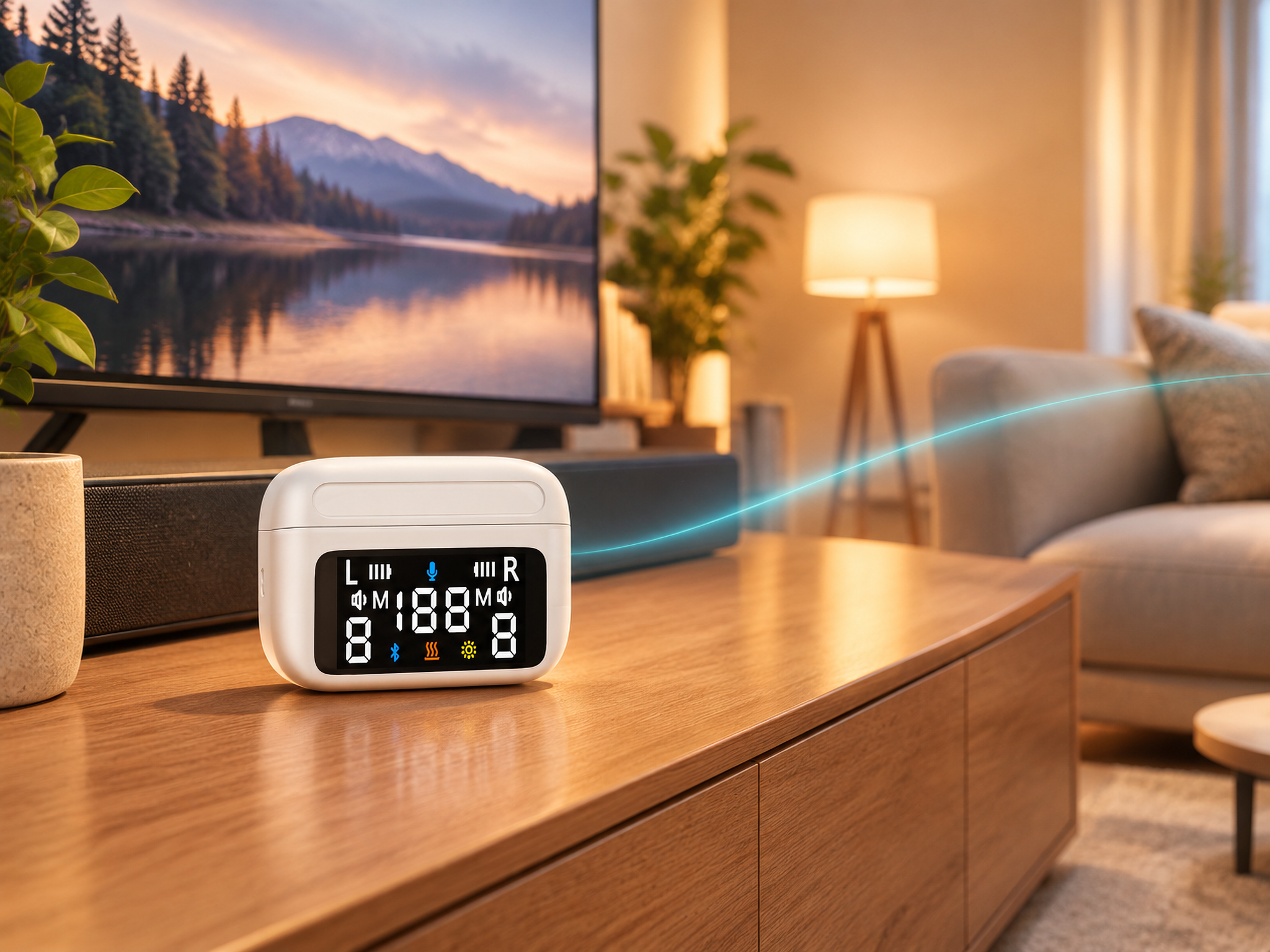
- One-to-Many Auracast Broadcasting: Auracast allows a single audio source (such as a gate announcement system, lecture hall PA, or living room TV) to broadcast simultaneously to an unlimited number of nearby LE Audio hearing aids without complex pairing menus.
- Seamless Multi-Stream Switching: Wearers can transition effortlessly between private smartphone calls and public broadcast streams, eliminating the connectivity friction that historically triggered post-purchase support calls.
Why the RIC Form Factor Leads LE Audio Adoption
While Completely-In-Canal (CIC) devices face strict physical antenna size constraints, Receiver-in-Canal (RIC) architectures provide the ideal electro-mechanical balance for next-generation wireless performance:
Behind-the-ear housing placement elevates the 2.4 GHz antenna above ear-canal tissue absorption, ensuring stable, dropout-free Auracast reception across large public venues.
RIC shells accommodate higher-density rechargeable cells capable of powering 32-channel DSP, AI noise suppression, and continuous LE Audio streaming for a full day on a single charge.
Legacy Bluetooth vs. LE Audio Auracast RIC: Distributor Procurement Comparison
When evaluating wholesale inventory for retail pharmacy chains, audiology networks, or direct-to-consumer (DTC) e-commerce storefronts, procurement teams should weigh the operational differences between legacy wireless platforms and modern LE Audio RIC systems:
| Evaluation Metric | Legacy Classic Bluetooth Hearing Aids | LE Audio + Auracast RIC Hearing Aids |
|---|---|---|
| Public Venue Access | Requires bulky external neckloops or legacy T-coil hardware | Direct native reception of Auracast venue broadcasts |
| Power Consumption | High current draw during audio streaming; rapid battery drain | Up to 40–50% lower power draw via LC3 codec optimization |
| Cross-Platform Compatibility | Fragmented (separate firmware stacks for iOS vs. Android) | Universal open standard across smartphones, TVs, and PCs |
| Inventory Shelf-Life Risk | High risk of markdowns as retail buyers demand future-proof specs | Future-proof product lifecycle with strong retail pricing power |
Key Hardware Specifications Distributors Should Demand from OEM Partners
To ensure low product return rates and strong brand reputation, distributors sourcing LE Audio RIC devices should verify four non-negotiable engineering benchmarks:
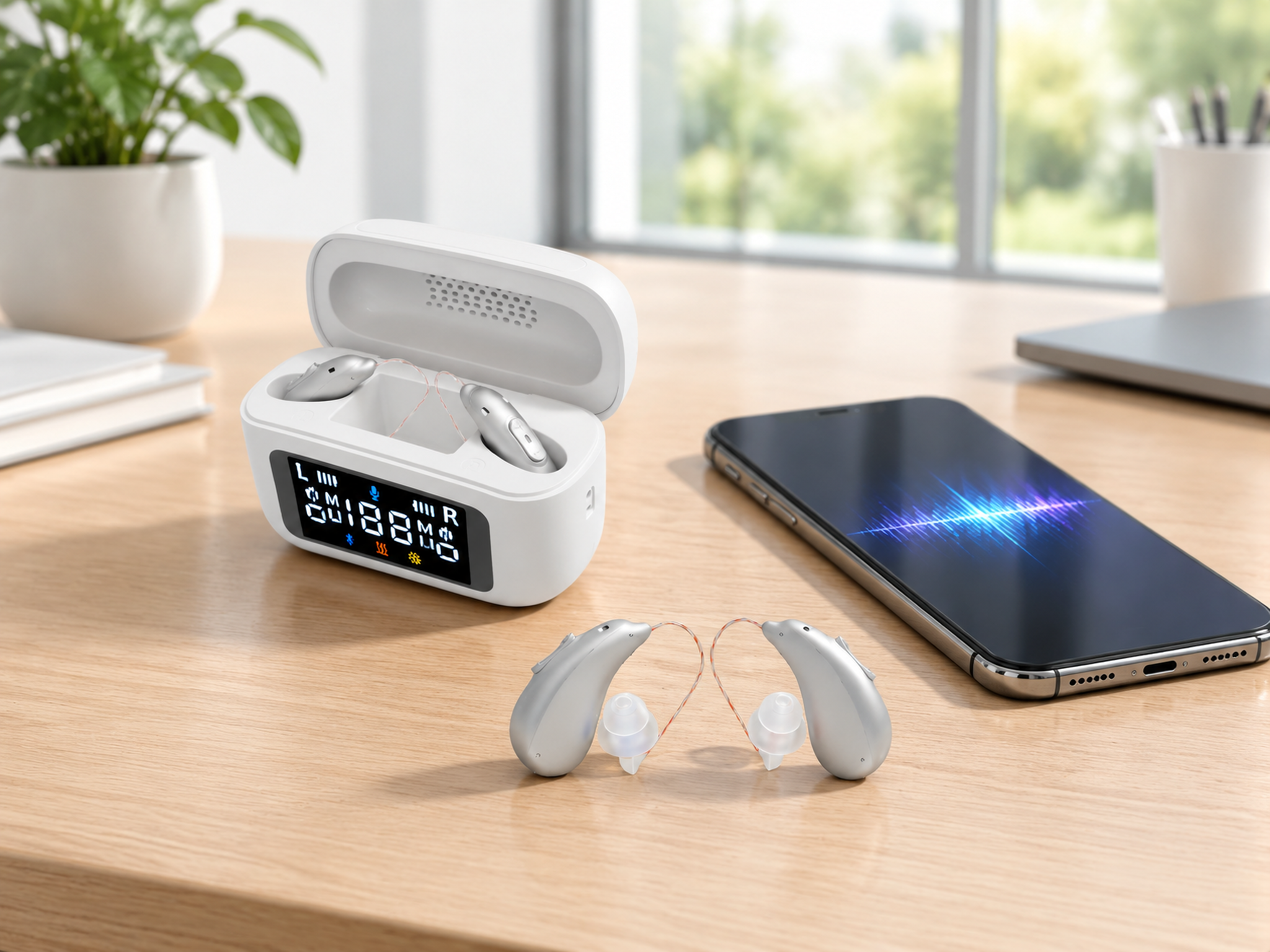
- Dual-Mode Backward Compatibility: Because public infrastructure is still transitioning, ensure the chipset supports both Bluetooth LE Audio (Auracast) and Classic Bluetooth so users can connect seamlessly to older smartphones.
- 32-Channel DSP & Edge AI Noise Isolation: Wireless streaming is only valuable if ambient speech clarity is equally strong. Require high-density 32-channel frequency carving paired with Deep Neural Network (DNN) background noise suppression.
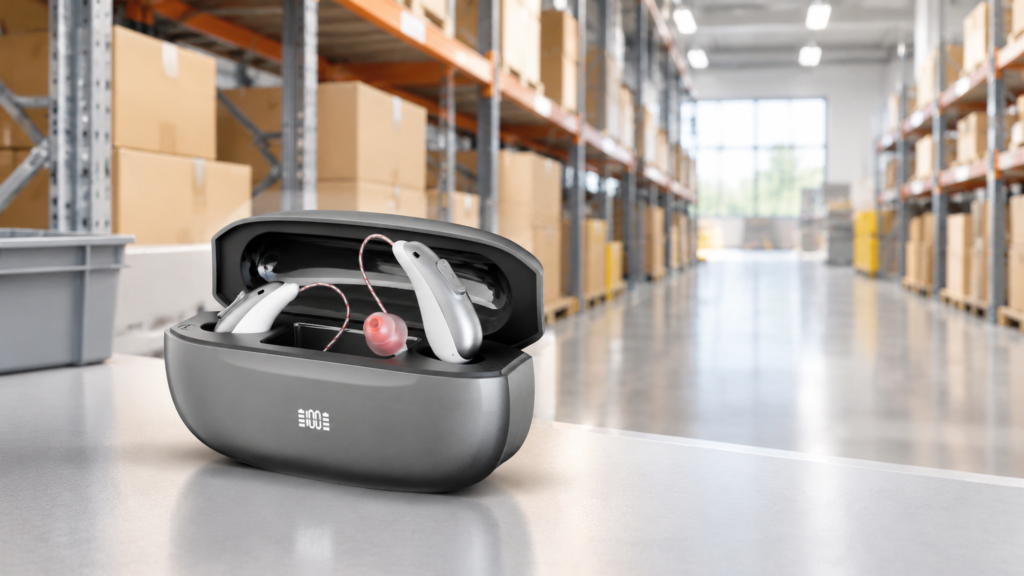
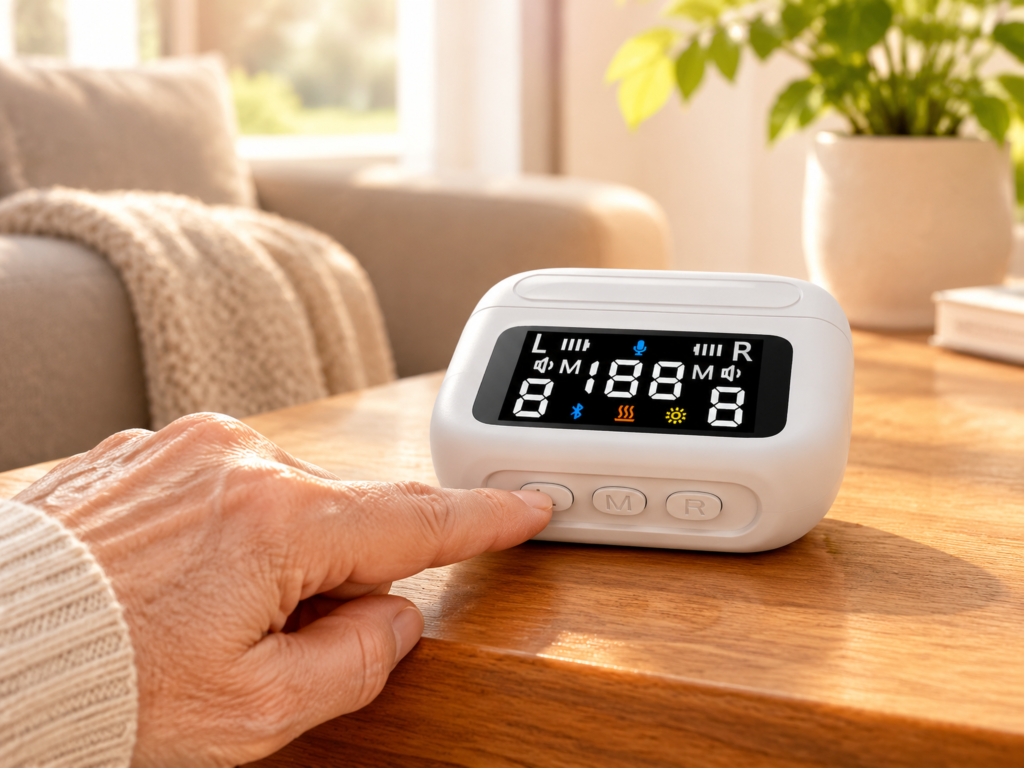
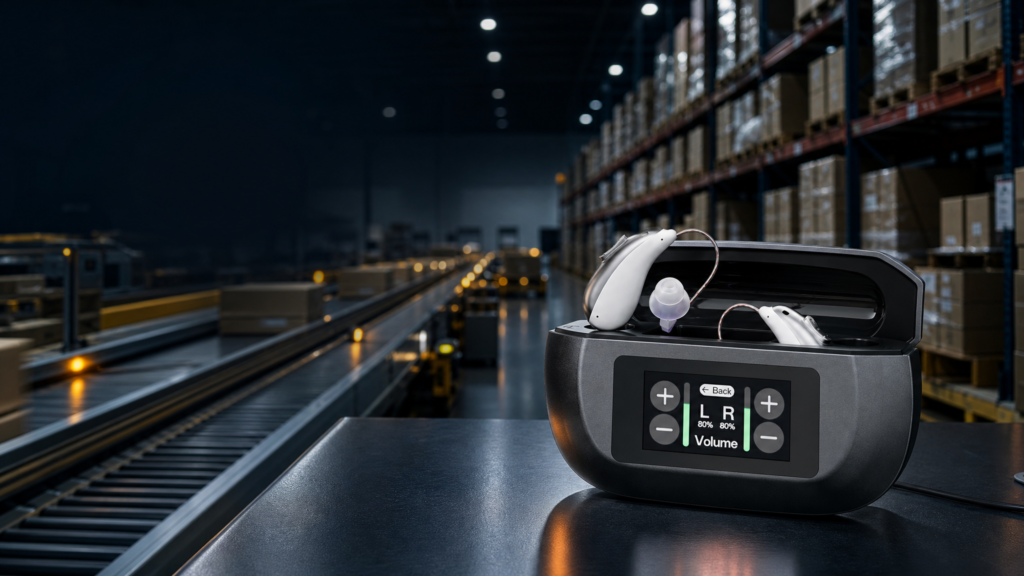
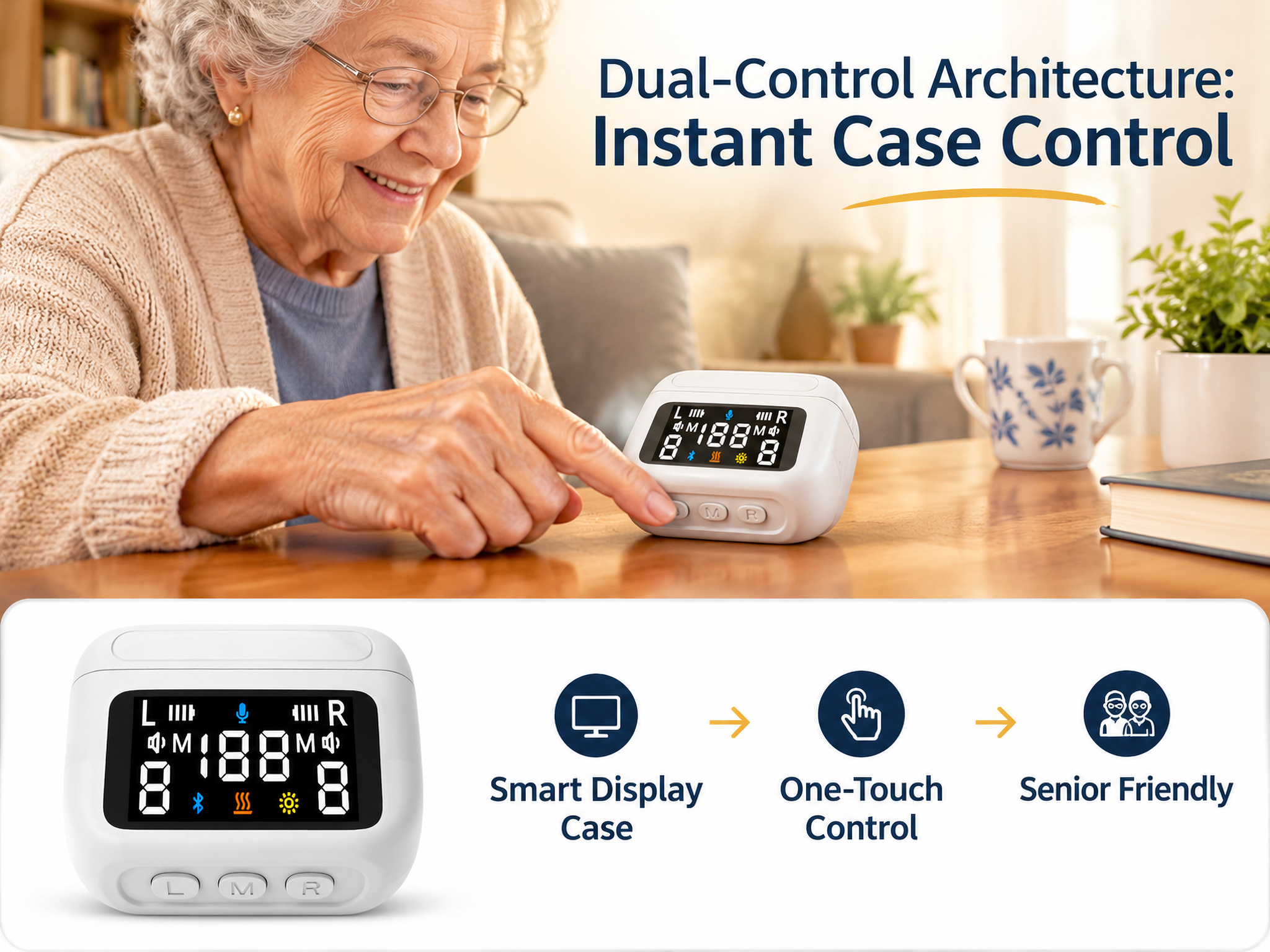
- Intuitive Smart Charging Case Controls: Integrating touchscreen controls onto the charging case allows senior users to switch Auracast streams, adjust volume, and check battery status without struggling with complex smartphone apps.
- Turnkey Global Medical & RF Certifications: Verify that your ISO 13485-certified OEM partner supplies complete FDA establishment listings, CE MDR/UKCA medical dossiers, FCC/CE-RED wireless approvals, and UN38.3 battery safety documentation.
Frequently Asked Questions
Will Auracast replace traditional telecoils (T-coils) in hearing aids?
Over time, yes. Auracast offers far higher audio fidelity, lower installation costs for public venues, and native integration with consumer smartphones and TVs, making it the industry successor to legacy induction loop systems.
Do LE Audio RIC hearing aids still work with older smartphones?
Yes, provided the manufacturer integrates a dual-mode Bluetooth chipset. Dual-mode RIC devices connect to older phones via Classic Bluetooth while unlocking LC3 and Auracast features on modern devices.
How fast can distributors source private label LE Audio RIC samples?
By partnering with agile OEM manufacturers that maintain pre-validated RIC acoustic platforms, distributors can receive custom digital renderings within 8 hours and physical functional prototypes in as little as 72 hours.
Partner with an ISO 13485-certified medical device manufacturer to source next-generation LE Audio & Auracast-ready RIC hearing aids backed by 72-hour rapid sampling.