
Introduction
Programmable hearing aids have become a crucial innovation in providing more personalized and precise solutions for hearing loss now. For procurement officers and hearing aid distributors, understanding the benefits and functionality of programmable hearing aids is essential. In this guide, we will explore the concept of programmable hearing aids, how they differ from traditional models, and why they are popular.
What Is a Programmable Hearing Aid?
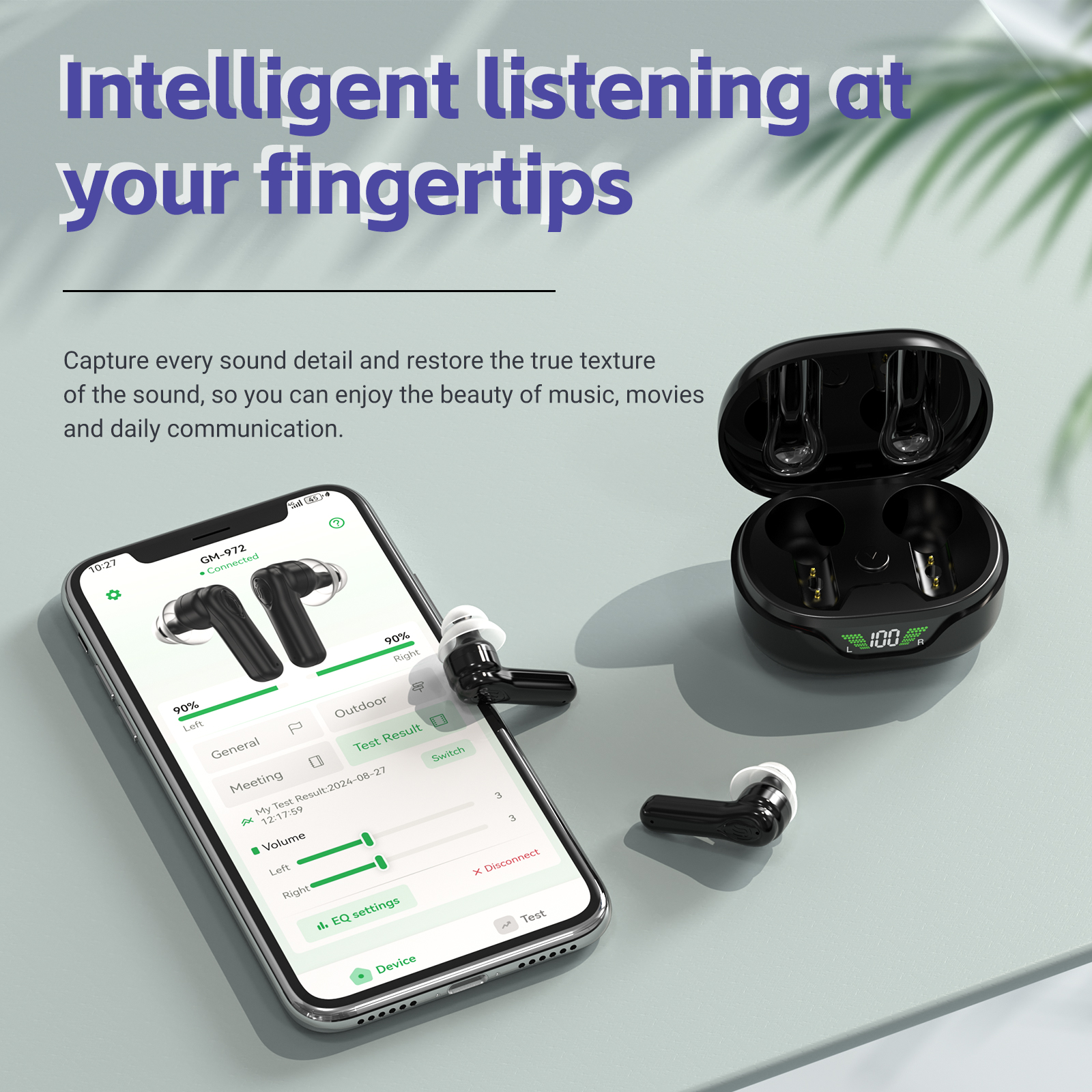
A programmable hearing aid is a type of hearing aid that can be customized to meet the specific hearing needs of the user through APP. Unlike traditional hearing aids, which have fixed settings, programmable hearing aids offer the flexibility to adjust various parameters, including amplification, frequency response, and noise reduction levels.
Programmable hearing aids are designed to adapt to various hearing conditions and environments. This feature provides users with improved sound quality and comfort, making them a popular choice for individuals with varying degrees of hearing loss.
Why Are Programmable Hearing Aids Important for Distributors?
For wholesale buyers and hearing aid distributors, offering programmable hearing aids can significantly enhance your product offerings. These devices are in demand due to their adaptability and ability to cater to a wide range of hearing conditions. As the market for hearing aids becomes increasingly competitive, stocking programmable models can give you a valuable edge.
Not only do these hearing aids offer increased user satisfaction, but their ability to adjust to environmental noise and personal preferences also means fewer returns and higher customer loyalty. This can lead to a more robust and sustainable business model for you.
How Do Programmable Hearing Aids Work?
Programmable hearing aids use digital technology to process sound. They contain a built-in microchip that allows the hearing aid to be programmed with various settings tailored to the user’s specific hearing loss profile. User typically performs the programming, adjusting parameters like volume, pitch, and amplification, depending on the results of the user’s hearing test.
Many programmable hearing aids also feature multiple channels for sound processing, which allows for fine-tuning in different frequencies. This precision helps to enhance speech clarity and overall sound quality, particularly in noisy environments.
What Are the Advantages of Programmable Hearing?
- Customization: Programmable hearing aids offer a level of customization that traditional devices cannot match. This allows you to cater to a wide variety of hearing needs and preferences, which is highly appealing for customers who may have unique requirements.
- Improved Sound Quality: With programmable settings, users can experience clearer and more natural sound. This is particularly beneficial for individuals with complex hearing loss patterns who require specific adjustments to various frequency ranges.
- Adaptability: These hearing aids can be easily adjusted for different environments, such as quiet rooms or noisy outdoor settings. This adaptability provides users with better listening experiences and greater comfort.
- User Control: Some programmable hearing aids offer users the ability to control certain aspects of their device, such as volume or environmental modes, through mobile apps or remote controls. This feature enhances the user experience by providing greater flexibility.
- Long-Term Use: The ability to reprogram the hearing aids over time ensures that they continue to meet the user’s evolving hearing needs. This can be especially valuable for aging users whose hearing may change over the years.
What Is the Difference Between Programmable and Non-Programmable Hearing Aids?
While both programmable and non-programmable hearing aids serve the same fundamental purpose—to amplify sound and improve hearing—the key difference lies in customization. Non-programmable hearing aids come with preset settings that cannot be altered, while programmable devices allow for adjustments in real-time. This customization makes programmable hearing aids more versatile and suitable for individuals with specific or changing hearing loss patterns.
Non-programmable hearing aids may be more affordable but tend to offer a less personalized listening experience. Programmable hearing aids, on the other hand, may come at a higher initial cost but offer long-term value due to their adaptability and precision.
How Do Programmable Hearing Aids Benefit Your Customers?
- Enhanced Listening Experience: By offering programmable hearing aids, you provide your customers with the opportunity to improve their listening experience in various environments. These aids automatically adjust to different noise levels, providing a seamless experience whether they are in a quiet room or a noisy restaurant.
- Better Speech Understanding: With programmable technology, these hearing aids optimize speech clarity, making it easier for users to follow conversations in different settings.
- Long-Term Value: The ability to reprogram these hearing aids ensures they continue to provide optimal performance even as the user’s hearing needs evolve over time.
Are Programmable Hearing Aids Suitable for All Users?
While programmable hearing aids are highly beneficial for many individuals, they are not always the right choice for everyone. Users with mild to moderate hearing loss may benefit from non-programmable or basic models. However, for those with more complex or progressive hearing loss, programmable hearing aids are often the best option due to their adaptability.
Conclusion
Programmable hearing aids are an essential product in today’s hearing aid market. By offering these devices to your customers, you are providing them with a tailored solution that enhances their hearing experience. As the demand for customizable, high-performance hearing aids grows, stocking programmable models can help you stay competitive in a rapidly evolving market.
If you’re looking to expand your inventory with the latest programmable hearing aids, Goodmi is your reliable partner for top-quality products. Contact us today to inquire about pricing or to learn more about our customizable hearing aid options for wholesale buyers.