Maximizing Q4 Profits: Why High-Margin OTC Hearing Aids Drive Black Friday Success

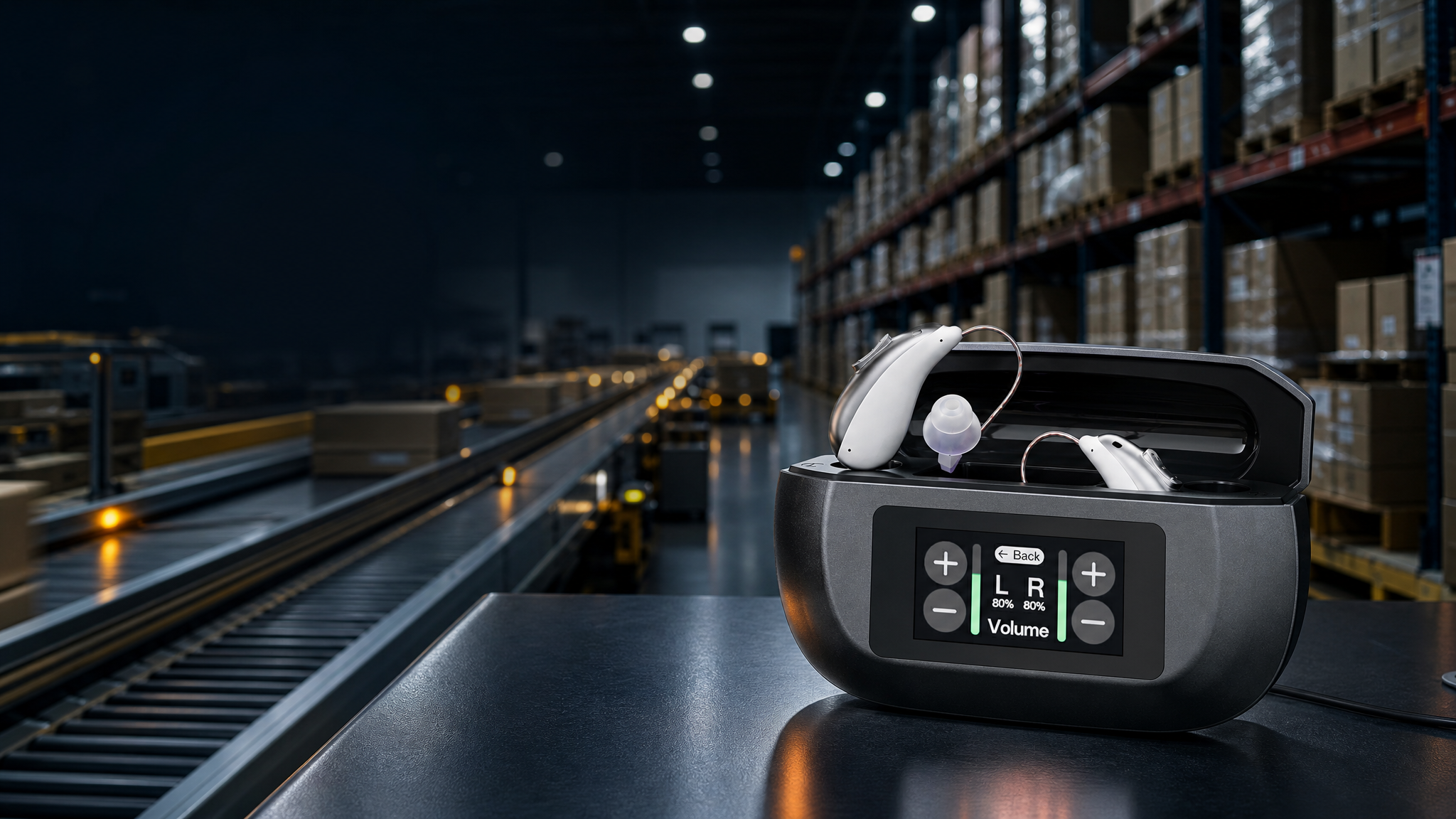
322 hearing aid charging case in a warehouse for Black Friday inventory planning

Table of Contents

As direct-to-consumer (DTC) brands, regional pharmacy chains, and health tech e-commerce managers finalize their inventory strategies for the upcoming Black Friday and Cyber Monday (BFCM) shopping window, a crucial strategic realization is taking shape: top-line sales volume means little if profit margins are swallowed by excessive supply chain and licensing overhead.

A retrospective analysis of last year’s holiday shopping trends reveals that while major brand-name hearing devices enjoyed strong unit sales, reseller net margins were heavily compressed. To win big during this year’s Q4 promotional season, savvy retailers are shifting toward medical-grade OEM platforms that deliver international-tier acoustic performance at substantially optimized production costs. Below is a strategic financial and merchandising framework for driving Q4 profitability.

📊 Q4 Financial Strategy Benchmark

Achieving sustainable e-commerce growth during holiday discount cycles requires decoupling retail price competitiveness from product quality. Sourcing direct-from-factory OTC hearing devices allows merchants to run aggressive Black Friday promotions while retaining exceptional 60%+ gross margins.


Abstract supply chain visualization showing Black Friday inventory stockout risk

Deconstructing Last Year’s BFCM Winners: Performance vs. Margin Realities

Evaluating last year’s top-performing health wearables highlights why certain product categories outpaced others in net profitability:

  • The Pitfall of Brand Licensing Overheads: Traditional wholesale models force retailers to surrender significant margin points to legacy brand names, leaving little room for holiday ad-spend discounting.
  • Consumer Demand for Flagship Features: Holiday shoppers refuse to compromise on sound quality; devices must feature multi-channel frequency processing and AI noise reduction to convert high-intent traffic.
  • The Sweet Spot of Private Label OEM: Sourcing direct-to-market hardware eliminates middleman markups, giving sellers the financial agility to capture peak holiday search traffic with attractive pricing.
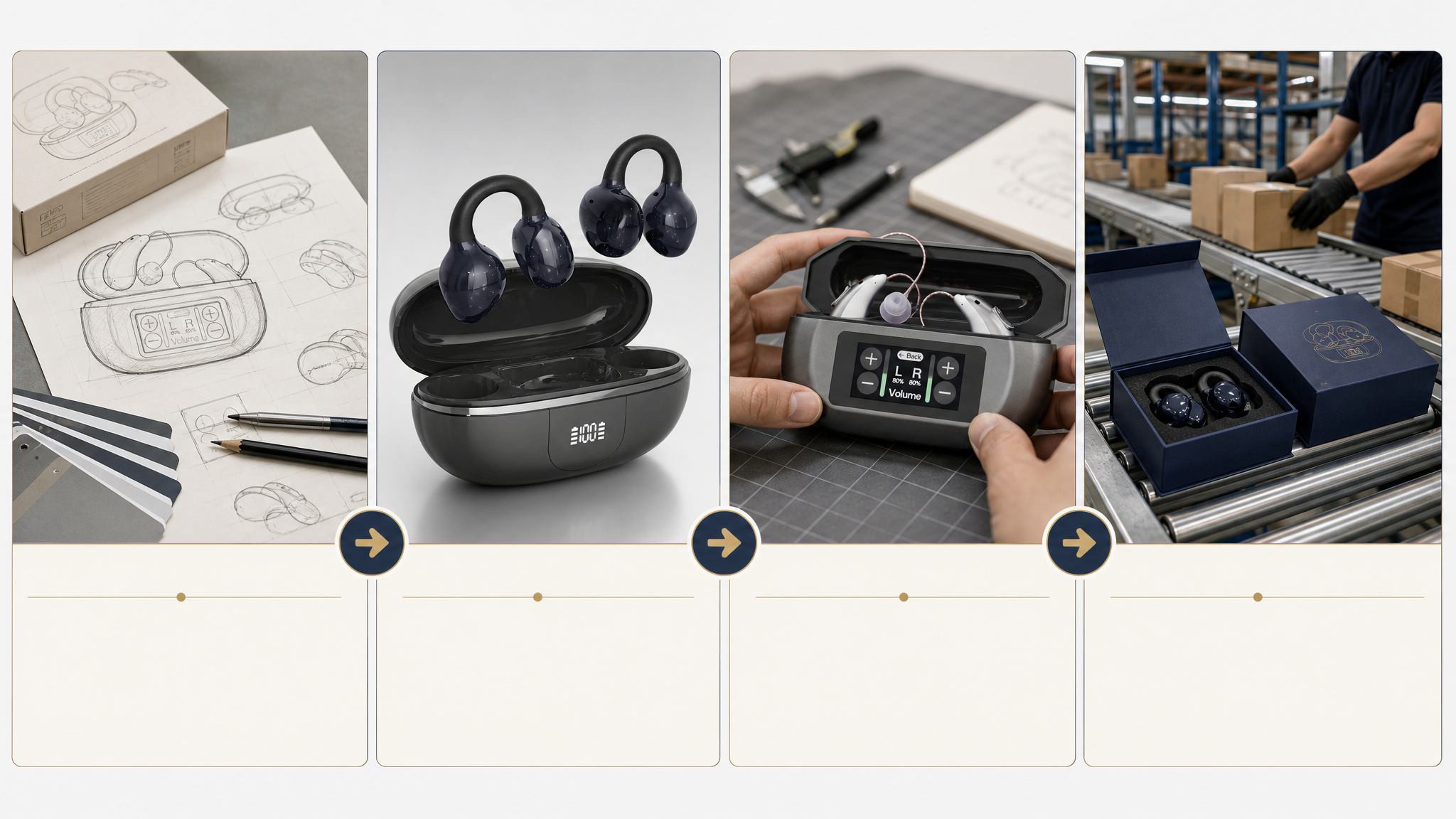
OEM/ODM hearing aid production process from product concept to fulfillment

Matching International Acoustic Standards at Optimized B.O.M. Costs

To serve as a true Q4 profit driver, private label inventory must match or exceed the technical benchmarks set by global industry leaders:

32-Channel Precision DSP
Delivers the same granular audio division found in expensive prescription devices, ensuring crisp speech clarity across mild-to-moderate hearing loss profiles.
AI Neural Noise Isolation
Actively suppresses ambient crowd chatter and dynamic background noise, satisfying holiday buyers and preventing costly post-purchase product returns.

The Supply Chain Advantage: Securing Your Q4 Profit Engine

Executing a high-margin holiday product rollout requires partnering with a reliable, certified manufacturing ecosystem designed for speed and compliance:

  • Optimized Bill-of-Materials (B.O.M.): Streamlined assembly and vertically integrated component sourcing reduce unit costs without compromising electro-acoustic precision.
  • Turnkey Global Regulatory Compliance: Access to pre-verified FDA establishment listings, CE MDR technical files, and ISO 13485 quality management systems ensures friction-free cross-border logistics.
  • Rapid Prototyping and Fulfillment Speed: Leveraging 72-hour physical sampling and flexible packaging turnarounds allows brands to scale stock levels instantly in response to surging Black Friday demand.
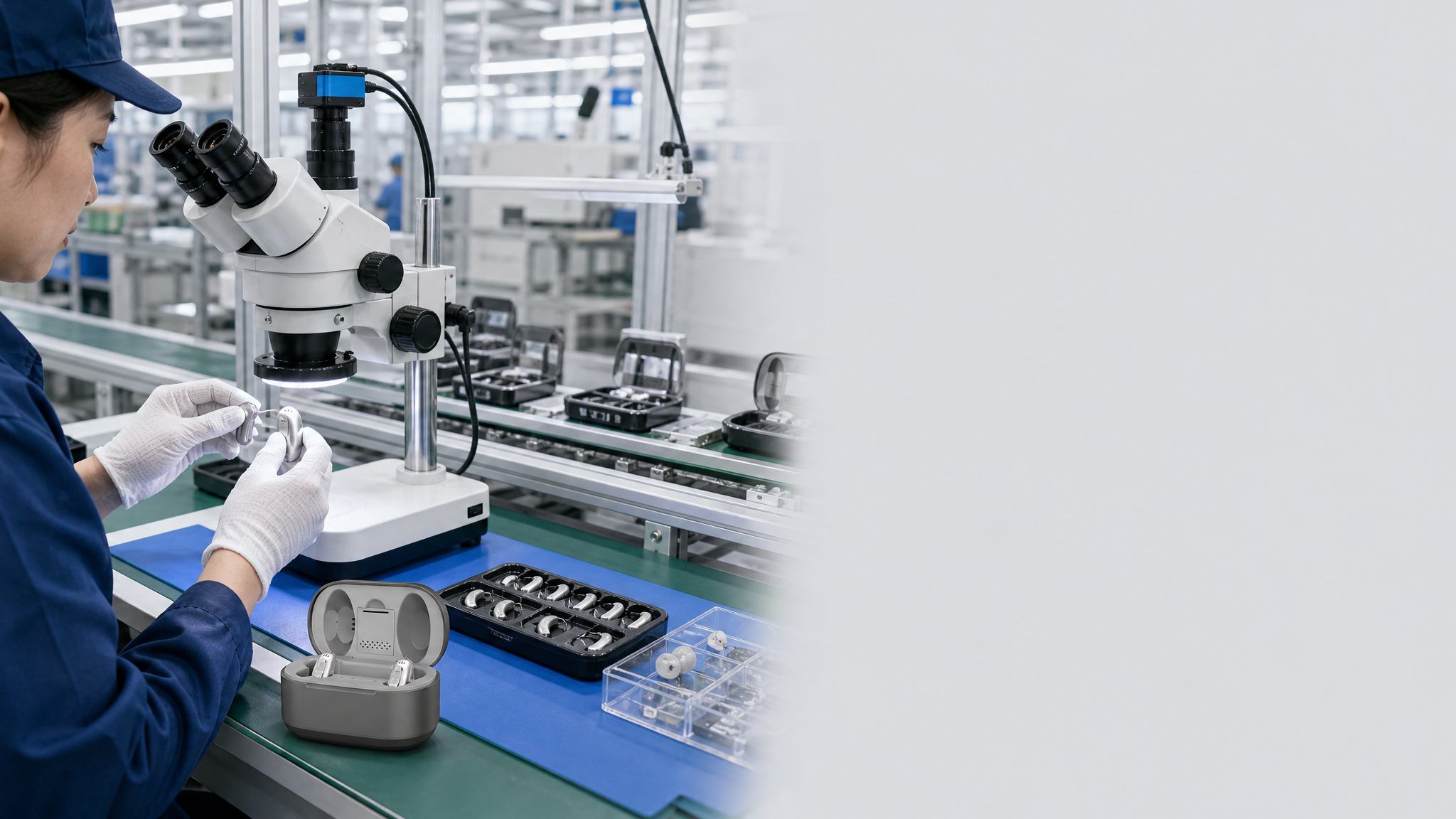
GM-321 hearing aid with integrated drying compartment in a factory quality control setting


Frequently Asked Questions

Why are high-margin OTC hearing aids considered the ultimate Q4 “profit drivers”?

They combine strong consumer demand for premium audio technology with optimized manufacturing costs, giving e-commerce sellers the flexibility to run deep Black Friday discounts while preserving high net profit margins.

How can independent DTC brands compete with international giants during Black Friday?

By partnering with ISO 13485-certified OEM manufacturers, independent brands can offer identical or superior technical performance (such as 32-channel DSP and AI noise reduction) at a fraction of the cost, securing a powerful competitive advantage.

What is the typical timeline to launch a private label hearing aid line for the holidays?

With pre-certified regulatory files and established OEM platforms, brands can review physical prototypes within 72 hours and complete full custom commercial packaging within 3 to 4 weeks.


Secure Your High-Margin Q4 Inventory Today

Partner with an established ISO 13485-certified medical device manufacturer to deploy international-grade OTC hearing aids engineered for maximum holiday profitability.
Request Your Custom Sample

Submit Your Sourcing Request
Related Posts
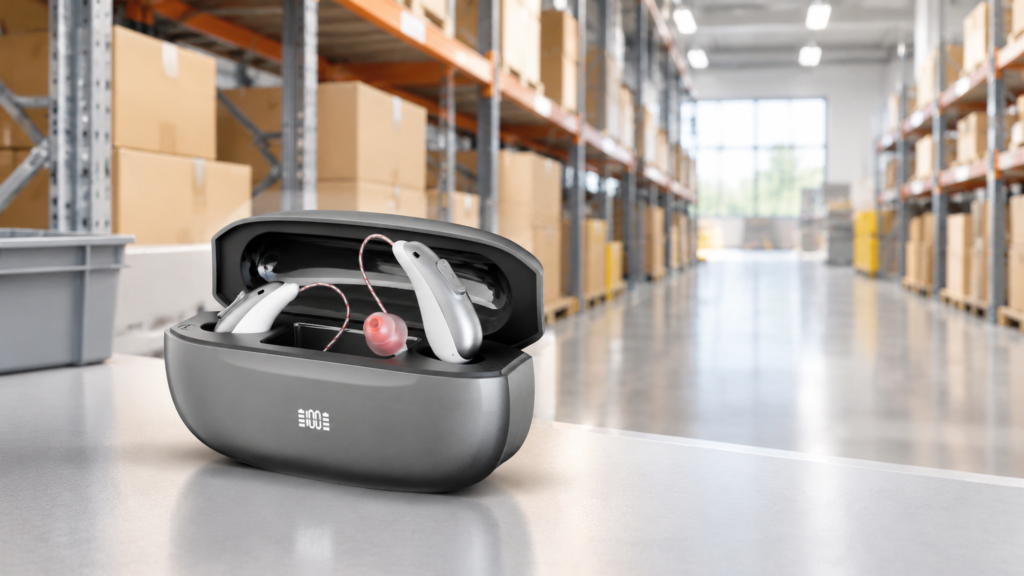
Open hearing aid charging case with warehouse shelves in the background
How to Build Your Own Hearing Aid Brand: A Step-by-Step Private Label Guide

For cross-border e-commerce sellers, Amazon brand owners, and regional medical distributors, launching a proprietary private label product line is the ultimate milestone for long-term valuation and profit margins. In the booming Over-the-Counter (OTC) hearing health market, entering the space no longer requires multi-million-dollar R&D budgets or years of waiting. Thanks to advanced ODM manufacturing ecosystems, launching your own medical-grade hearing aid brand has become remarkably streamlined. Below is a step-by-step operational guide detailing how to transition from an initial concept to market-ready inventory, backed by rapid 8-hour digital renderings and 72-hour physical sampling. 🚀 E-Commerce Entrepreneurship Insight Building a private label health brand is no longer a complex multi-year enterprise. By partnering with agile ISO 13485-certified manufacturers, digital entrepreneurs can validate designs, review physical prototypes, and secure compliant retail stock in under a month. Phase 1: Product Selection and Technical Specification The foundation of any successful private label brand begins with choosing the right hardware platform to match your target retail audience: Form Factor Definition: Decide between popular consumer styles, such as discreet Receiver-in-Canal (RIC) models, modern open-ear clip-on designs, or ergonomic Completely-In-Canal (CIC) units. Core Acoustic Standards: Ensure the base platform features high-demand technologies, such as 32-channel digital signal

Read More >>
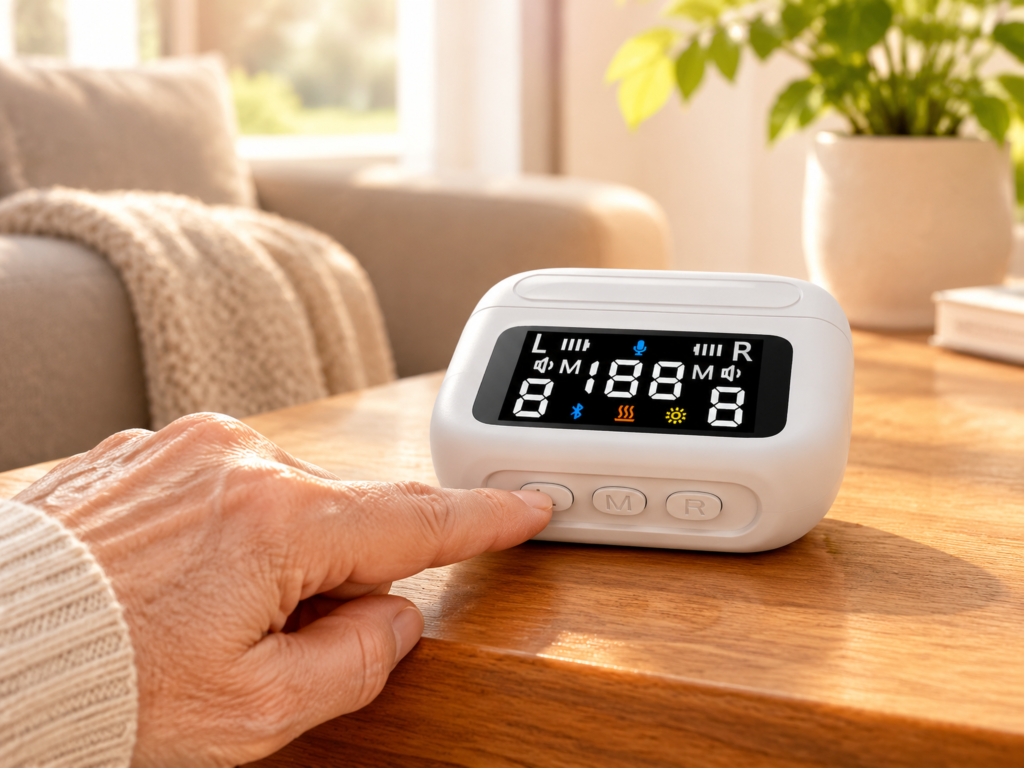
User pressing a control button on a white hearing aid case with a digital display
How App-Controlled Hearing Aids Are Changing Private Label Product Lines

In the Over-the-Counter (OTC) hearing health sector, competition is no longer decided solely by acoustic hardware specifications. As consumer expectations shift toward personalized, smartphone-integrated wellness devices, app-controlled hearing aids have become the defining standard for modern private label product lines. For direct-to-consumer (DTC) brands, pharmacy chains, and regional medical distributors, integrating a companion mobile application transforms a static hardware SKU into an adaptive, user-empowering digital ecosystem. Below is a product-strategy blueprint examining how app-controlled architectures reshape private label positioning, reduce post-purchase returns, and unlock higher retail margins. 📱 Product Ecosystem Shift Moving from button-only amplifiers to app-enabled digital signal processing (DSP) platforms allows private label brands to command higher average order values (AOV) while eliminating the clinical bottleneck of in-person audiologist programming. From Static Hardware to Software-Defined Hearing Solutions Historically, private label sellers relied on generic pre-programmed devices with physical volume wheels. While inexpensive to source, those legacy units suffered from high dissatisfaction rates because every user’s hearing loss profile is unique. App-controlled architectures solve this challenge at scale: In-App Self-Fitting & Audiometry Tests: Guided tone-threshold assessments inside the smartphone app automatically generate a personalized audiogram and map customized gain curves across 32 DSP frequency bands in under five minutes.

Read More >>
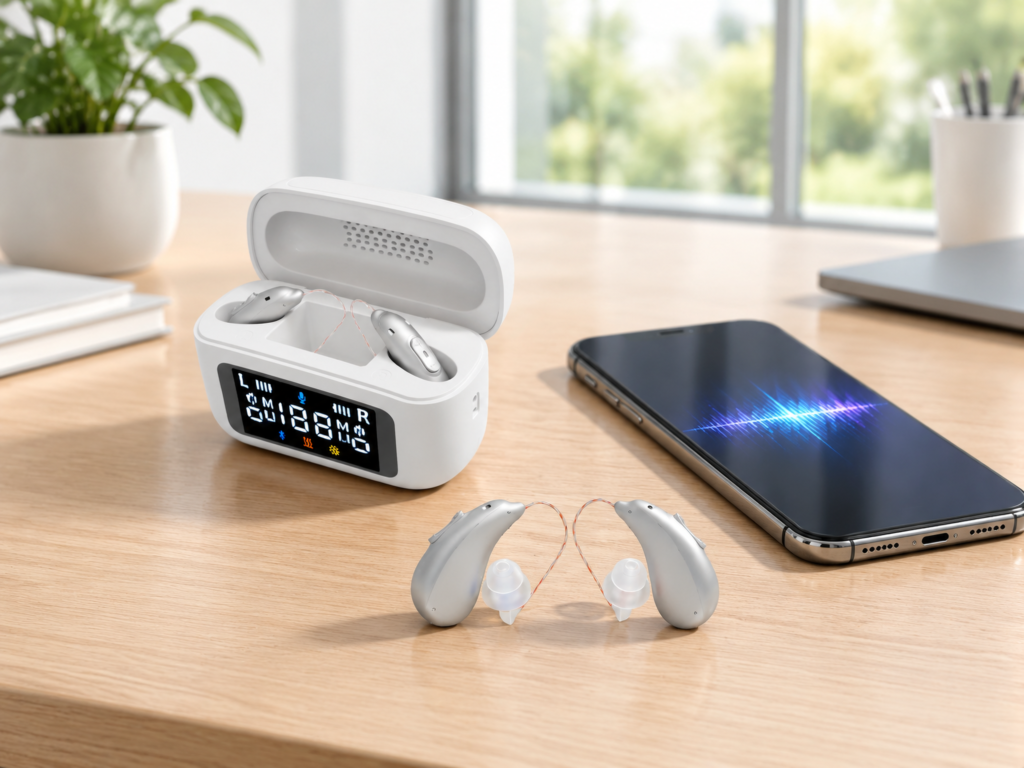
Open hearing aid case beside two hearing aids and a smartphone on a wooden desk
What Does Auracast Mean for Hearing Aid Distributors? A Practical Guide to LE Audio RIC Hearing Aids

The global assistive listening industry is undergoing its most significant wireless transformation in two decades. With Bluetooth LE Audio and Auracast™ broadcast audio rapidly expanding across public venues, consumer electronics, and healthcare ecosystems, hearing aid distributors face a pivotal inventory decision: transition product portfolios toward next-generation wireless architectures or risk holding obsolete legacy stock. Among all acoustic form factors, Receiver-in-Canal (RIC) devices have emerged as the primary commercial vehicle for LE Audio adoption. Below is a practical procurement and market-readiness guide explaining what Auracast means for regional distributors, pharmacy chains, and private label brands—and how to evaluate LE Audio RIC hardware for upcoming purchasing cycles. 📡 Distribution Market Shift As airports, theaters, places of worship, and home televisions deploy Auracast transmitters to replace aging telecoil (T-coil) induction loops, end-users increasingly view Auracast compatibility as a baseline requirement rather than a luxury add-on. Understanding Bluetooth LE Audio and Auracast Broadcast Technology Unlike traditional Classic Bluetooth—which was engineered primarily for point-to-point audio streaming and required proprietary protocols (such as MFi or ASHA) to preserve battery life—Bluetooth LE Audio introduces an open, standardized, ultra-low-power wireless framework: LC3 Codec Acoustic Efficiency: The Low Complexity Communication Codec (LC3) delivers superior audio clarity at roughly half

Read More >>

We'd like to work with you

Send us a message if you have any questions or request a quote. Our experts will give you a reply within 24 hours and help you select the right hearing aid you want.

Get A Free Quote

All of our products are available for sampling