How to Build Your Own Hearing Aid Brand: A Step-by-Step Private Label Guide

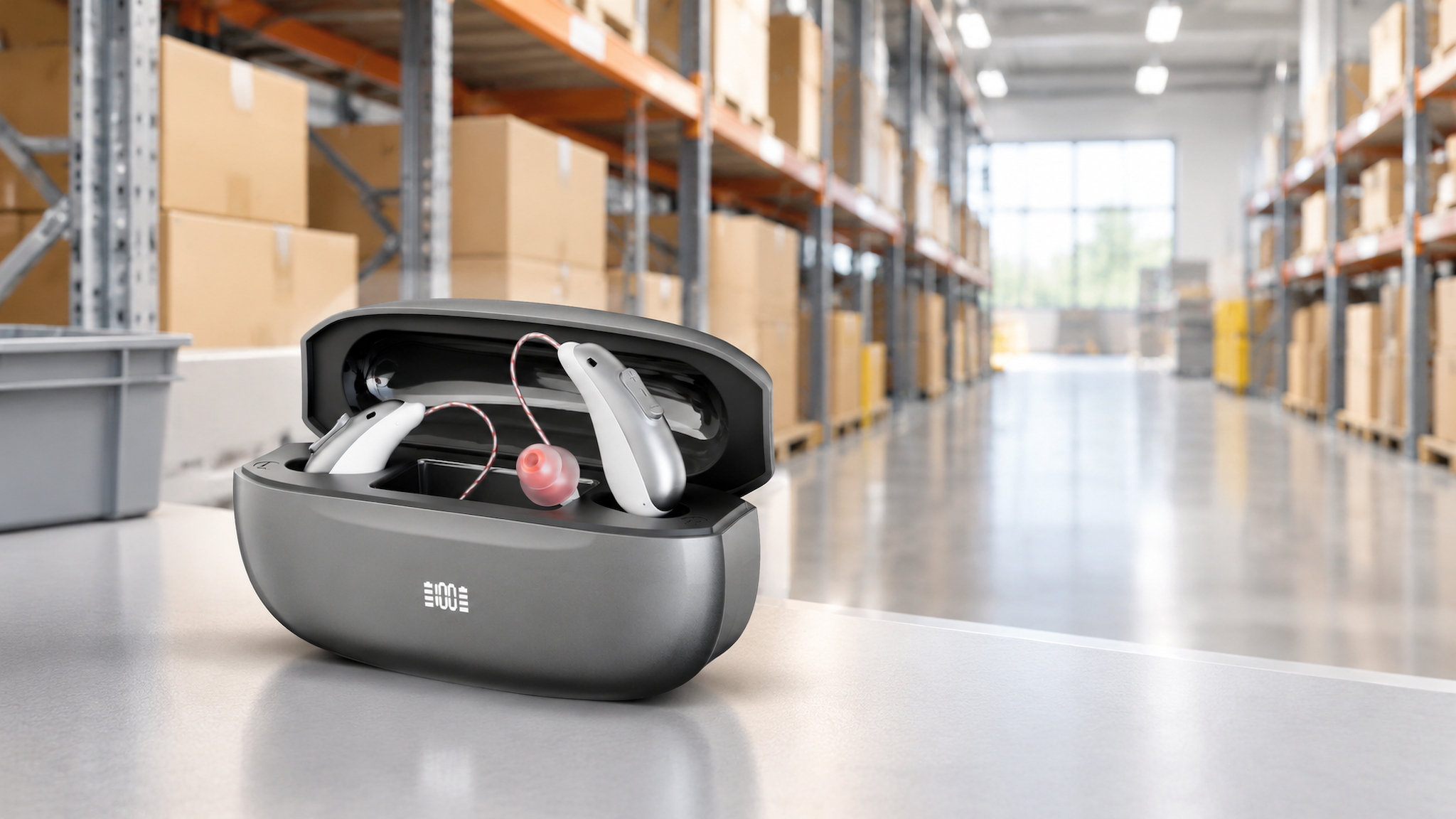
Open hearing aid charging case with warehouse shelves in the background

Table of Contents

For cross-border e-commerce sellers, Amazon brand owners, and regional medical distributors, launching a proprietary private label product line is the ultimate milestone for long-term valuation and profit margins. In the booming Over-the-Counter (OTC) hearing health market, entering the space no longer requires multi-million-dollar R&D budgets or years of waiting.

Thanks to advanced ODM manufacturing ecosystems, launching your own medical-grade hearing aid brand has become remarkably streamlined. Below is a step-by-step operational guide detailing how to transition from an initial concept to market-ready inventory, backed by rapid 8-hour digital renderings and 72-hour physical sampling.

🚀 E-Commerce Entrepreneurship Insight

Building a private label health brand is no longer a complex multi-year enterprise. By partnering with agile ISO 13485-certified manufacturers, digital entrepreneurs can validate designs, review physical prototypes, and secure compliant retail stock in under a month.
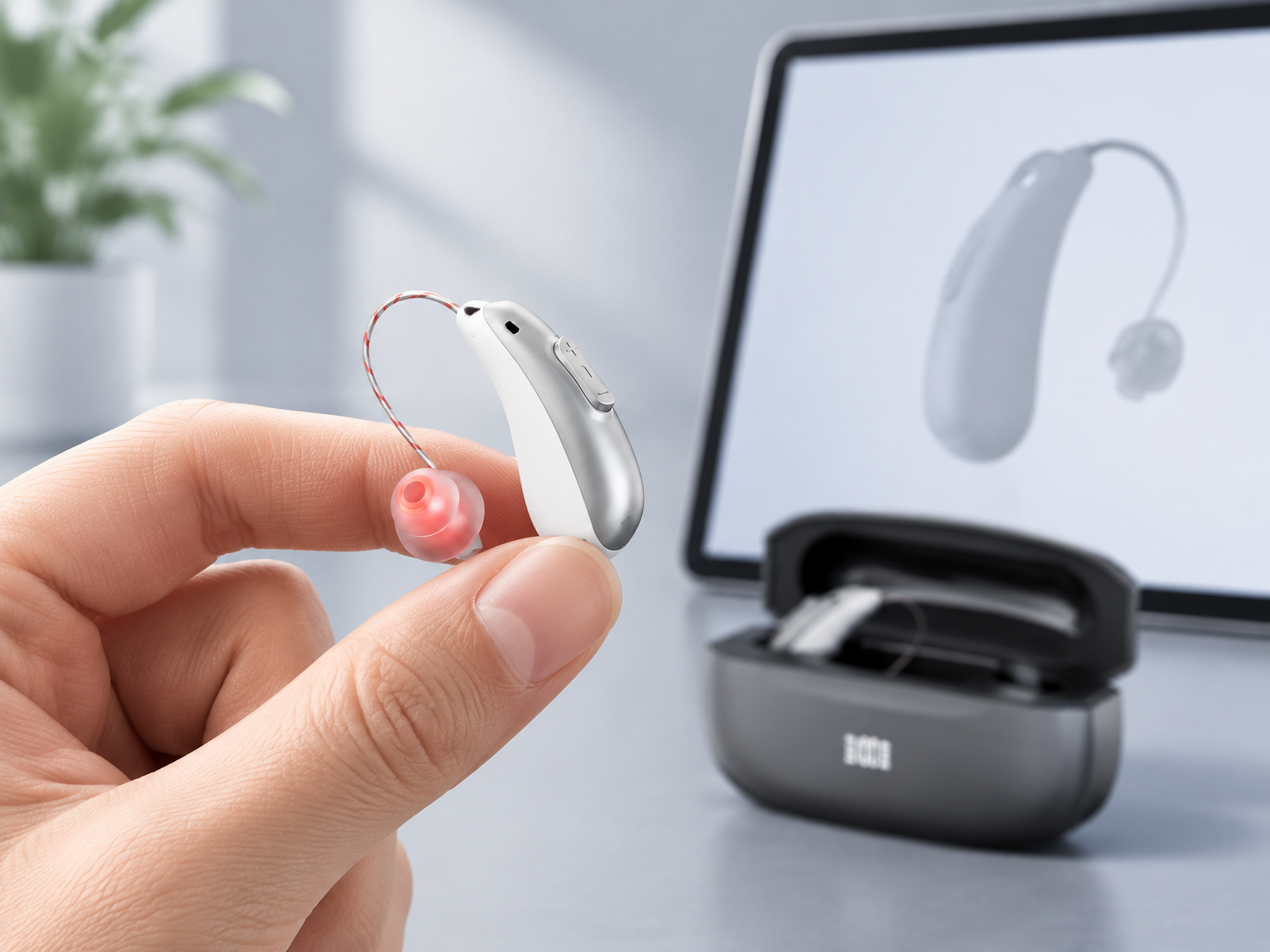

Hand holding a hearing aid during a product sample review

Phase 1: Product Selection and Technical Specification

The foundation of any successful private label brand begins with choosing the right hardware platform to match your target retail audience:

  • Form Factor Definition: Decide between popular consumer styles, such as discreet Receiver-in-Canal (RIC) models, modern open-ear clip-on designs, or ergonomic Completely-In-Canal (CIC) units.
  • Core Acoustic Standards: Ensure the base platform features high-demand technologies, such as 32-channel digital signal processing (DSP) and AI-powered speech isolation, to guarantee high consumer satisfaction.
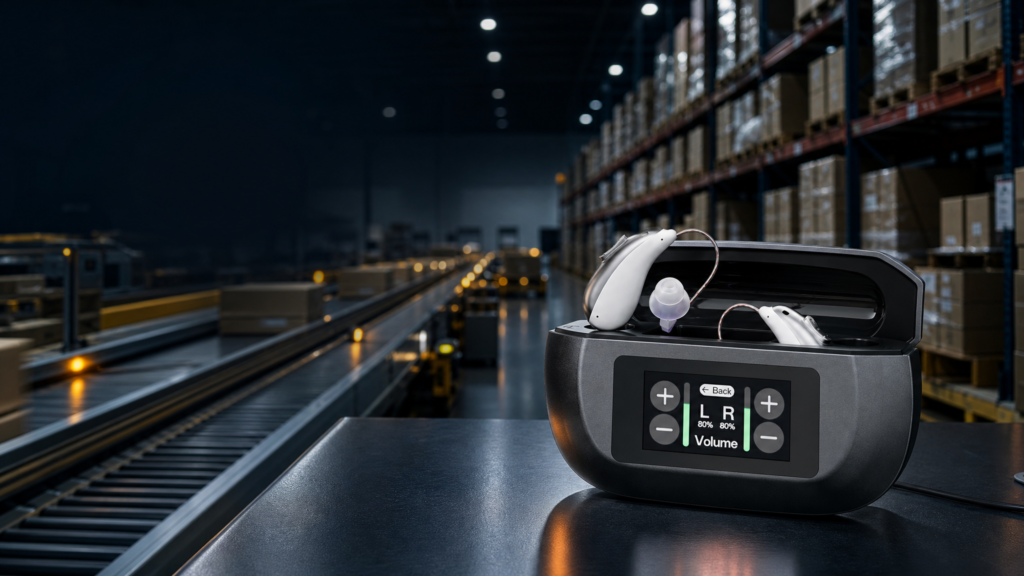
  • Power and Usability: Select user-friendly configurations like rechargeable lithium-ion batteries and smart charging cases with intuitive touchscreen controls.

Phase 2: Visual Branding, Laser Engraving, and Custom Packaging

Differentiating your products on Amazon or independent DTC storefronts requires professional visual branding and custom retail presentation:

Laser Logo Marking
Apply precise corporate logos and model numbers directly onto the device housing and charging case surface for a permanent, high-end finish.
Custom Retail Packaging
Design bespoke unboxing boxes, instruction manuals, and quick-start inserts tailored to your brand identity and compliance requirements.

Two people discussing a planning board with a hearing aid case nearby
Phase 3: Rapid Prototyping – 8-Hour Renderings and 72-Hour Sampling
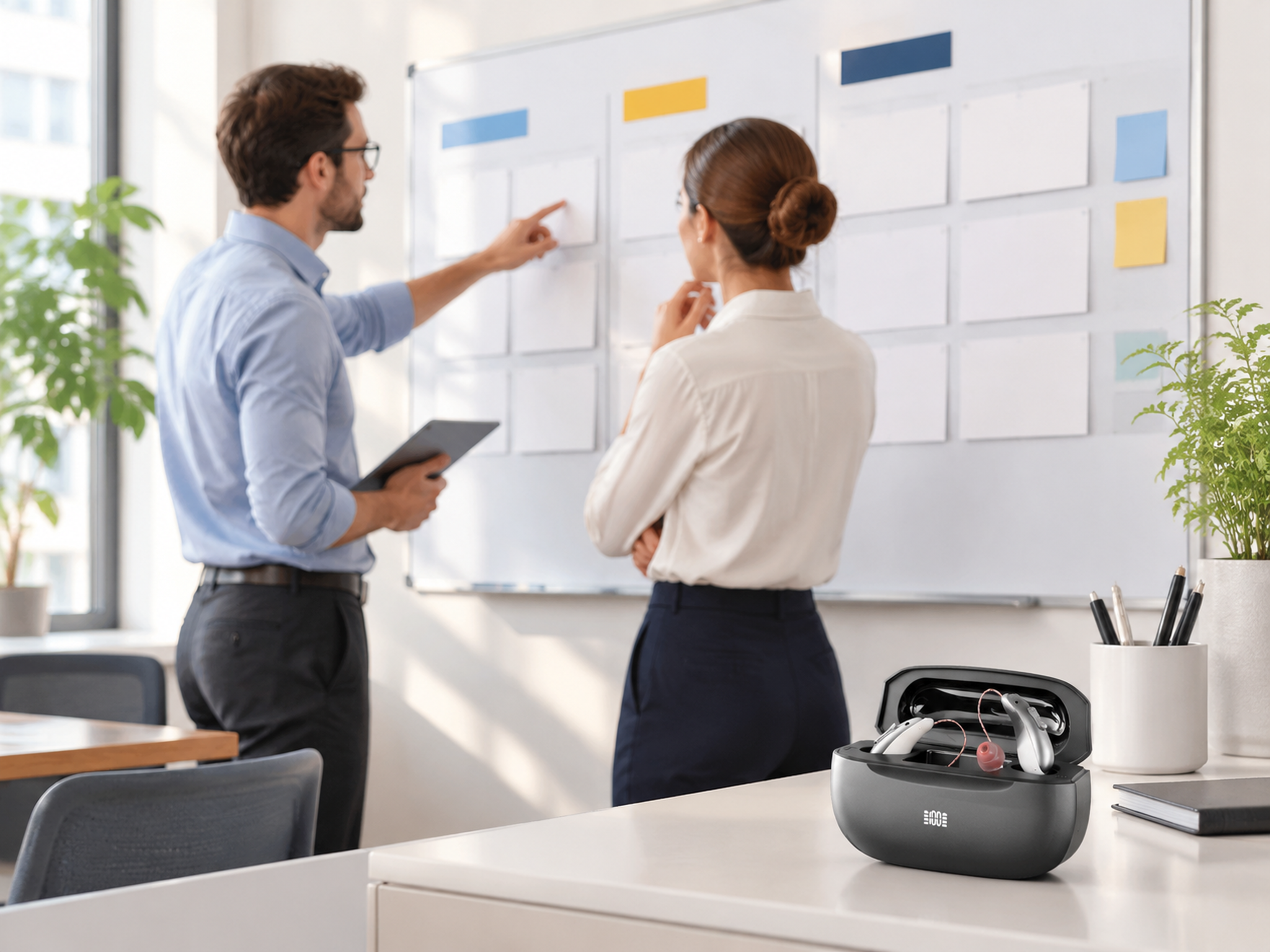
Speed-to-market is critical for digital entrepreneurs. Advanced OEM manufacturing partners eliminate long waiting times through rapid digital and physical prototyping workflows:

  • 8-Hour 3D Virtual Renderings: Submit your brand logo and color preferences, and receive photorealistic CAD design files within 8 hours to instantly evaluate how your finished product will look.
  • 72-Hour Physical Sample Delivery: Move from digital concepts to physical reality in just three days, receiving fully functional, acoustic-tested sample units directly at your office for final verification.

Phase 4: Regulatory Compliance and Mass Production

Before launching your storefront, seamless cross-border regulatory compliance ensures your inventory clears customs without friction:

  • Turnkey Medical Dossiers: Leverage pre-verified FDA establishment listings, CE MDR conformity documents, and ISO 13485 quality management files provided by your manufacturer.
  • Scalable Mass Production: Once samples are approved, automated SMT assembly lines and rigorous electro-acoustic testing kick into gear, scaling output to meet your launch demand.

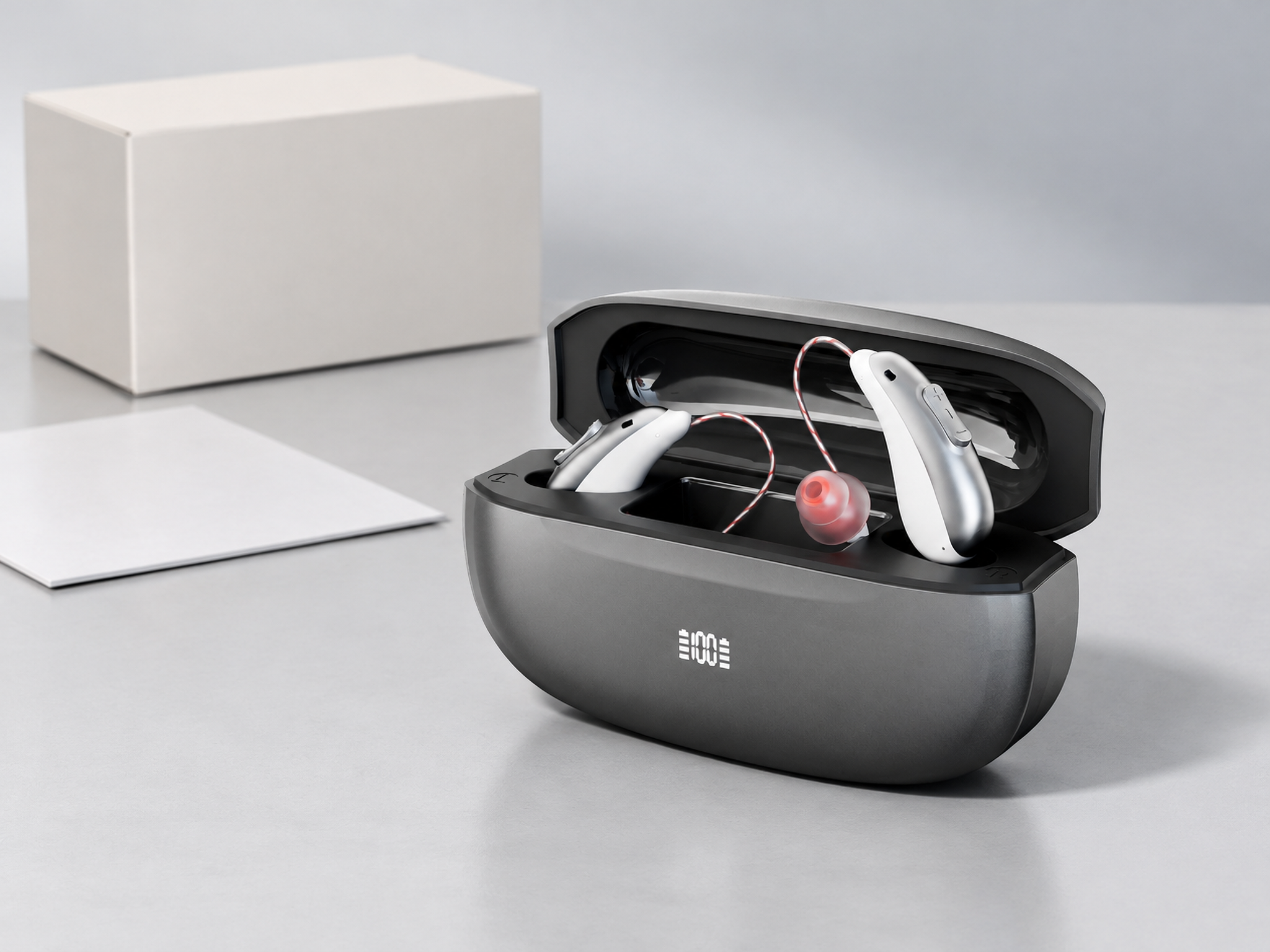
Open hearing aid charging case beside a plain box on a gray surface
Frequently Asked Questions

How long does it take to launch a private label hearing aid brand?

With streamlined OEM platforms offering 8-hour digital renderings and 72-hour sample delivery, brands can review prototypes in days and complete full commercial packaging production within 3 to 4 weeks.

What is the minimum order quantity (MOQ) for starting a private label?

Standard private labeling—including custom laser logo engraving and branded retail packaging—typically starts at low, accessible MOQs (500 to 1,000 units), making it ideal for growing e-commerce brands.

Do I need a medical license to sell OTC hearing aids online?

Under United States FDA OTC regulations and equivalent European frameworks, certified devices intended for mild-to-moderate hearing loss can be sold directly via e-commerce and retail channels without clinical prescriptions.


Launch Your Private Label Hearing Brand Today

Partner with an ISO 13485-certified medical device manufacturer to build your own high-margin hearing brand with 8-hour rendering and 72-hour sample delivery.
Request Your 72-Hour Custom Sample

Submit Your Sourcing Request
Related Posts
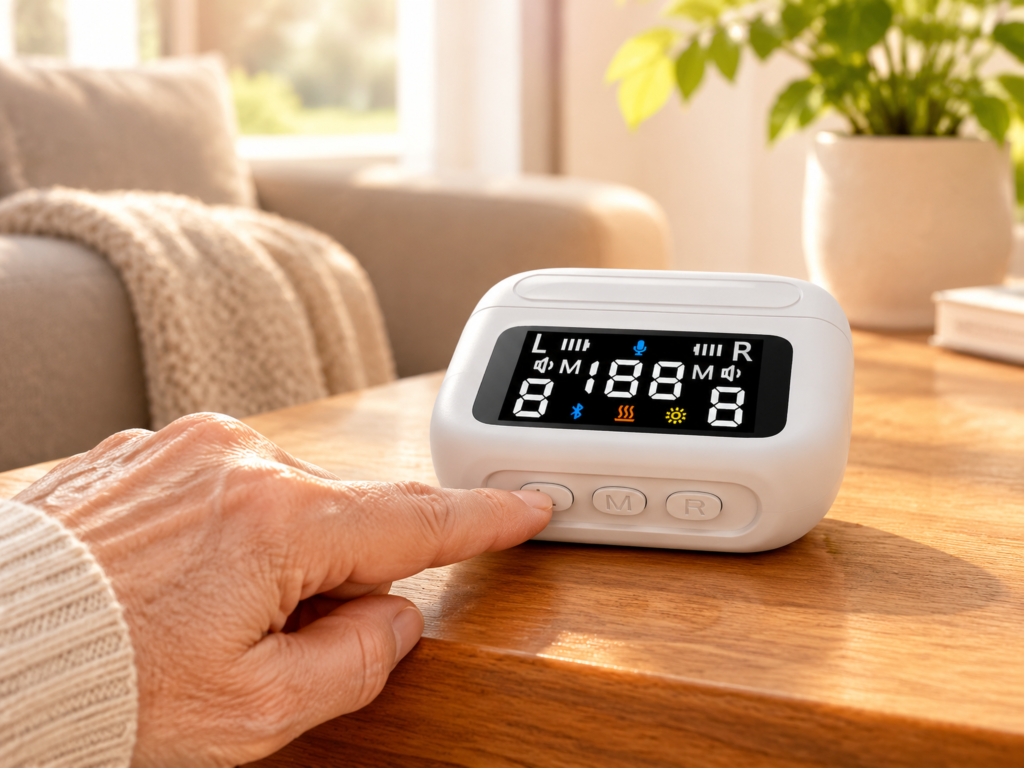
User pressing a control button on a white hearing aid case with a digital display
How App-Controlled Hearing Aids Are Changing Private Label Product Lines

In the Over-the-Counter (OTC) hearing health sector, competition is no longer decided solely by acoustic hardware specifications. As consumer expectations shift toward personalized, smartphone-integrated wellness devices, app-controlled hearing aids have become the defining standard for modern private label product lines. For direct-to-consumer (DTC) brands, pharmacy chains, and regional medical distributors, integrating a companion mobile application transforms a static hardware SKU into an adaptive, user-empowering digital ecosystem. Below is a product-strategy blueprint examining how app-controlled architectures reshape private label positioning, reduce post-purchase returns, and unlock higher retail margins. 📱 Product Ecosystem Shift Moving from button-only amplifiers to app-enabled digital signal processing (DSP) platforms allows private label brands to command higher average order values (AOV) while eliminating the clinical bottleneck of in-person audiologist programming. From Static Hardware to Software-Defined Hearing Solutions Historically, private label sellers relied on generic pre-programmed devices with physical volume wheels. While inexpensive to source, those legacy units suffered from high dissatisfaction rates because every user’s hearing loss profile is unique. App-controlled architectures solve this challenge at scale: In-App Self-Fitting & Audiometry Tests: Guided tone-threshold assessments inside the smartphone app automatically generate a personalized audiogram and map customized gain curves across 32 DSP frequency bands in under five minutes.

Read More >>
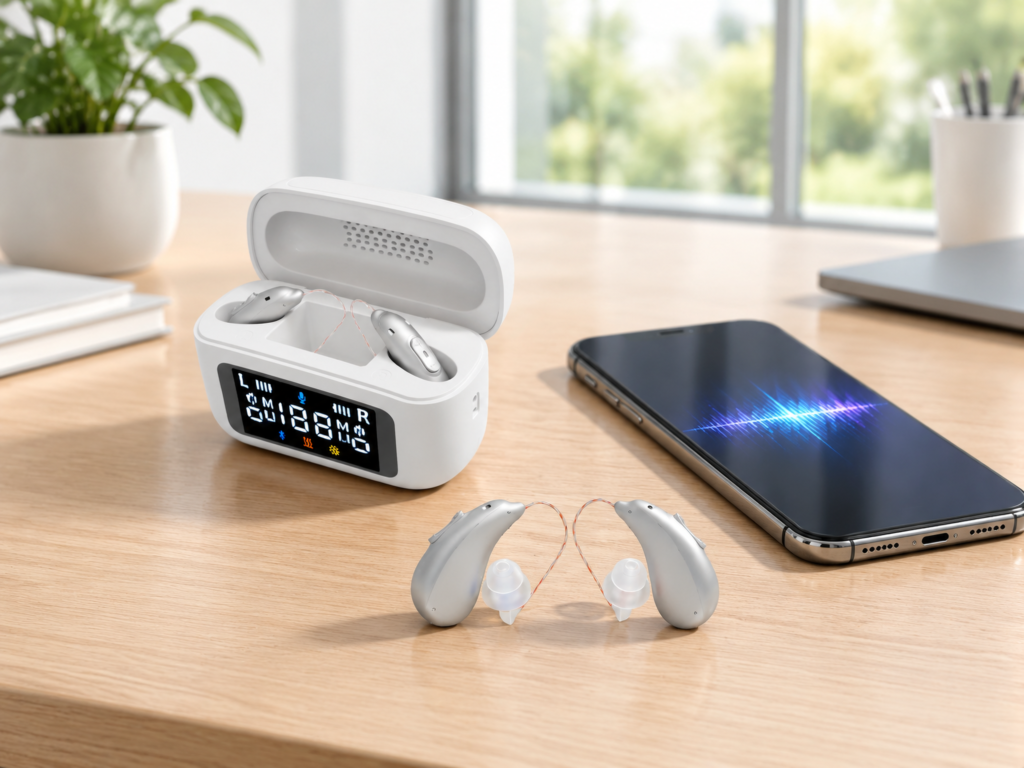
Open hearing aid case beside two hearing aids and a smartphone on a wooden desk
What Does Auracast Mean for Hearing Aid Distributors? A Practical Guide to LE Audio RIC Hearing Aids

The global assistive listening industry is undergoing its most significant wireless transformation in two decades. With Bluetooth LE Audio and Auracast™ broadcast audio rapidly expanding across public venues, consumer electronics, and healthcare ecosystems, hearing aid distributors face a pivotal inventory decision: transition product portfolios toward next-generation wireless architectures or risk holding obsolete legacy stock. Among all acoustic form factors, Receiver-in-Canal (RIC) devices have emerged as the primary commercial vehicle for LE Audio adoption. Below is a practical procurement and market-readiness guide explaining what Auracast means for regional distributors, pharmacy chains, and private label brands—and how to evaluate LE Audio RIC hardware for upcoming purchasing cycles. 📡 Distribution Market Shift As airports, theaters, places of worship, and home televisions deploy Auracast transmitters to replace aging telecoil (T-coil) induction loops, end-users increasingly view Auracast compatibility as a baseline requirement rather than a luxury add-on. Understanding Bluetooth LE Audio and Auracast Broadcast Technology Unlike traditional Classic Bluetooth—which was engineered primarily for point-to-point audio streaming and required proprietary protocols (such as MFi or ASHA) to preserve battery life—Bluetooth LE Audio introduces an open, standardized, ultra-low-power wireless framework: LC3 Codec Acoustic Efficiency: The Low Complexity Communication Codec (LC3) delivers superior audio clarity at roughly half

Read More >>
322 hearing aid charging case in a warehouse for Black Friday inventory planning
Maximizing Q4 Profits: Why High-Margin OTC Hearing Aids Drive Black Friday Success

As direct-to-consumer (DTC) brands, regional pharmacy chains, and health tech e-commerce managers finalize their inventory strategies for the upcoming Black Friday and Cyber Monday (BFCM) shopping window, a crucial strategic realization is taking shape: top-line sales volume means little if profit margins are swallowed by excessive supply chain and licensing overhead. A retrospective analysis of last year’s holiday shopping trends reveals that while major brand-name hearing devices enjoyed strong unit sales, reseller net margins were heavily compressed. To win big during this year’s Q4 promotional season, savvy retailers are shifting toward medical-grade OEM platforms that deliver international-tier acoustic performance at substantially optimized production costs. Below is a strategic financial and merchandising framework for driving Q4 profitability. 📊 Q4 Financial Strategy Benchmark Achieving sustainable e-commerce growth during holiday discount cycles requires decoupling retail price competitiveness from product quality. Sourcing direct-from-factory OTC hearing devices allows merchants to run aggressive Black Friday promotions while retaining exceptional 60%+ gross margins. Deconstructing Last Year’s BFCM Winners: Performance vs. Margin Realities Evaluating last year’s top-performing health wearables highlights why certain product categories outpaced others in net profitability: The Pitfall of Brand Licensing Overheads: Traditional wholesale models force retailers to surrender significant margin points to legacy brand

Read More >>

We'd like to work with you

Send us a message if you have any questions or request a quote. Our experts will give you a reply within 24 hours and help you select the right hearing aid you want.

Get A Free Quote

All of our products are available for sampling