Advanced Hearing Solution: GM-903BT Invisible Bluetooth Hearing Aid

Table of Contents

Welcome to our latest blog post, where we introduce the GM-903BT CIC Hearing Aid, a cutting-edge device that redefines auditory assistance with its discreet design and advanced Bluetooth functionality. This post will guide you through the benefits of Completely-in-Canal (CIC) hearing aids, highlight the standout features of the GM-903BT, explain why choosing Goodmi’s hearing aids is a smart choice, and conclude with insights into our company’s culture and commitment to improving hearing health.


 Why Choose CIC Hearing Aids?


CIC hearing aids are an excellent choice for individuals seeking a virtually invisible hearing solution. These devices fit snugly inside the ear canal, offering discretion and comfort. CIC hearing aids are ideal for people who are concerned about the visibility of their hearing aids and want a solution that seamlessly integrates into their daily lives without drawing attention.


The compact design of CIC hearing aids also provides several functional advantages. By being placed deeper in the ear canal, they can utilize the ear’s natural shape to improve sound localization and directionality. This results in a more natural hearing experience. Additionally, their secure fit makes them less likely to be affected by wind noise, enhancing their performance in outdoor environments.


 The Standout Features of GM-903BT


The GM-903BT CIC Hearing Aid sets a new standard in the world of hearing assistance. Here are its key features that make it a standout choice:


  1. Discreet CIC Design: The GM-903BT fits completely in the ear canal, providing a virtually invisible appearance. This design eliminates bulky external components, allowing for seamless integration into your daily routine.


  1. Advanced Bluetooth Functionality: Stay connected wirelessly with the GM-903BT’s Bluetooth capabilities. Stream audio directly from your smartphone, tablet, or other Bluetooth-enabled devices. Whether you’re listening to music, taking phone calls, or watching videos, enjoy the freedom and convenience of wireless connectivity with uncompromised sound quality.


  1. Extended Usage Duration: With an impressive battery life of 4-6 hours on a single charge, the GM-903BT ensures reliable performance throughout your day. From morning meetings to evening social gatherings, you can trust that your hearing aid will keep up with your active lifestyle.


  1. Magnetic Charging: Simplify your charging routine with the GM-903BT’s magnetic charging feature. Just place the device in the charging dock, and the magnetic connection will securely attach, ensuring a quick and efficient charging experience every time. Say goodbye to the hassle of cords and plugs.


 Why Choose Goodmi’s Hearing Aids?


Goodmi Intelligent (Shenzhen) Co., Ltd. has been at the forefront of the hearing aid industry since its inception in 2011. Here’s why Goodmi stands out:


  • Certified Quality: Our products meet rigorous standards, with certifications such as GMP, FDA, CE, ROHS, and FCC. Our factory is licensed by the National Medical Products Administration, and we hold the first domestic digital hearing aid medical registration certification.


  • Innovation and R&D: We invest heavily in research and development to bring you the latest in hearing aid technology. Our advanced features, such as Bluetooth connectivity and magnetic charging, showcase our commitment to innovation.


  • Comprehensive Services: From initial design to after-sales support, we provide a seamless and comprehensive service experience. Our dedicated team is here to ensure your satisfaction at every step.


 Conclusion


At Goodmi Intelligent, we are dedicated to enhancing the lives of those with hearing impairments through innovation and excellence. Our company culture is built on a foundation of quality, reliability, and a passion for improving auditory health. The GM-903BT CIC Hearing Aid embodies these values, offering a discreet, high-performance solution for those seeking to elevate their hearing experience.


Rediscover the joy of hearing with the GM-903BT. Experience the difference that advanced technology and thoughtful design can make in your daily life. Thank you for choosing Goodmi Intelligent as your partner in better hearing.
Submit Your Sourcing Request
Related Posts
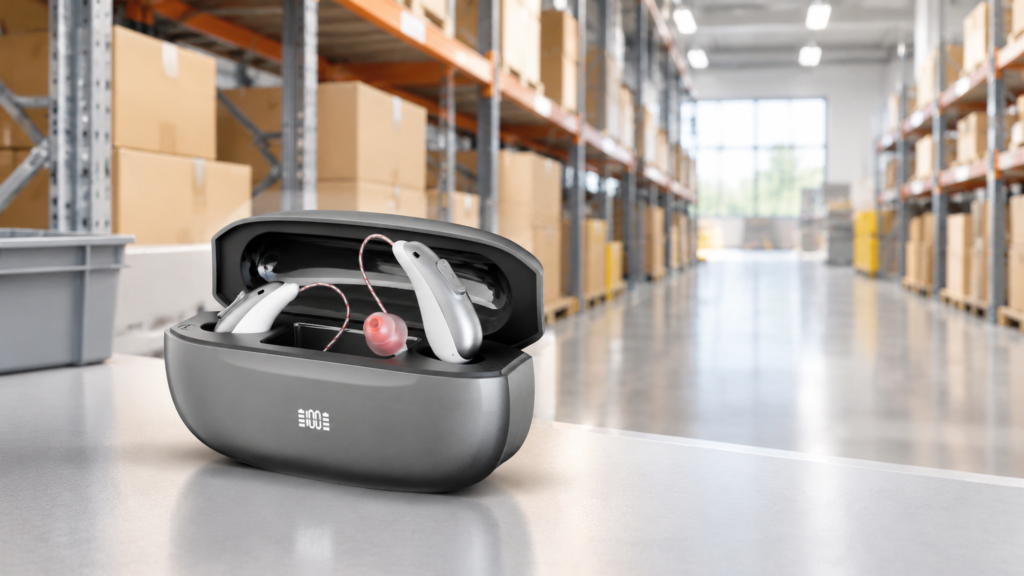
Open hearing aid charging case with warehouse shelves in the background
How to Build Your Own Hearing Aid Brand: A Step-by-Step Private Label Guide

For cross-border e-commerce sellers, Amazon brand owners, and regional medical distributors, launching a proprietary private label product line is the ultimate milestone for long-term valuation and profit margins. In the booming Over-the-Counter (OTC) hearing health market, entering the space no longer requires multi-million-dollar R&D budgets or years of waiting. Thanks to advanced ODM manufacturing ecosystems, launching your own medical-grade hearing aid brand has become remarkably streamlined. Below is a step-by-step operational guide detailing how to transition from an initial concept to market-ready inventory, backed by rapid 8-hour digital renderings and 72-hour physical sampling. 🚀 E-Commerce Entrepreneurship Insight Building a private label health brand is no longer a complex multi-year enterprise. By partnering with agile ISO 13485-certified manufacturers, digital entrepreneurs can validate designs, review physical prototypes, and secure compliant retail stock in under a month. Phase 1: Product Selection and Technical Specification The foundation of any successful private label brand begins with choosing the right hardware platform to match your target retail audience: Form Factor Definition: Decide between popular consumer styles, such as discreet Receiver-in-Canal (RIC) models, modern open-ear clip-on designs, or ergonomic Completely-In-Canal (CIC) units. Core Acoustic Standards: Ensure the base platform features high-demand technologies, such as 32-channel digital signal

Read More >>
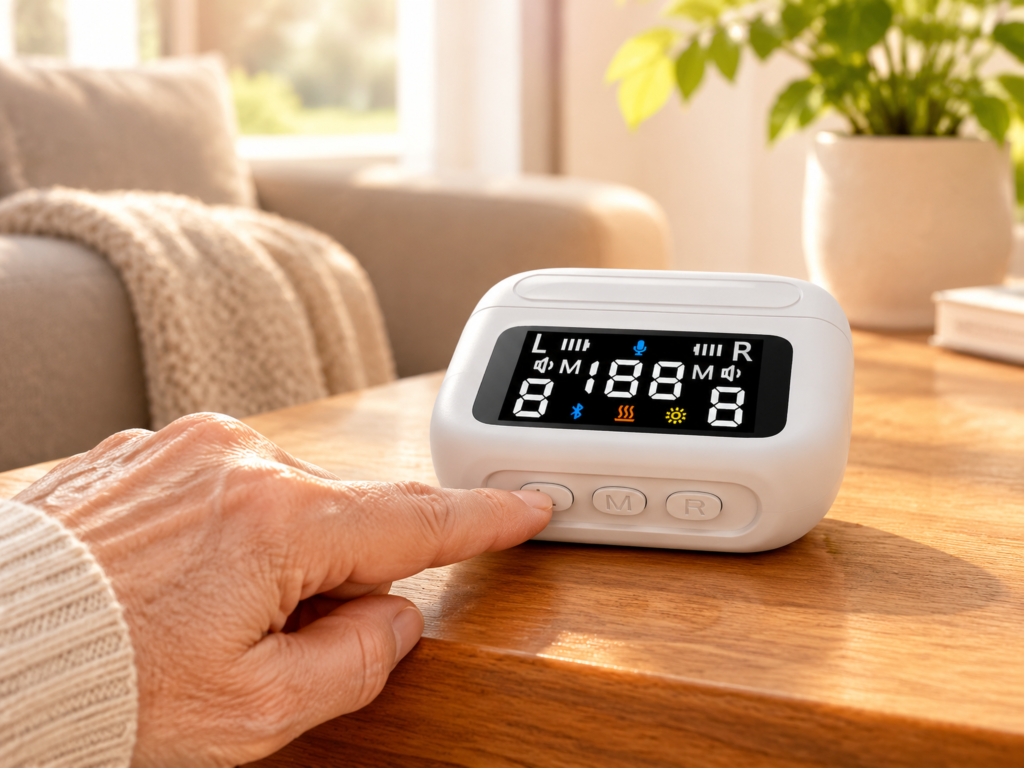
User pressing a control button on a white hearing aid case with a digital display
How App-Controlled Hearing Aids Are Changing Private Label Product Lines

In the Over-the-Counter (OTC) hearing health sector, competition is no longer decided solely by acoustic hardware specifications. As consumer expectations shift toward personalized, smartphone-integrated wellness devices, app-controlled hearing aids have become the defining standard for modern private label product lines. For direct-to-consumer (DTC) brands, pharmacy chains, and regional medical distributors, integrating a companion mobile application transforms a static hardware SKU into an adaptive, user-empowering digital ecosystem. Below is a product-strategy blueprint examining how app-controlled architectures reshape private label positioning, reduce post-purchase returns, and unlock higher retail margins. 📱 Product Ecosystem Shift Moving from button-only amplifiers to app-enabled digital signal processing (DSP) platforms allows private label brands to command higher average order values (AOV) while eliminating the clinical bottleneck of in-person audiologist programming. From Static Hardware to Software-Defined Hearing Solutions Historically, private label sellers relied on generic pre-programmed devices with physical volume wheels. While inexpensive to source, those legacy units suffered from high dissatisfaction rates because every user’s hearing loss profile is unique. App-controlled architectures solve this challenge at scale: In-App Self-Fitting & Audiometry Tests: Guided tone-threshold assessments inside the smartphone app automatically generate a personalized audiogram and map customized gain curves across 32 DSP frequency bands in under five minutes.

Read More >>
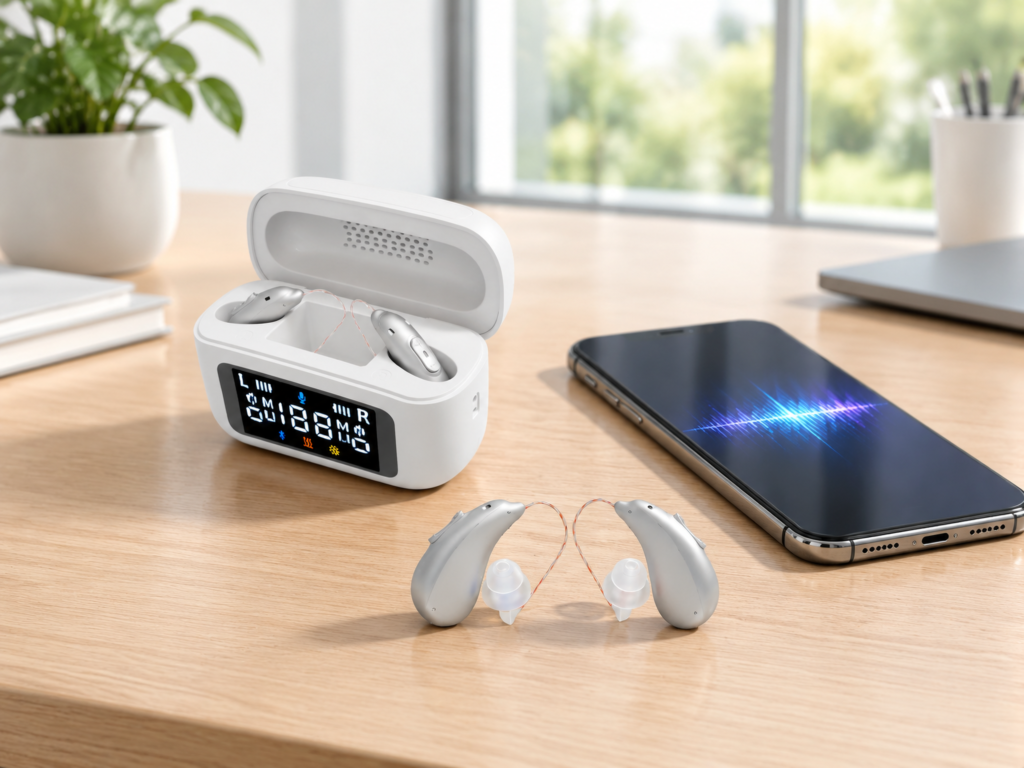
Open hearing aid case beside two hearing aids and a smartphone on a wooden desk
What Does Auracast Mean for Hearing Aid Distributors? A Practical Guide to LE Audio RIC Hearing Aids

The global assistive listening industry is undergoing its most significant wireless transformation in two decades. With Bluetooth LE Audio and Auracast™ broadcast audio rapidly expanding across public venues, consumer electronics, and healthcare ecosystems, hearing aid distributors face a pivotal inventory decision: transition product portfolios toward next-generation wireless architectures or risk holding obsolete legacy stock. Among all acoustic form factors, Receiver-in-Canal (RIC) devices have emerged as the primary commercial vehicle for LE Audio adoption. Below is a practical procurement and market-readiness guide explaining what Auracast means for regional distributors, pharmacy chains, and private label brands—and how to evaluate LE Audio RIC hardware for upcoming purchasing cycles. 📡 Distribution Market Shift As airports, theaters, places of worship, and home televisions deploy Auracast transmitters to replace aging telecoil (T-coil) induction loops, end-users increasingly view Auracast compatibility as a baseline requirement rather than a luxury add-on. Understanding Bluetooth LE Audio and Auracast Broadcast Technology Unlike traditional Classic Bluetooth—which was engineered primarily for point-to-point audio streaming and required proprietary protocols (such as MFi or ASHA) to preserve battery life—Bluetooth LE Audio introduces an open, standardized, ultra-low-power wireless framework: LC3 Codec Acoustic Efficiency: The Low Complexity Communication Codec (LC3) delivers superior audio clarity at roughly half

Read More >>

We'd like to work with you

Send us a message if you have any questions or request a quote. Our experts will give you a reply within 24 hours and help you select the right hearing aid you want.

Get A Free Quote

All of our products are available for sampling