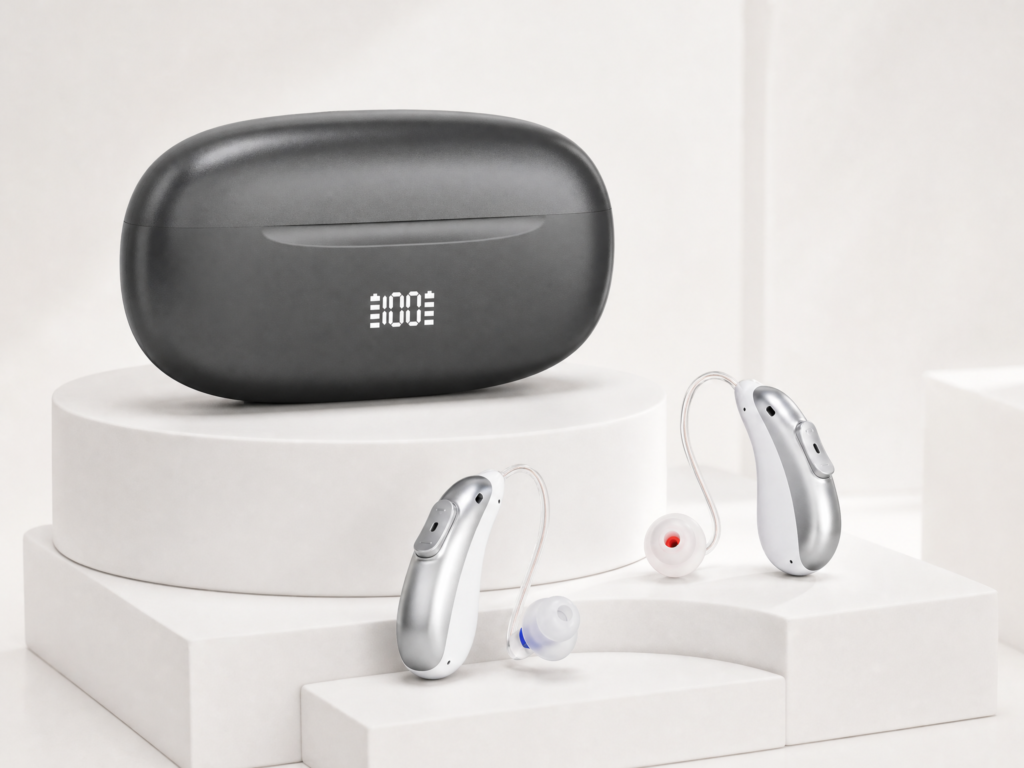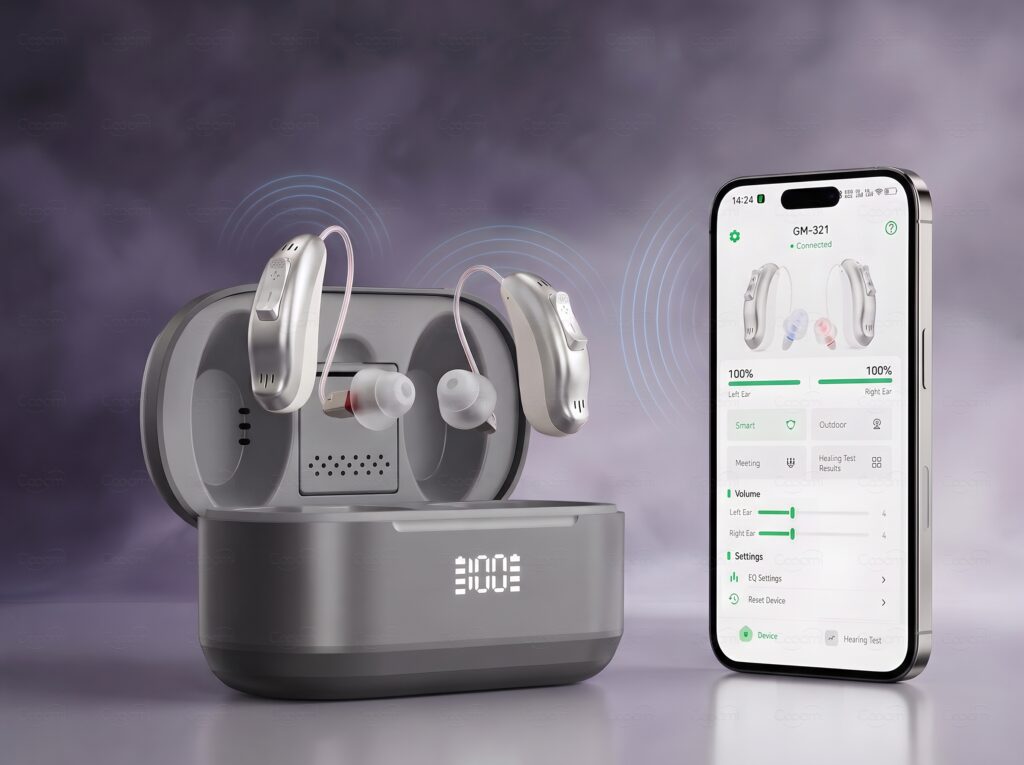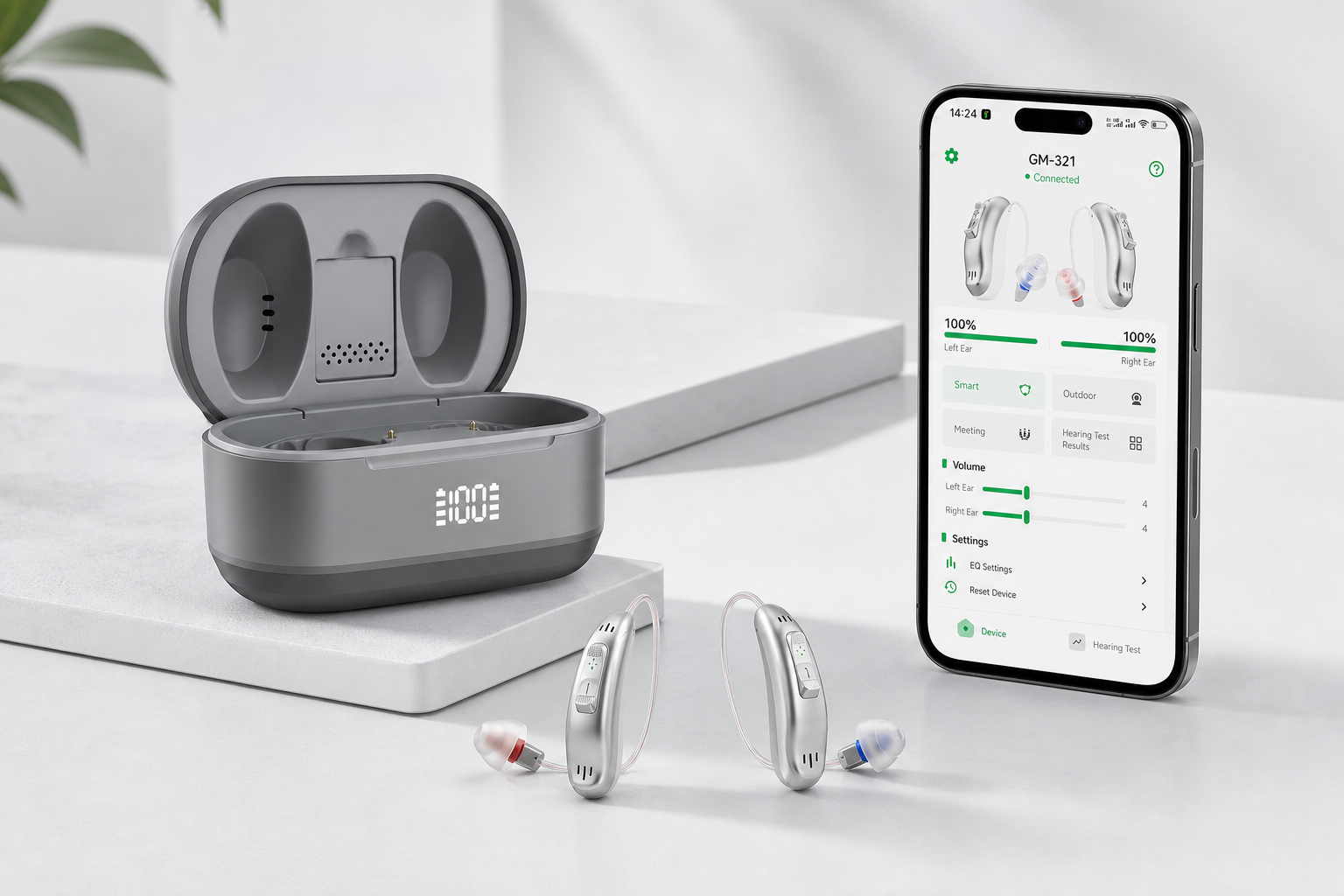
The intersection of artificial intelligence, micro-acoustics, and consumer electronics has fundamentally redefined personal audio health. No longer functioning as simple acoustic amplifiers, smart hearing aids have evolved into sophisticated, AI-driven health-tech wearables capable of analyzing, learning, and adapting to complex acoustic soundscapes in real time.
For healthcare distributors, retail pharmacy chains, and direct-to-consumer (DTC) brands, understanding the mechanics of edge intelligence is essential for capturing high-growth market segments. Below is a comprehensive, deep-dive exploration into how artificial intelligence and smart technologies are actively transforming the modern hearing device industry.
The integration of deep neural networks (DNN) and low-power digital signal processing (DSP) enables smart hearing aids to isolate human speech from chaotic ambient noise in milliseconds. By shifting complex computations directly onto local microchips, manufacturers can deliver instantaneous speech clarity and dynamic sound management without reliance on cloud servers.
The Paradigm Shift: From Static Amplification to Adaptive AI
Historically, traditional digital hearing devices relied on static amplification curves. These legacy systems boosted all frequencies within specified decibel ranges, which frequently resulted in amplifying uncomfortable background noise alongside target speech. Artificial intelligence completely fundamentally changes this paradigm:
- Dynamic Acoustic Classification: On-board processors continuously scan the user’s acoustic surroundings, classifying environmental signatures between speech, music, traffic, and indoor reverb in microsecond intervals.
- Sub-Millisecond Response Times: High-efficiency micro-processors execute complex noise-suppression algorithms with sub-5ms latency, ensuring audio processing remains imperceptible and echo-free.
- Continuous Personalized Adaptation: Machine learning algorithms monitor real-time user volume adjustments and environmental selections, automatically updating sound mapping profiles to match individual listening preferences over time.
Deep Neural Networks (DNN) in Complex Acoustic Environments

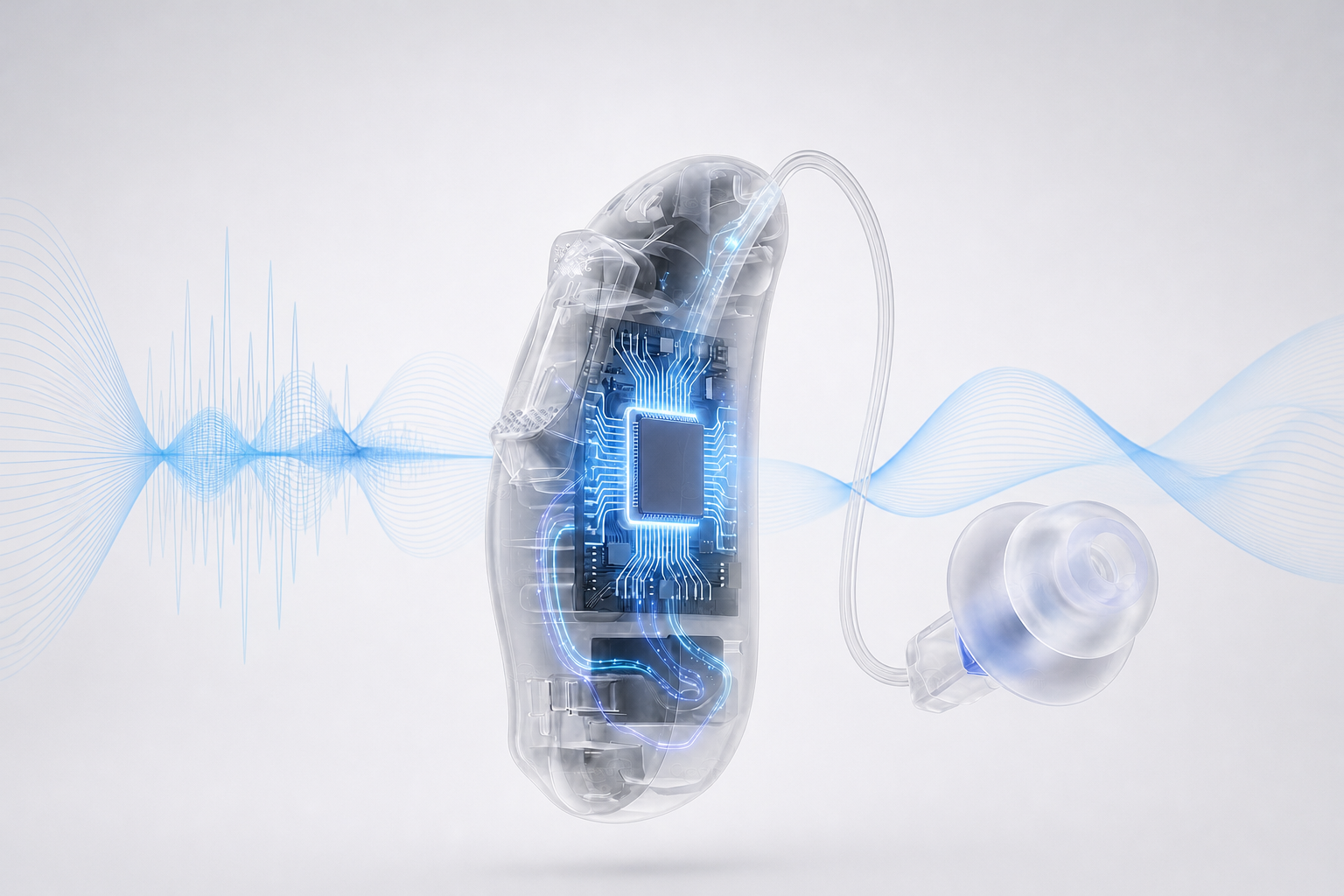
One of the most persistent challenges in hearing care is the classic “cocktail party effect”—the struggle to hear a single speaker in a crowded, noisy environment. Modern smart hearing devices address this using sophisticated deep neural network architectures trained on millions of real-world acoustic samples.
DNN models systematically isolate specific human speech frequencies while aggressively suppressing omnidirectional ambient noise streams in busy venues.
Advanced feedback cancellation algorithms predict potential high-frequency whistling and phase shifts, neutralizing acoustic feedback before it becomes audible.
Furthermore, integration of 32-channel Digital Signal Processing (DSP) allows acoustic engineers to carve audio spectrums into precise frequency bands, delivering granular gain adjustments specifically tuned for mild-to-moderate hearing loss profiles.
Edge AI Computing: Low-Power Local Audio Processing
Unlike consumer smart devices that stream voice data to cloud servers for computational analysis, smart hearing aids operate under strict latency and privacy constraints. This necessitates the deployment of Edge AI computing architectures directly inside the hardware platform.
Key Benefits of Edge AI Processing:
- Zero Internet Dependency: Full AI noise filtering, speech enhancement, and scene recognition function offline, guaranteeing privacy and consistent acoustic performance anywhere.
- Ultra-Low Power Consumption: Specialized micro-architectures optimize battery draw, enabling continuous AI sound processing on rechargeable lithium-ion cells for extended daily use.
- Instantaneous Acoustic Adjustments: Eliminating network transmission delays ensures that sudden ambient spikes—such as slamming doors or clattering dishes—are instantly compressed.
Next-Generation Ecosystem Connectivity: Bluetooth LE Audio and Auracast
Smart connectivity extends far beyond local sound amplification. Modern smart hearing aids seamlessly integrate into the broader consumer wireless ecosystem through advanced Bluetooth protocols:
- Auracast™ Public Broadcast Capabilities: Wearers can tune directly into localized wireless audio broadcasts at airports, public auditoriums, places of worship, and sports venues without specialized receivers.
- Bluetooth® LE Audio Protocol: Low-energy streaming delivers crystal-clear audio quality during phone calls, TV streaming, and music playback while significantly reducing battery drain.
- Multi-Device Cross-Platform Sync: Modern platforms support effortless switching between iOS, Android, and desktop computing devices, transforming hearing aids into versatile daily headsets.
User-Centric Innovations: Smart Cases and Ergonomic Form Factors
Product aesthetics and daily usability have evolved rapidly to eliminate historical medical stigma. Today’s hardware emphasizes consumer tech design cues that combine style with effortless operational control:
- Smart Touchscreen Charging Cases: Storage cases featuring intuitive color touch displays allow users to inspect battery levels, adjust volume, and switch AI noise modes directly without relying on smartphone applications.
- Ergonomic Open-Ear & Ear-Clip Wearability: Lightweight ear-clip and open-ear form factors relieve canal pressure, ensuring all-day wearing comfort for active lifestyle users.
- Invisible Completely-in-Canal (CIC) Designs: For users seeking maximum cosmetic discretion, ultra-compact internal components fit deep within the ear canal for a virtually invisible profile.
- App-Guided Self-Fitting & Audiogram Mapping: Intuitive mobile companion software guides users through quick self-conducted hearing checks, automatically syncing personalized audio gain curves directly into the device hardware.
Frequently Asked Questions
How does artificial intelligence differ from standard digital noise reduction in hearing aids?
Standard digital noise reduction attenuates entire frequency bands when noise is detected. In contrast, AI utilizes deep neural networks to recognize and separate speech patterns from background noise dynamically, enhancing voice clarity without reducing overall sound awareness.
Can smart hearing aids automatically adapt to changing acoustic environments?
Yes. Integrated acoustic classifiers and micro-sensors continuously evaluate ambient soundscapes, automatically adjusting noise cancellation levels and microphone directionality as users transition between quiet and noisy settings.
Do smart hearing aids require specialized clinical equipment for initial setup?
Many modern Over-the-Counter (OTC) smart hearing devices feature app-guided self-fitting routines that allow users to complete hearing assessments and map personalized audiograms directly through their smartphones.
Partner with an established ISO 13485-certified medical device manufacturer to integrate cutting-edge 32-channel DSP and AI acoustic platforms into your private label brand.