2026 Global Hearing Aid Market Trends: Why High-Performance RIC Models are Dominating the Wholesale Sector

Table of Contents

2026 Global Hearing Aid Market Trends: Why High-Performance RIC Models are Dominating the Wholesale Sector

As we move into 2026, the global hearing aid industry is witnessing its most significant transformation in a decade. Driven by an aging global population and rapid technological breakthroughs, the demand for sophisticated auditory solutions has shifted from simple sound amplification to intelligent, lifestyle-integrated systems.

For wholesalers and distributors, understanding these trends is not just about staying relevant—it is about identifying the products that will define market growth for the next five years. Currently, one form factor stands above the rest: the RIC (Receiver-in-Canal) hearing aid.

1. The AI Integration Peak

In 2026, AI is no longer a buzzword; it is a core functional requirement. High-performance RIC models are now equipped with neural processing units that can distinguish between human speech and background noise in real-time. For B2B buyers, this means offering products that provide higher user satisfaction and lower return rates.

2. The Unstoppable Rise of Rechargeable Technology

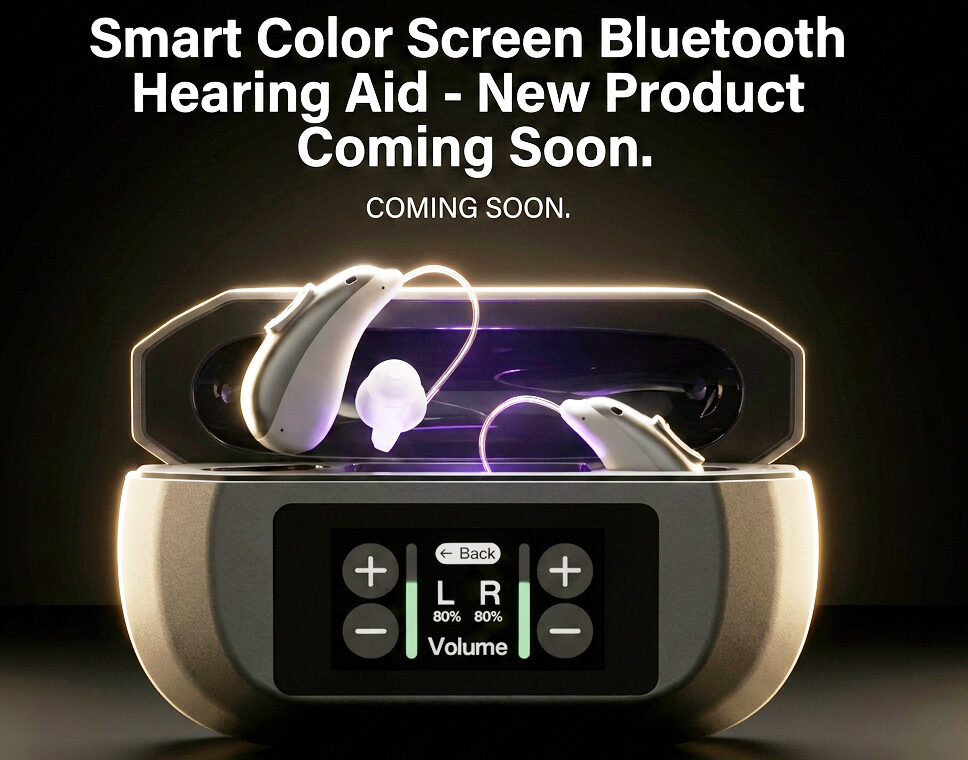
The shift toward eco-friendly and user-convenient power sources has reached a tipping point. Wholesalers are reporting a clear preference for lithium-ion rechargeable models over traditional zinc-air battery units. Goodmi’s latest RIC series, for instance, offers up to 25 hours of use on a single charge—a critical selling point for the North American and European markets.

3. Why RIC Models Lead the Wholesale Sector

RIC hearing aids have become the “sweet spot” for importers for three reasons:

  • Versatility: They fit a wide range of hearing loss profiles, reducing the need for extensive inventory diversity.
  • Discreet Aesthetics: Modern professional purchasers know that end-users prioritize the “invisible” look, which RIC models provide better than traditional BTE aids.
  • Higher Margins: As a premium tech product, RIC models allow distributors to maintain healthy margins while offering competitive value.

4. The Importance of a Certified Manufacturing Partner

With the expansion of the OTC (Over-the-Counter) market, compliance has become the ultimate filter for successful importers. Partnering with a manufacturer like Goodmi, who holds ISO 13485, CE, and FDA certifications, ensures that your products can enter the U.S. and European markets without regulatory friction.

Conclusion

The 2026 market is unforgiving to low-tech solutions. To capture the growing demand for high-end auditory care, wholesalers must prioritize AI-integrated, rechargeable RIC models that balance professional performance with consumer-grade ease of use.


Ready to elevate your portfolio with 2026’s leading RIC technology?

[Contact Goodmi Intelligent Today] for our latest wholesale price list and OEM/ODM capabilities. Let’s build the future of hearing together.

Submit Your Sourcing Request
Related Posts
The Silver Economy Opportunity: Building a High-Margin OTC Hearing Aid Brand

The convergence of global demographic aging and healthcare digitalization has given rise to a multi-billion-dollar market sector: the Silver Economy. As active older adults prioritize personal wellness and independence, traditional healthcare distribution models are being rapidly disrupted. Over-the-Counter (OTC) hearing devices now stand at the forefront of this commercial expansion. Historically, high entry costs, complex clinical fitting processes, and the social stigma of traditional medical devices kept market penetration low. Today, modern regulatory frameworks and consumer-friendly technology allow retailers, pharmacy networks, and direct-to-consumer (DTC) brands to introduce proprietary hearing health lines with exceptional profit margins.| 📈 Commercial Strategic Insight Launching a private label OTC hearing aid line allows businesses to capture long-term equity in the silver economy. By partnering with certified OEM manufacturing platforms utilizing 32-channel DSP technology, brands can launch consumer-grade, high-margin products without heavy R&D investments. Analyzing Drivers Behind the Silver Economy Hearing Aid Market Understanding the modern senior consumer is critical for successful market entry. Today’s aging population differs fundamentally from previous generations in buying behavior, digital adoption, and lifestyle expectations: Shift Toward Proactive Wellness: Older consumers view hearing care as part of overall cognitive health and active living rather than a late-stage medical intervention. Erasure of

Read More >>
Private Label Hearing Aids: A Step-by-Step Guide to Building Your Own Brand

The global Over-the-Counter (OTC) hearing device market is undergoing a massive transformation. As regulatory frameworks open up direct retail channels, healthcare providers, pharmacy chains, and direct-to-consumer (DTC) brands are presented with a highly lucrative opportunity: capturing high retail margins by launching their own private label hearing health lines. Instead of acting as a third-party distributor for legacy brands—where profit margins are capped and market competition is intense—building a proprietary brand allows companies to secure long-term customer equity and control their pricing strategy. Below is an execution-focused roadmap for scaling a private label OTC hearing aid brand, supported by certified medical manufacturing standards. 💡 Executive Summary Building a premium OTC hearing health brand does not require multi-million-dollar acoustic R&D. By leveraging pre-engineered, 32-channel DSP base architectures and custom physical branding from established OEM partners, brands can hit the market up to 70% faster with zero capital wasted on trial-and-error tooling. Selecting the Right Private Label Hearing Aid Architecture A resilient brand identity starts with reliable, market-tested hardware. Rather than reinventing acoustic engineering from scratch, leading medical device brands select proven, pre-certified hardware architectures tailored to specific consumer personas: Touchscreen Smart Charging Cases: Designed for modern consumers who prioritize intuitive touch controls,

Read More >>
Hearing Aid OEM vs ODM: What Is the Difference and Which Model Is Right for Your Brand?

As the Over-the-Counter (OTC) hearing health market continues to expand rapidly, healthcare distributors, pharmacy chains, and DTC e-commerce brands are eager to capitalize on growing consumer demand. However, when entering the market or scaling an existing product line, business owners face a critical strategic decision: Should you choose an OEM (Original Equipment Manufacturer) or an ODM (Original Design Manufacturer) partner? Understanding the distinction between hearing aid OEM vs ODM differences is essential for optimizing your capital allocation, product development timeline, and brand differentiation. At Goodmi Intelligent, we support global B2B clients with both high-efficiency OEM private labeling and full-scale ODM turnkey design. Key B2B Value Proposition: Whether you need rapid private labeling to capture immediate market share (OEM) or proprietary acoustic hardware with custom molds (ODM), Goodmi’s ISO 13485-certified facility provides the engineering scale and FDA-Ready compliance required for long-term growth.   At a Glance: Hearing Aid OEM vs. ODM Comparison Before selecting a manufacturing path for your private-label hearing health line, review how OEM and ODM models compare across key operational metrics: Sourcing Criteria OEM (Original Equipment Manufacturer) ODM (Original Design Manufacturer) Primary Focus Branding pre-engineered, market-proven hardware Developing custom industrial designs & exclusive molds Upfront R&D Investment Minimal

Read More >>

We'd like to work with you

Send us a message if you have any questions or request a quote. Our experts will give you a reply within 24 hours and help you select the right hearing aid you want.

Get A Free Quote

All of our products are available for sampling