2026 Hearing Aid Industry Trends: AI, Auracast, and the OTC Revolution

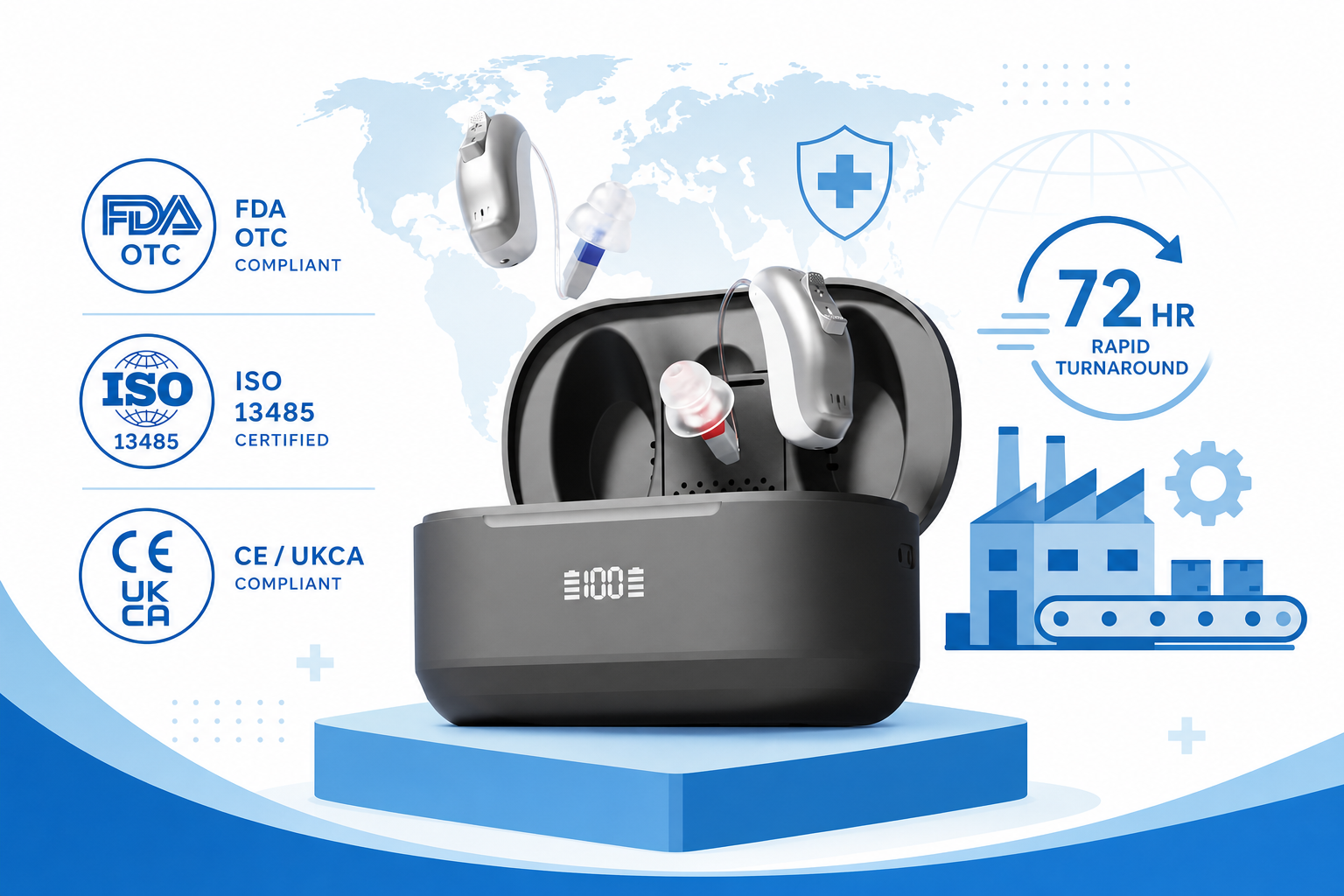
Goodmi GM-321 3U3 digital hearing aid with FDA OTC compliance, ISO 13485 certification, and 72-hour OEM prototyping

Table of Contents

The global hearing health ecosystem is undergoing an unprecedented shift. Driven by rapid advances in micro-acoustics, consumer electronics integration, and updated global regulatory frameworks, hearing devices are transitioning from traditional medical tools into intelligent, everyday health-tech wearables.

For healthcare retailers, pharmacy chains, and direct-to-consumer (DTC) brands, keeping pace with current hardware and software capabilities is critical for market leadership. Below is an executive analysis of the key technology and distribution trends shaping the hearing aid industry.

📡 Industry Trend Outlook

Next-generation hearing platforms merge on-device AI acoustic filtering, universal Auracast™ Bluetooth streaming, and consumer-friendly smart charging cases. Brands leveraging certified 32-channel DSP OEM architectures can deliver these cutting-edge capabilities directly to consumers at accessible price points.


On-Device AI Noise Isolation and Neural Sound Processing
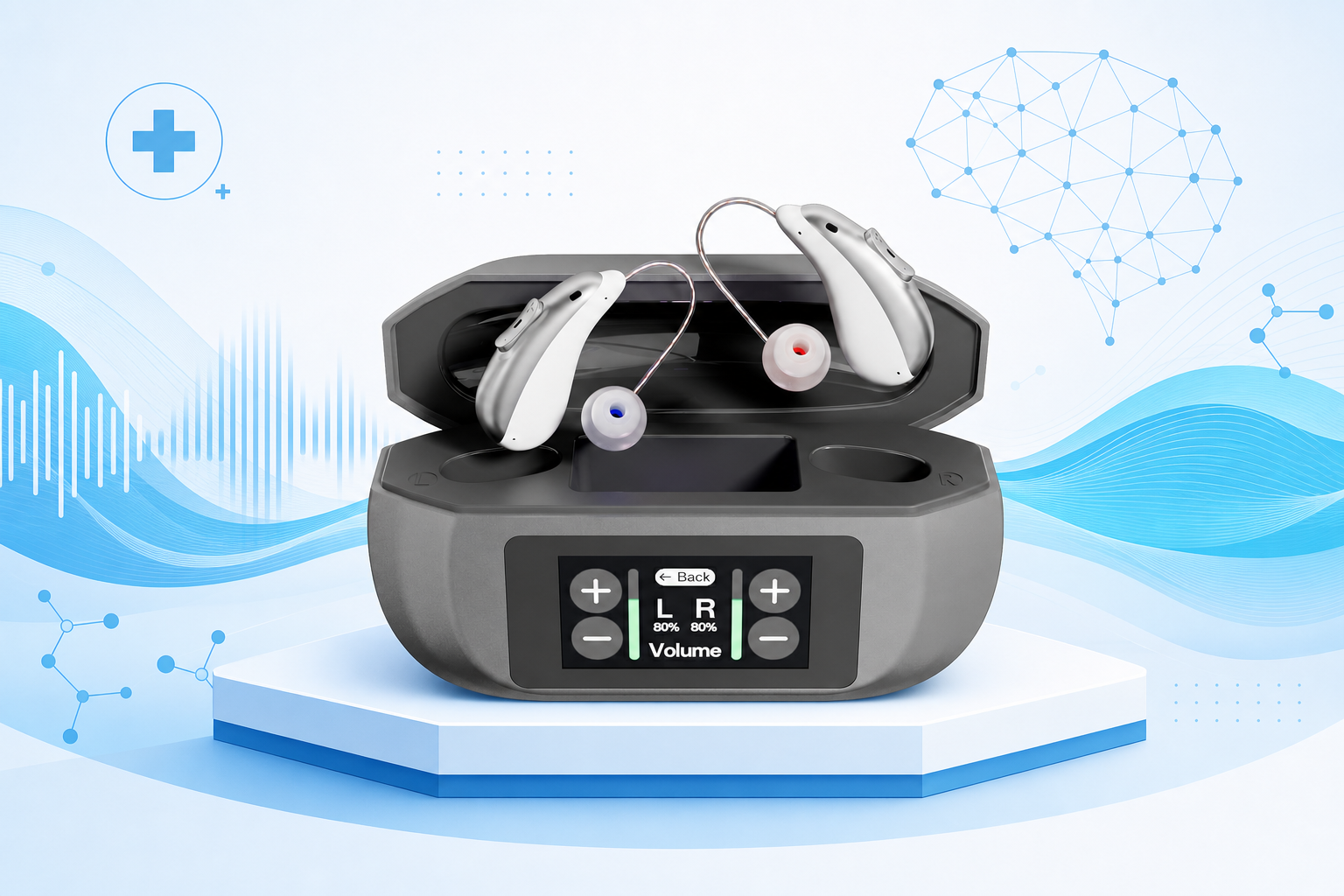
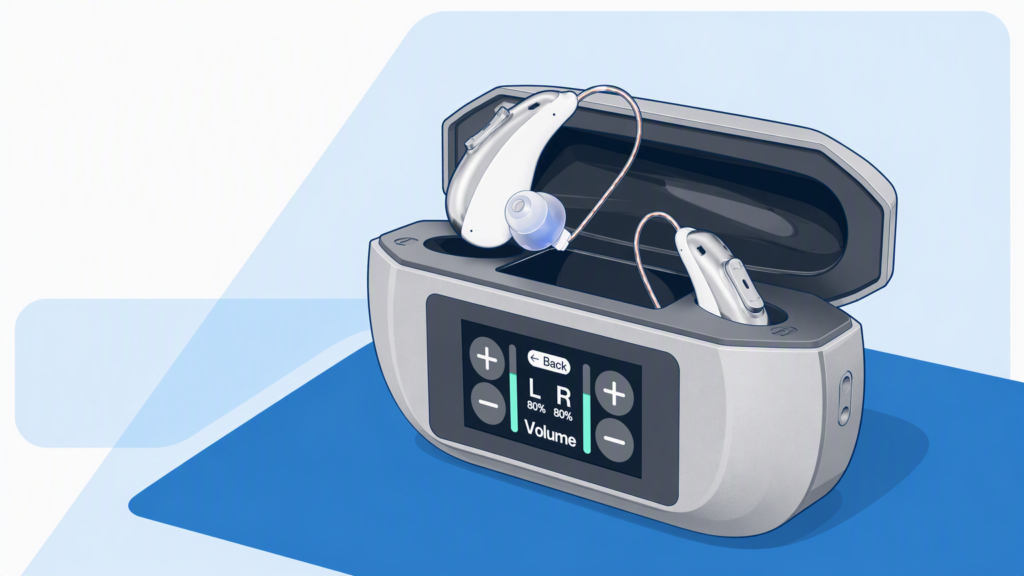
Goodmi GM-322 3U6 touchscreen OTC hearing aid with on-device AI sound processing and neural network noise isolation

A primary challenge with legacy amplification devices has been distinguishing speech from background environmental noise. Modern acoustic architectures solve this through deep neural network (DNN) algorithms executed directly on low-power DSP processors:

  • Real-Time Voice Separation: Advanced AI algorithms isolate human speech from chaotic environments—such as crowded restaurants or outdoor traffic—in milliseconds.
  • Sub-5ms Ultra-Low Latency: Processing delays are kept virtually imperceptible to the wearer, eliminating the echo effect common in older digital devices.
  • Adaptive Scene Recognition: Micro-sensors dynamically detect shifting acoustic environments, automatically adjusting gain and directional focus without manual intervention.

Universal Connectivity with Auracast Bluetooth Streaming
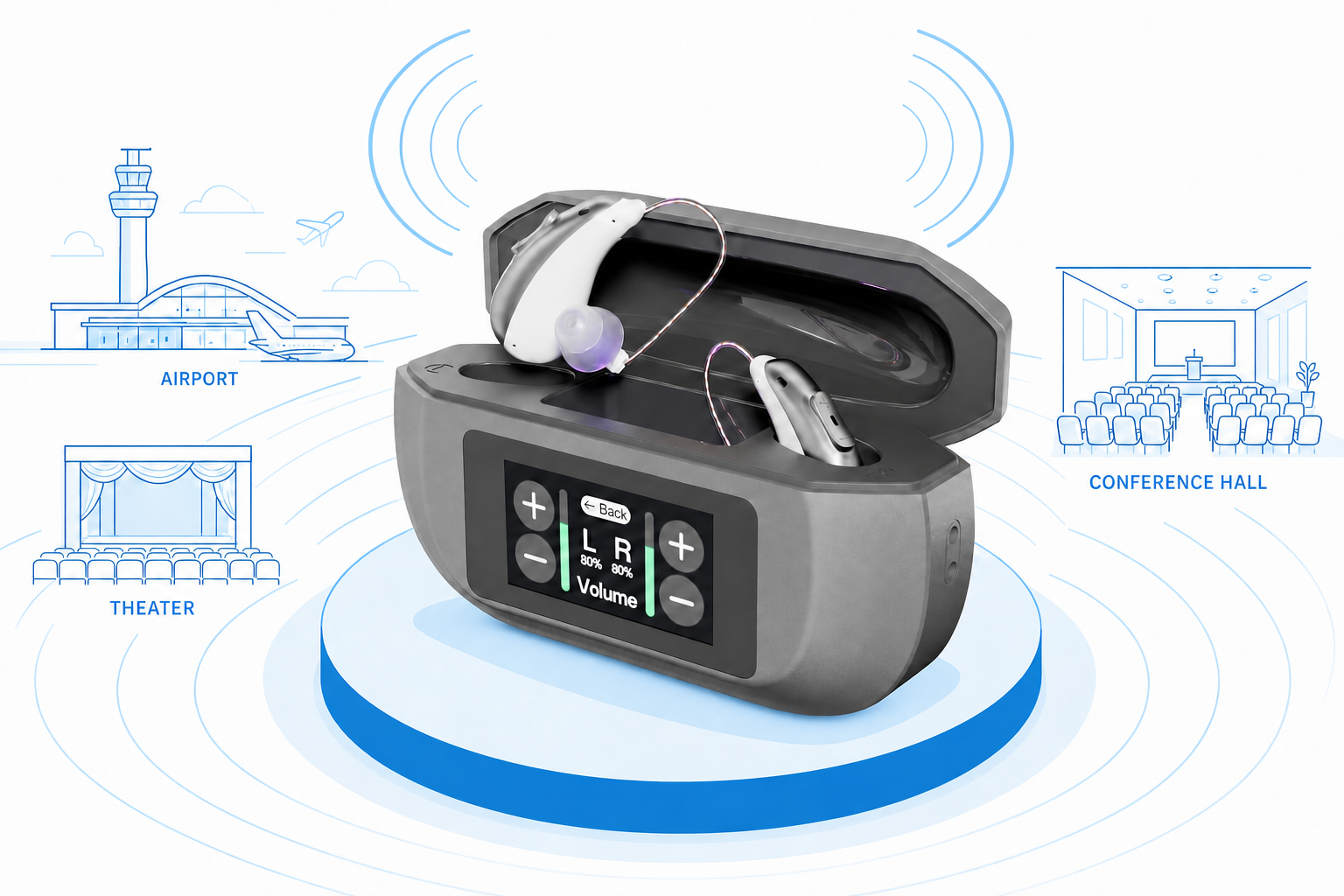
Goodmi GM-322 (3U6)smart hearing aid with universal public broadcast audio streaming in airports, theaters, and conference halls

Wireless connectivity has evolved from basic smartphone pairing into a universal public broadcast standard. Integration of Bluetooth® LE Audio and Auracast™ technology redefines how users interact with audio in daily life:

Public Audio Broadcasting
Users can tune directly into public broadcast streams at airports, theaters, places of worship, and conference halls without intermediary hardware.
Extended Battery Efficiency
Low-energy Bluetooth protocols drastically reduce power consumption during continuous streaming, extending lithium-ion battery performance.

Smart Touchscreen Cases and Ergonomic Form Factors

Physical product design is moving firmly away from bulky, clinical aesthetics toward sleek, consumer-centric ergonomics that eliminate social stigma:

  • Smart Touchscreen Charging Cases: Integrated color touch displays allow wearers to adjust volume levels, change noise modes, and check battery life without relying on mobile apps.
  • Open-Ear Clip-On Wearability: Ergonomic ear-clip and open-ear designs reduce ear-canal pressure while maintaining a stylish, earbud-like profile for active users.
  • Low-Profile Invisible CIC & RIC Units: For users prioritizing maximum discretion, ultra-compact Completely-in-Canal (CIC) and Receiver-in-Canal (RIC) models offer virtually invisible wearability.

The Expansion of Private Label OTC Hearing Devices

Regulatory frameworks such as the U.S. FDA Over-the-Counter (OTC) regulations have permanently lowered distribution barriers. Retailers and brand owners can now establish high-margin private label hearing lines through certified OEM factories:

Market RegionCompliance FrameworkOEM Turnkey Advantage
United StatesFDA 21 CFR Part 800 (OTC Regulations)Pre-verified establishment files & compliant retail packaging
European UnionCE Medical Directive / ISO 13485 QMSAudit-ready technical files backed by medical-grade manufacturing
United KingdomUKCA Marking RequirementsComplete UKCA technical file ready for rapid distribution
Global FreightFCC, RoHS, REACH, UN38.3 & MSDS100% compliant lithium battery and transport safety pass rate

Frequently Asked Questions

What are the key benefits of AI noise processing in modern hearing devices?

AI processing isolates speech from complex background noise in real time, improving voice clarity without amplifying surrounding environmental chatter.

Do OTC hearing aids require audiologist fittings?

No. Certified OTC hearing devices are engineered for self-fitting via intuitive mobile apps or smart charging cases, allowing direct retail distribution without prescriptions.

How fast can a private label OTC hearing aid line be launched?

By leveraging established ISO 13485 OEM partners, virtual 3D renders are ready in 8 hours, physical branded samples ship in 72 hours, and initial production runs complete in weeks.


Build Your Next-Gen Hearing Brand

Partner with an established ISO 13485 medical manufacturer to access 32-channel AI acoustic platforms, factory-direct pricing, and rapid sample prototyping.

Request Your 72-Hour Custom Sample

Submit Your Sourcing Request
Related Posts
Matte dark-grey oval OTC hearing aid charging case with dual digital battery level indicators and red-core silicone ear domes
The Silver Economy Opportunity: Building a High-Margin OTC Hearing Aid Brand

The convergence of global demographic aging and healthcare digitalization has given rise to a multi-billion-dollar market sector: the Silver Economy. As active older adults prioritize personal wellness and independence, traditional healthcare distribution models are being rapidly disrupted. Over-the-Counter (OTC) hearing devices now stand at the forefront of this commercial expansion. Historically, high entry costs, complex clinical fitting processes, and the social stigma of traditional medical devices kept market penetration low. Today, modern regulatory frameworks and consumer-friendly technology allow retailers, pharmacy networks, and direct-to-consumer (DTC) brands to introduce proprietary hearing health lines with exceptional profit margins.| 📈 Commercial Strategic Insight Launching a private label OTC hearing aid line allows businesses to capture long-term equity in the silver economy. By partnering with certified OEM manufacturing platforms utilizing 32-channel DSP technology, brands can launch consumer-grade, high-margin products without heavy R&D investments. Analyzing Drivers Behind the Silver Economy Hearing Aid Market Understanding the modern senior consumer is critical for successful market entry. Today’s aging population differs fundamentally from previous generations in buying behavior, digital adoption, and lifestyle expectations: Shift Toward Proactive Wellness: Older consumers view hearing care as part of overall cognitive health and active living rather than a late-stage medical intervention. Erasure of

Read More >>
Private Label 32 Channel RIC Hearing Aid with Touchscreen Smart Charging Case - OEM ODM Service
Private Label Hearing Aids: A Step-by-Step Guide to Building Your Own Brand

The global Over-the-Counter (OTC) hearing device market is undergoing a massive transformation. As regulatory frameworks open up direct retail channels, healthcare providers, pharmacy chains, and direct-to-consumer (DTC) brands are presented with a highly lucrative opportunity: capturing high retail margins by launching their own private label hearing health lines. Instead of acting as a third-party distributor for legacy brands—where profit margins are capped and market competition is intense—building a proprietary brand allows companies to secure long-term customer equity and control their pricing strategy. Below is an execution-focused roadmap for scaling a private label OTC hearing aid brand, supported by certified medical manufacturing standards. 💡 Executive Summary Building a premium OTC hearing health brand does not require multi-million-dollar acoustic R&D. By leveraging pre-engineered, 32-channel DSP base architectures and custom physical branding from established OEM partners, brands can hit the market up to 70% faster with zero capital wasted on trial-and-error tooling. Selecting the Right Private Label Hearing Aid Architecture A resilient brand identity starts with reliable, market-tested hardware. Rather than reinventing acoustic engineering from scratch, leading medical device brands select proven, pre-certified hardware architectures tailored to specific consumer personas: Touchscreen Smart Charging Cases: Designed for modern consumers who prioritize intuitive touch controls,

Read More >>
Goodmi Hearing Aid OEM ODM Factory - Customize Your Hearing Aid Brand with 3000+ sqm Smart Manufacturing
Hearing Aid OEM vs ODM: What Is the Difference and Which Model Is Right for Your Brand?

  As the Over-the-Counter (OTC) hearing health market continues to expand rapidly, healthcare distributors, pharmacy chains, and DTC e-commerce brands are eager to capitalize on growing consumer demand. However, when entering the market or scaling an existing product line, business owners face a critical strategic decision: Should you choose an OEM (Original Equipment Manufacturer) or an ODM (Original Design Manufacturer) partner? Understanding the distinction between hearing aid OEM vs ODM differences is essential for optimizing your capital allocation, product development timeline, and brand differentiation. At Goodmi Intelligent, we support global B2B clients with both high-efficiency OEM private labeling and full-scale ODM turnkey design. Key B2B Value Proposition: Whether you need rapid private labeling to capture immediate market share (OEM) or proprietary acoustic hardware with custom molds (ODM), Goodmi’s ISO 13485-certified facility provides the engineering scale and FDA-Ready compliance required for long-term growth.   At a Glance: Hearing Aid OEM vs. ODM Comparison Before selecting a manufacturing path for your private-label hearing health line, review how OEM and ODM models compare across key operational metrics: Sourcing Criteria OEM (Original Equipment Manufacturer) ODM (Original Design Manufacturer) Primary Focus Branding pre-engineered, market-proven hardware Developing custom industrial designs & exclusive molds Upfront R&D Investment

Read More >>

We'd like to work with you

Send us a message if you have any questions or request a quote. Our experts will give you a reply within 24 hours and help you select the right hearing aid you want.

Get A Free Quote

All of our products are available for sampling