The convergence of global demographic aging and healthcare digitalization has given rise to a multi-billion-dollar market sector: the Silver Economy. As active older adults prioritize personal wellness and independence, traditional healthcare distribution models are being rapidly disrupted. Over-the-Counter (OTC) hearing devices now stand at the forefront of this commercial expansion.
Historically, high entry costs, complex clinical fitting processes, and the social stigma of traditional medical devices kept market penetration low. Today, modern regulatory frameworks and consumer-friendly technology allow retailers, pharmacy networks, and direct-to-consumer (DTC) brands to introduce proprietary hearing health lines with exceptional profit margins.|

Launching a private label OTC hearing aid line allows businesses to capture long-term equity in the silver economy. By partnering with certified OEM manufacturing platforms utilizing 32-channel DSP technology, brands can launch consumer-grade, high-margin products without heavy R&D investments.
Analyzing Drivers Behind the Silver Economy Hearing Aid Market
Understanding the modern senior consumer is critical for successful market entry. Today’s aging population differs fundamentally from previous generations in buying behavior, digital adoption, and lifestyle expectations:
- Shift Toward Proactive Wellness: Older consumers view hearing care as part of overall cognitive health and active living rather than a late-stage medical intervention.
- Erasure of Medical Stigma: Sleek form factors reminiscent of modern wireless earbuds eliminate the discomfort associated with bulky legacy hearing aids.
- Demand for Retail & Online Accessibility: OTC regulations enable consumers to purchase certified hearing assistance directly from retail pharmacies and online stores without audiologist prescriptions.
Key Product Innovations Capturing Senior Consumer Demand
To succeed in the private label hearing device market, products must balance advanced acoustic engineering with effortless daily usability. Top-performing OEM hardware platforms feature specific user-centric design elements:
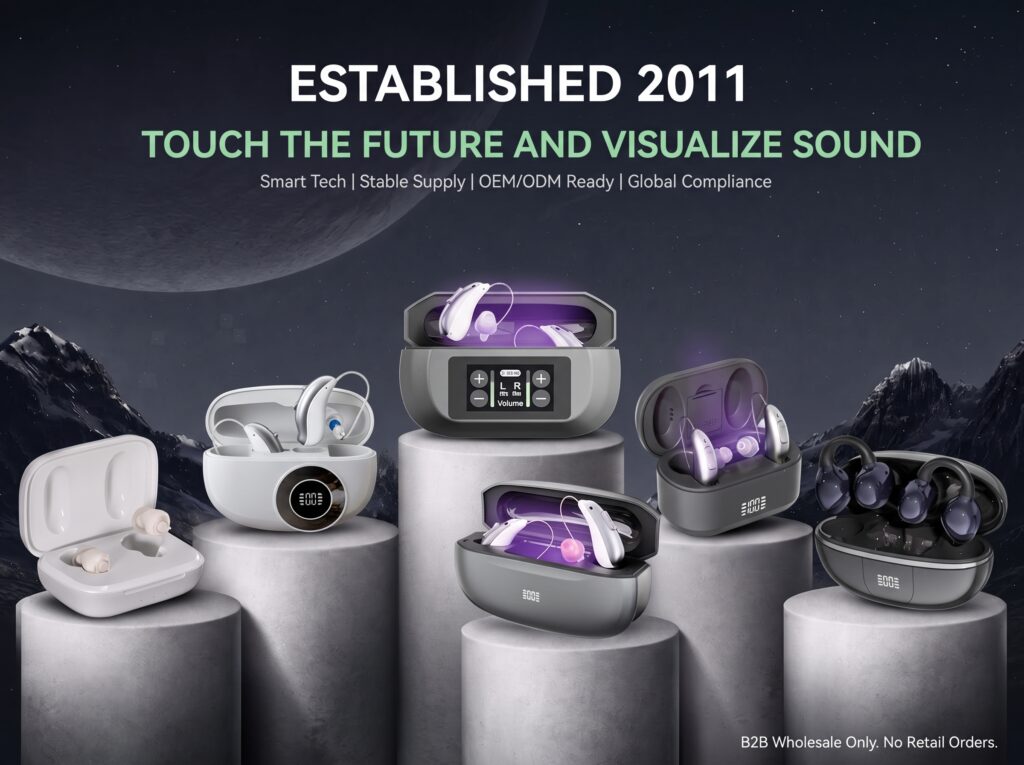
Open‑ear clip‑on and low‑profile invisible form factors reduce ear‑canal pressure, ensuring all‑day comfort for users with an active lifestyle.
Intuitive charging cases with real-time displays allow seniors to adjust volume and noise-cancellation modes without navigating smartphone apps.
Furthermore, integration of 32-channel Digital Signal Processing (DSP) and smart AI noise isolation ensures crystal-clear speech recognition in noisy environments.
Navigating Regulatory Approvals for Global Senior Health Markets
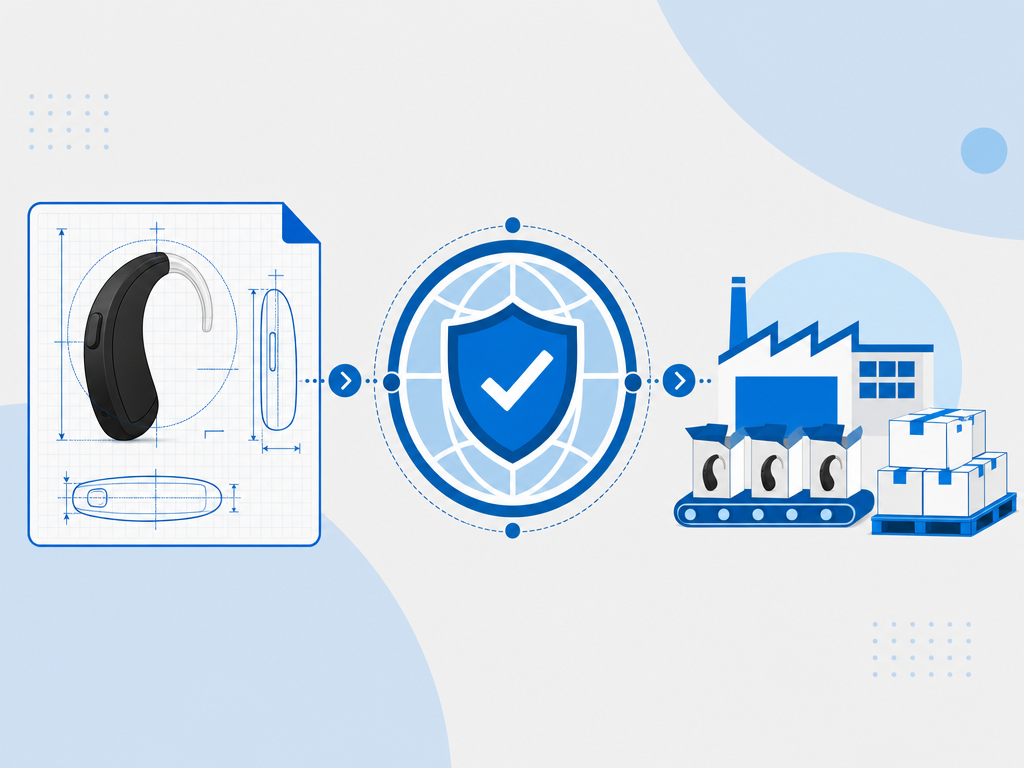
Entering international healthcare channels requires rigorous adherence to regional safety and quality standards. Partnering with an ISO 13485-certified manufacturer streamlines global market entry:
| Target Market | Regulatory Compliance Framework | OEM Manufacturer Qualification |
|---|---|---|
| North America | FDA 21 CFR Part 800 (OTC Hearing Aid Regulations) | FDA-ready establishment listing & compliant retail labeling |
| European Union | CE Medical Device Directive & ISO 13485 QMS | Full CE certification supported by audited medical‑grade production lines |
| United Kingdom | UKCA marking requirements | Complete UKCA technical file ready for distribution |
| Global Freight | FCC, RoHS, REACH, UN38.3 & MSDS | Certified lithium battery transport and environmental compliance |
Execution Path: From OEM Prototype to Retail Scale
Speed-to-market allows brands to establish early leadership in emerging retail channels. Established OEM partners facilitate seamless rapid-to-market workflows:
- Virtual Branding (8 Hours): Immediate 3D rendering of custom logos, custom metallic finishes, and retail packaging layouts.
- Physical Sample Verification (72 Hours): Inspection of fully functional custom-branded samples prior to mass order commitment.
- Scalable Production Lines: High-capacity manufacturing infrastructure capable of delivering up to 100,000 certified units per month.
Frequently Asked Questions
Why are OTC hearing aids considered a high-growth opportunity in the silver economy?
Because OTC regulations reduce retail prices while maintaining high profit margins, allowing non-traditional medical sellers, pharmacies, and DTC brands to capture growing senior consumer demand.
Do retailers need specialized medical distribution permits to sell OTC hearing aids?
In key markets like the U.S., FDA OTC regulations allow certified devices to be sold in general retail stores, pharmacy chains, and e-commerce platforms without prescription requirements.
What level of brand customization is available for private label orders?
OEM customization covers laser-engraved logos on hardware, custom housing colorways, multi-language quick-start guides, and branded gift box packaging.
Partner with an established ISO 13485 medical manufacturer to build your proprietary OTC hearing health brand with factory-direct pricing and rapid sampling.