As the Over-the-Counter (OTC) hearing health market continues to expand rapidly, healthcare distributors, pharmacy chains, and DTC e-commerce brands are eager to capitalize on growing consumer demand.
However, when entering the market or scaling an existing product line, business owners face a critical strategic decision: Should you choose an OEM (Original Equipment Manufacturer) or an ODM (Original Design Manufacturer) partner?
Understanding the distinction between hearing aid OEM vs ODM differences is essential for optimizing your capital allocation, product development timeline, and brand differentiation. At Goodmi Intelligent, we support global B2B clients with both high-efficiency OEM private labeling and full-scale ODM turnkey design.
At a Glance: Hearing Aid OEM vs. ODM Comparison
Before selecting a manufacturing path for your private-label hearing health line, review how OEM and ODM models compare across key operational metrics:
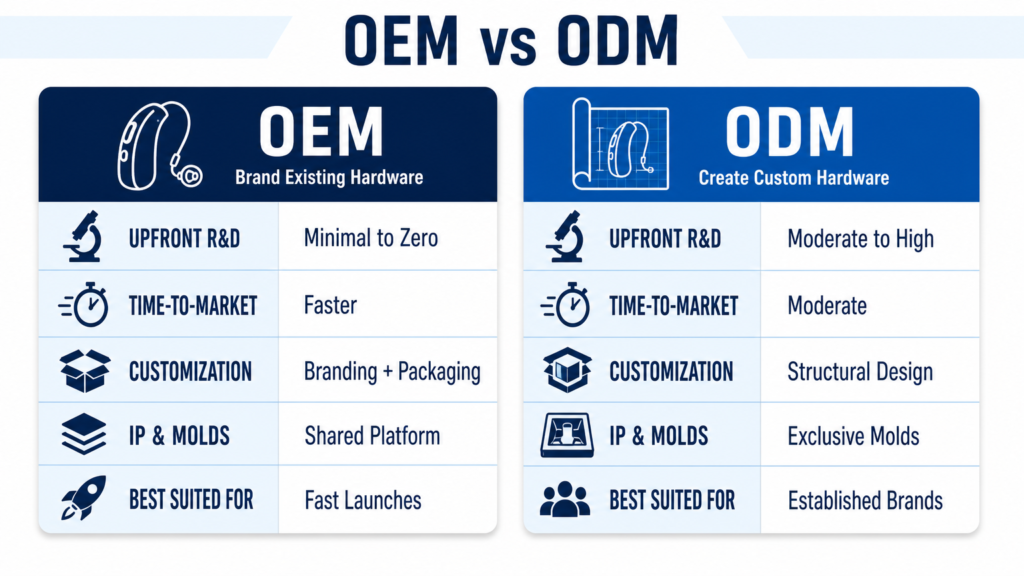
| Sourcing Criteria | OEM (Original Equipment Manufacturer) | ODM (Original Design Manufacturer) |
|---|---|---|
| Primary Focus | Branding pre-engineered, market-proven hardware | Developing custom industrial designs & exclusive molds |
| Upfront R&D Investment | Minimal to zero (Leverage existing tooling) | Moderate to high (Custom tooling & ID engineering) |
| Time-to-Market | Ultra-Fast (72-hour sampling / weeks to ship) | Moderate (Requires mold building & pilot runs) |
| Customization Depth | Logo, packaging, custom colorways | Full structural, ergonomic, & PCBA electronic design |
| IP & Mold Exclusivity | Shared platform with branded customization | Exclusive mold rights for your target market |
| Best Suited For | Fast product launches & e-commerce testing | Established brands seeking proprietary market moat |
1. What Is Hearing Aid OEM (Original Equipment Manufacturing)?
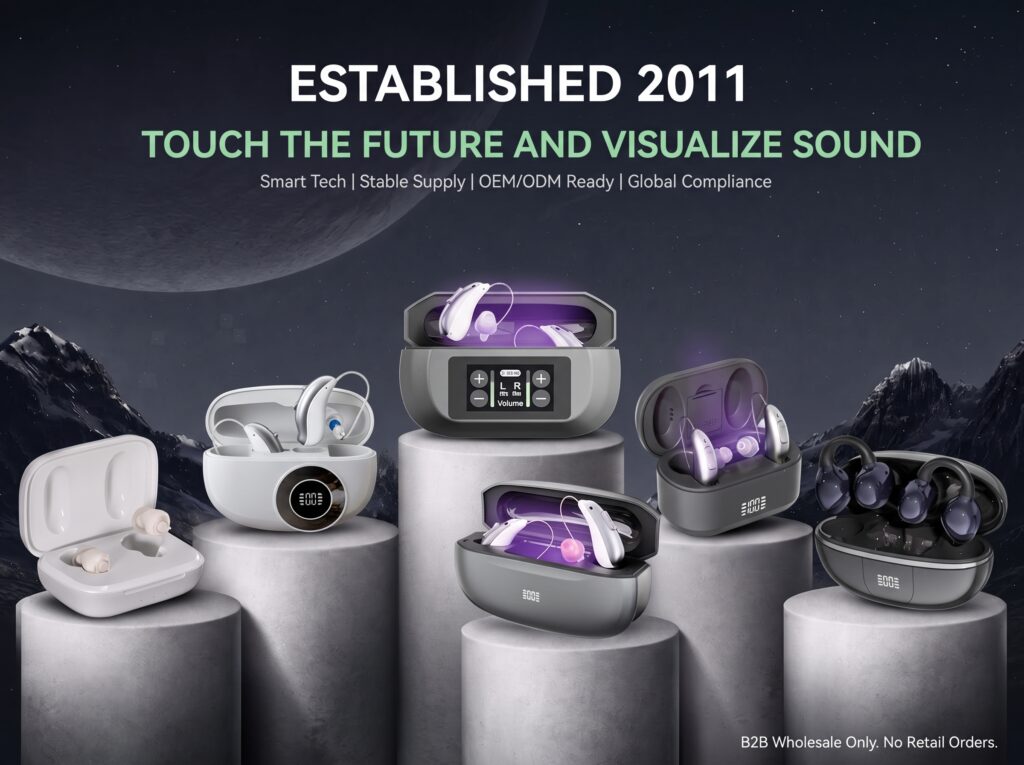
In the OEM model, Goodmi acts as the factory that produces pre-engineered, fully certified medical-grade hearing devices. You select a high-performing base model—such as our touchscreen dual-control charging cases, open-ear clip-on models (GM-321/GM-972), or ultra-compact invisible CIC/RIC units—and customize it with your brand identity.
Key Advantages of the OEM Model:
- Minimal Financial Risk: You don’t need to invest tens of thousands of dollars into custom plastic injection molds or acoustic PCBA design.
- Turnkey Compliance: All Goodmi OEM platforms are pre-certified with FDA-Ready registration, CE, UKCA, and ISO 13485 compliance.
- Agile Execution: Receive 3D renderings in 8 hours and physical branded samples within 72 hours to validate your sales channel.
2. What Is Hearing Aid ODM (Original Design Manufacturing)?
In the ODM model, Goodmi collaborates with your brand to conceptualize, design, and manufacture a completely original hearing device from scratch. From custom ergonomic housing tailored for specific demographics to unique electronic layout and specialized App software features, our team brings your vision to life.
Key Advantages of the ODM Model:
- Complete Product Differentiation: Create a unique aesthetic and feature set that eliminates direct price comparison with competitors.
- Exclusive Market Rights: Secure proprietary mold agreements to prevent rival brands from copying your exact industrial design.
- Targeted Innovation: Integrate custom acoustic profiles, proprietary sensor arrays, or specialized charging case form factors.
3. Key Factors: How to Choose the Right Model for Your Brand
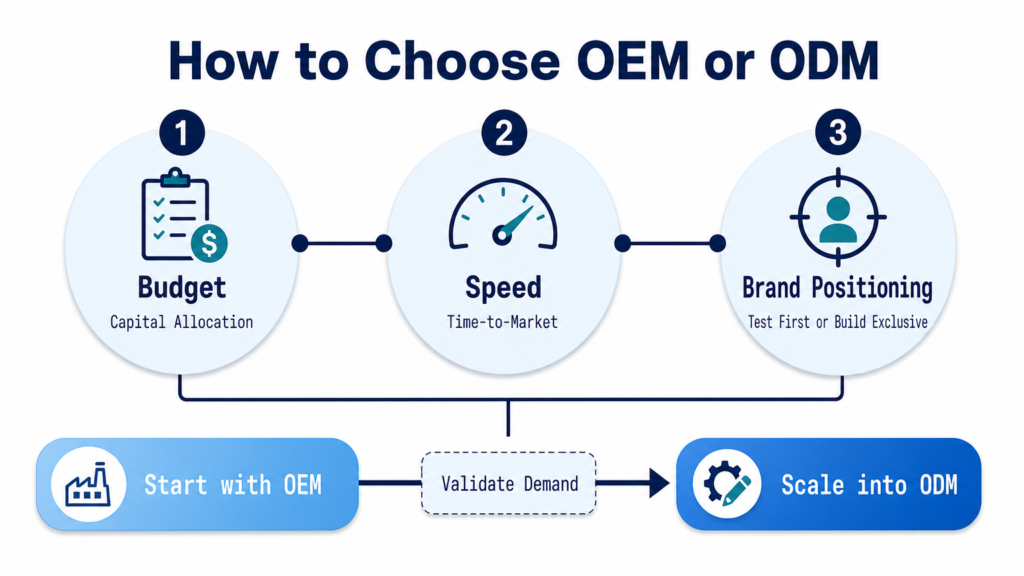
When deciding between OEM and ODM for your next OTC hearing aid procurement, evaluate your business based on three core parameters:
A. Budget and Capital Allocation
If your priority is preserving cash flow for marketing, channel acquisition, and inventory PPC, OEM is the ideal choice. If you have substantial capital and wish to build a long-term brand equity moat with patented hardware, ODM provides higher enterprise value.
B. Speed-to-Market Requirements
Timing can make or break a commercial campaign. If you need to capitalize on upcoming Q4 retail shelf opportunities or seasonal e-commerce traffic, Goodmi’s OEM private-label pathway allows you to go from concept to mass inventory in record time.
C. Desired Brand Positioning
If you are testing the OTC hearing health category for the first time alongside your existing product lines, starting with OEM reduces market entry friction. As your sales volume grows, you can seamlessly transition to an ODM project with Goodmi to develop exclusive second-generation hardware.
Why Global Buyers Partner with Goodmi for OEM & ODM Projects
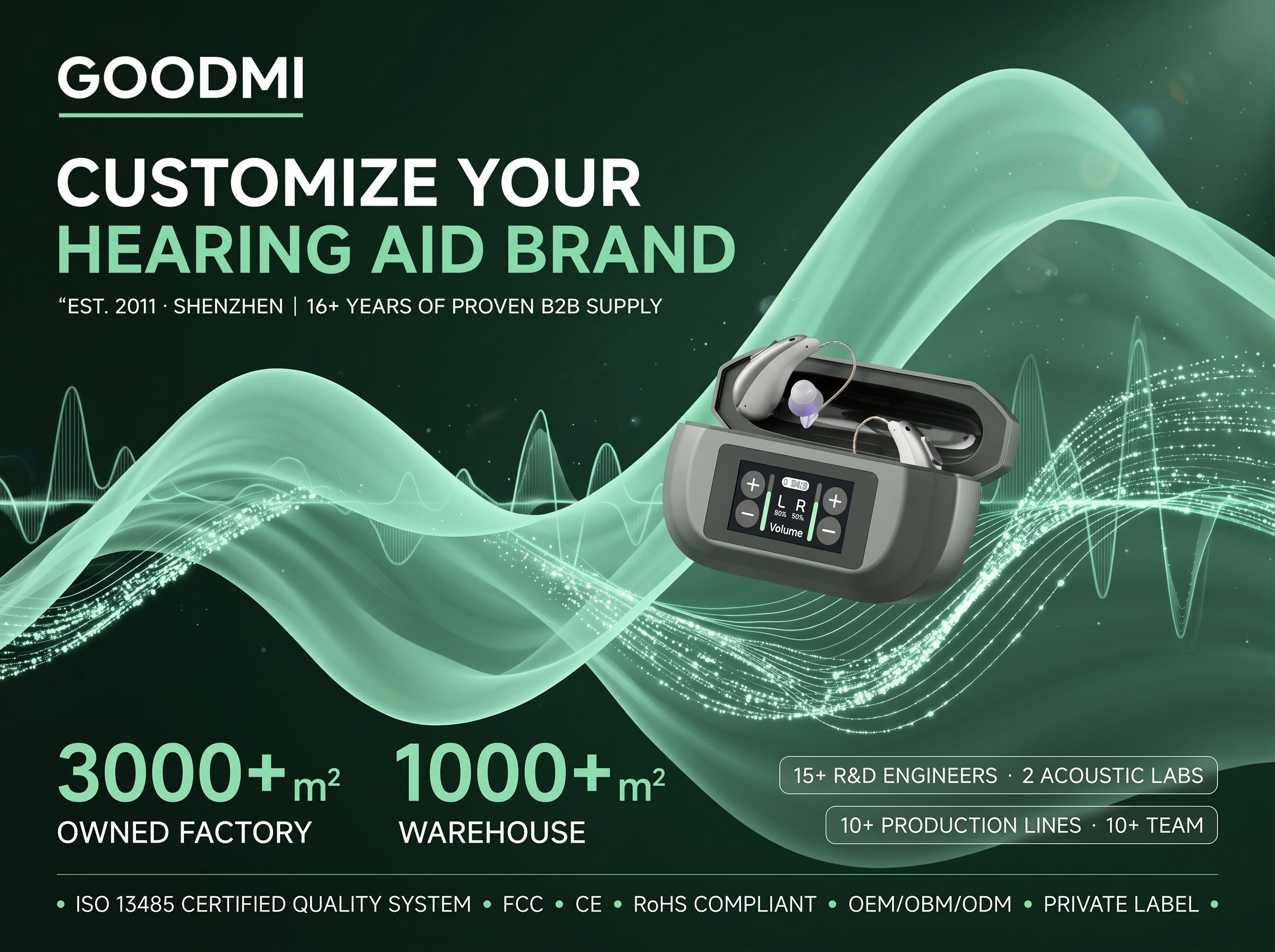
Operating out of a state-of-the-art 3,000 square meter SGS-verified factory with a monthly output of 100,000 units, Goodmi provides the infrastructure needed for both manufacturing models:
- Senior Acoustic R&D Team: 10+ dedicated acoustic and hardware engineers specializing in 32-channel DSP tuning and AI noise cancellation algorithms.
- Uncompromised Quality Control: 100% factory inspection operating under strict ISO 13485 medical device quality management systems.
- Comprehensive Customization: Complete support for private-label packaging, laser logo etching, custom colorways, and white-label mobile app UI development.

Frequently Asked Questions (FAQ)
Can we start with an OEM model and later upgrade to a full ODM project?
Yes[cite: 2]. Many of our most successful international distributors begin with our proven OEM platforms to test market demand and establish brand traction. Once sales volume scales, we transition them into exclusive ODM projects with customized molds.
How does Goodmi protect our intellectual property (IP) during an ODM project?
We execute strict Non-Disclosure Agreements (NDAs) and non-compete contracts prior to project initiation. Your proprietary industrial designs, custom molds, and custom software code remain strictly confidential and exclusive to your brand.
Are both OEM and ODM products fully certified for North American and European imports?
Yes[cite: 2]. Whether you choose OEM private-label or ODM custom manufacturing, all final products are produced under ISO 13485 guidelines and backed by complete compliance documentation packages (FDA-Ready, CE, UKCA, FCC, and RoHS).
Find the Perfect Manufacturing Strategy for Your OTC Brand
Ready to launch your medical-grade hearing aid line? Contact Goodmi’s engineering team today to discuss your OEM or ODM project specifications and receive custom quotes.