What types of hearing aids are there?

Table of Contents

There are five main types of hearing aids: Behind-The-Ear (BTE), Receiver-In-Canal (RIC), In-The-Ear (ITE), In-The-Canal (ITC), and Completely-In-Canal (CIC). Each type offers different features, sizes, and performance levels to suit various degrees of hearing loss and personal preferences.

Knowing the differences between them helps you match the right product to your needs—whether you want advanced technology, discreet design, or ease of use.

What is a Behind-The-Ear (BTE) hearing aid?

A BTE hearing aid rests comfortably behind the ear and connects to a custom ear mold or dome via a clear tube.

Research findings show that BTEs to be ideal for people with moderate to profound hearing loss because they offer strong amplification and are easy to handle.

They also come with large batteries, making them suitable for extended use, and many models are rechargeable or Bluetooth-enabled.

How is Receiver-In-Canal (RIC) different from BTE?

A RIC hearing aid is similar in shape to a BTE but is smaller and more discreet. The receiver (speaker) is placed inside the ear canal instead of the main body.

This gives you more natural sound quality and allows the device to stay lightweight and low-profile.

RICs are best for mild to moderate hearing loss and are a popular choice for those seeking comfort and performance.

What are In-The-Ear (ITE) hearing aids like?

In-the-ear (ITE) hearing aids offer a balance between visibility and functionality.

Unlike behind-the-ear (BTE) models, ITE hearing aids have no visible external wires or tubes, making them one of the most discreet styles available. All components—including the microphone, amplifier, and speaker—are housed within a single shell that sits flush with the ear.

Many people like ITE models for their ease of handling and comfort. They’re ideal for individuals with mild to severe hearing loss and can accommodate additional features like volume controls, telecoil, or Bluetooth connectivity, depending on the size and model.

For people who prefer a cleaner aesthetic without sacrificing performance, ITE hearing aids are a smart, professional choice—especially for those seeking a good balance between visibility, customization, and technology.

What are Completely-In-Canal (CIC) hearing aids?

CIC hearing aids are tiny and fit entirely inside the ear canal, making them almost invisible. Many people like how discreet they are, though they can be harder to adjust or clean.

These are great for mild to moderate hearing loss and for those who prefer a very subtle solution.

Since they’re smaller, they often don’t include directional mics or Bluetooth, but their comfort and aesthetics are unmatched.

Are Invisible-In-Canal (IIC) hearing aids even smaller?

Yes. IIC hearing aids are the smallest available and sit deep within the ear canal, making them invisible to others.

They are best for mild hearing loss. However, due to their size, they usually don’t have advanced features or long battery life.

Still, for cosmetic reasons, IICs can be the perfect fit for some users.

What type of hearing aid is best for you?

Choosing the right type depends on several factors: the degree of your hearing loss, your manual dexterity, lifestyle, and appearance preferences.

For example, if you have severe hearing loss, a BTE might be the best choice. But if you value aesthetics, CIC or IIC models may work better.

Trying different styles and consulting with a specialist can help narrow down the best option.

Are there hearing aids with Bluetooth and smart features?

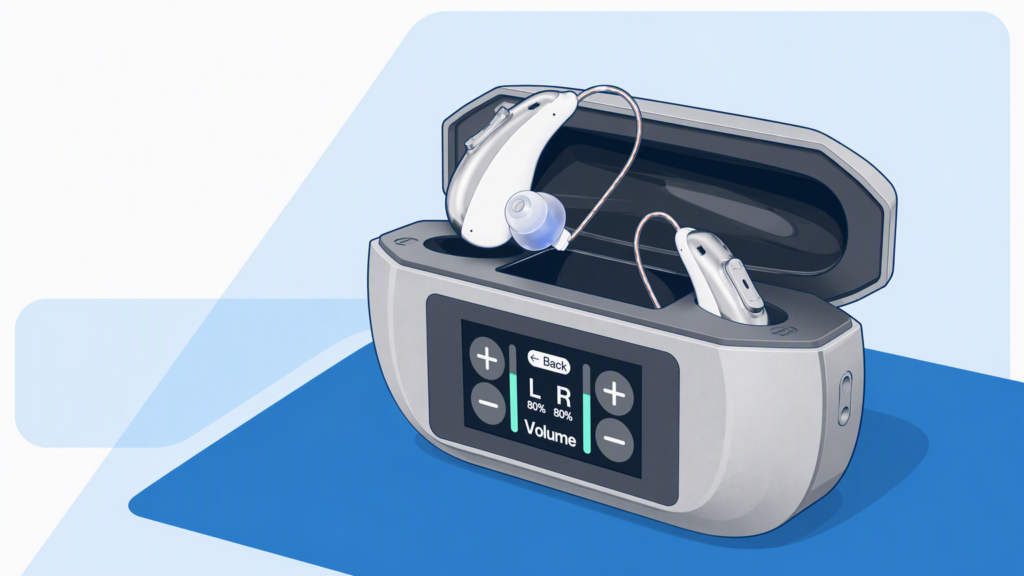
Yes, many modern hearing aids now come with Bluetooth connectivity, allowing you to stream calls, music, and TV audio directly to your ears.

Nowadays, almost all types of hearing aids offered by our company can be customized with Bluetooth function. If you want to know more, you can contact us.

What if you want rechargeable hearing aids?

Rechargeable hearing aids are now widely available, and almost all types of hearing aids have the feature of being rechargeable.

Instead of changing disposable batteries, you just place them in a charging case overnight. This is more convenient and eco-friendly for daily use.

Some models even include programmable hearing aids or UV disinfection features, adding even more convenience to your routine.

Now that you know the main types of hearing aids—BTE, RIC, ITE, ITC, CIC, and IIC—you’re better prepared to make an informed decision based on your hearing needs and preferences.

Each type offers distinct advantages, whether you prioritize power, size, discretion, or smart features.

If you’re a hearing aid distributor or wholesale buyer looking for high-quality or OEM/ODM hearing aids, contact us today for catalogs, pricing, and expert support. We’re ready to help you find the best products for your market.
Submit Your Sourcing Request
Related Posts
Goodmi GM-321 3U3 digital hearing aid with FDA OTC compliance, ISO 13485 certification, and 72-hour OEM prototyping
2026 Hearing Aid Industry Trends: AI, Auracast, and the OTC Revolution

The global hearing health ecosystem is undergoing an unprecedented shift. Driven by rapid advances in micro-acoustics, consumer electronics integration, and updated global regulatory frameworks, hearing devices are transitioning from traditional medical tools into intelligent, everyday health-tech wearables. For healthcare retailers, pharmacy chains, and direct-to-consumer (DTC) brands, keeping pace with current hardware and software capabilities is critical for market leadership. Below is an executive analysis of the key technology and distribution trends shaping the hearing aid industry. 📡 Industry Trend Outlook Next-generation hearing platforms merge on-device AI acoustic filtering, universal Auracast™ Bluetooth streaming, and consumer-friendly smart charging cases. Brands leveraging certified 32-channel DSP OEM architectures can deliver these cutting-edge capabilities directly to consumers at accessible price points. On-Device AI Noise Isolation and Neural Sound Processing A primary challenge with legacy amplification devices has been distinguishing speech from background environmental noise. Modern acoustic architectures solve this through deep neural network (DNN) algorithms executed directly on low-power DSP processors: Real-Time Voice Separation: Advanced AI algorithms isolate human speech from chaotic environments—such as crowded restaurants or outdoor traffic—in milliseconds. Sub-5ms Ultra-Low Latency: Processing delays are kept virtually imperceptible to the wearer, eliminating the echo effect common in older digital devices. Adaptive Scene Recognition: Micro-sensors

Read More >>
Matte dark-grey oval OTC hearing aid charging case with dual digital battery level indicators and red-core silicone ear domes
The Silver Economy Opportunity: Building a High-Margin OTC Hearing Aid Brand

The convergence of global demographic aging and healthcare digitalization has given rise to a multi-billion-dollar market sector: the Silver Economy. As active older adults prioritize personal wellness and independence, traditional healthcare distribution models are being rapidly disrupted. Over-the-Counter (OTC) hearing devices now stand at the forefront of this commercial expansion. Historically, high entry costs, complex clinical fitting processes, and the social stigma of traditional medical devices kept market penetration low. Today, modern regulatory frameworks and consumer-friendly technology allow retailers, pharmacy networks, and direct-to-consumer (DTC) brands to introduce proprietary hearing health lines with exceptional profit margins.| 📈 Commercial Strategic Insight Launching a private label OTC hearing aid line allows businesses to capture long-term equity in the silver economy. By partnering with certified OEM manufacturing platforms utilizing 32-channel DSP technology, brands can launch consumer-grade, high-margin products without heavy R&D investments. Analyzing Drivers Behind the Silver Economy Hearing Aid Market Understanding the modern senior consumer is critical for successful market entry. Today’s aging population differs fundamentally from previous generations in buying behavior, digital adoption, and lifestyle expectations: Shift Toward Proactive Wellness: Older consumers view hearing care as part of overall cognitive health and active living rather than a late-stage medical intervention. Erasure of

Read More >>
Private Label 32 Channel RIC Hearing Aid with Touchscreen Smart Charging Case - OEM ODM Service
Private Label Hearing Aids: A Step-by-Step Guide to Building Your Own Brand

The global Over-the-Counter (OTC) hearing device market is undergoing a massive transformation. As regulatory frameworks open up direct retail channels, healthcare providers, pharmacy chains, and direct-to-consumer (DTC) brands are presented with a highly lucrative opportunity: capturing high retail margins by launching their own private label hearing health lines. Instead of acting as a third-party distributor for legacy brands—where profit margins are capped and market competition is intense—building a proprietary brand allows companies to secure long-term customer equity and control their pricing strategy. Below is an execution-focused roadmap for scaling a private label OTC hearing aid brand, supported by certified medical manufacturing standards. 💡 Executive Summary Building a premium OTC hearing health brand does not require multi-million-dollar acoustic R&D. By leveraging pre-engineered, 32-channel DSP base architectures and custom physical branding from established OEM partners, brands can hit the market up to 70% faster with zero capital wasted on trial-and-error tooling. Selecting the Right Private Label Hearing Aid Architecture A resilient brand identity starts with reliable, market-tested hardware. Rather than reinventing acoustic engineering from scratch, leading medical device brands select proven, pre-certified hardware architectures tailored to specific consumer personas: Touchscreen Smart Charging Cases: Designed for modern consumers who prioritize intuitive touch controls,

Read More >>

We'd like to work with you

Send us a message if you have any questions or request a quote. Our experts will give you a reply within 24 hours and help you select the right hearing aid you want.

Get A Free Quote

All of our products are available for sampling