The global hearing health ecosystem is undergoing an unprecedented shift. Driven by rapid advances in micro-acoustics, consumer electronics integration, and updated global regulatory frameworks, hearing devices are transitioning from traditional medical tools into intelligent, everyday health-tech wearables.
For healthcare retailers, pharmacy chains, and direct-to-consumer (DTC) brands, keeping pace with current hardware and software capabilities is critical for market leadership. Below is an executive analysis of the key technology and distribution trends shaping the hearing aid industry.
Next-generation hearing platforms merge on-device AI acoustic filtering, universal Auracast™ Bluetooth streaming, and consumer-friendly smart charging cases. Brands leveraging certified 32-channel DSP OEM architectures can deliver these cutting-edge capabilities directly to consumers at accessible price points.
On-Device AI Noise Isolation and Neural Sound Processing
A primary challenge with legacy amplification devices has been distinguishing speech from background environmental noise. Modern acoustic architectures solve this through deep neural network (DNN) algorithms executed directly on low-power DSP processors:
- Real-Time Voice Separation: Advanced AI algorithms isolate human speech from chaotic environments—such as crowded restaurants or outdoor traffic—in milliseconds.
- Sub-5ms Ultra-Low Latency: Processing delays are kept virtually imperceptible to the wearer, eliminating the echo effect common in older digital devices.
- Adaptive Scene Recognition: Micro-sensors dynamically detect shifting acoustic environments, automatically adjusting gain and directional focus without manual intervention.
Universal Connectivity with Auracast Bluetooth Streaming

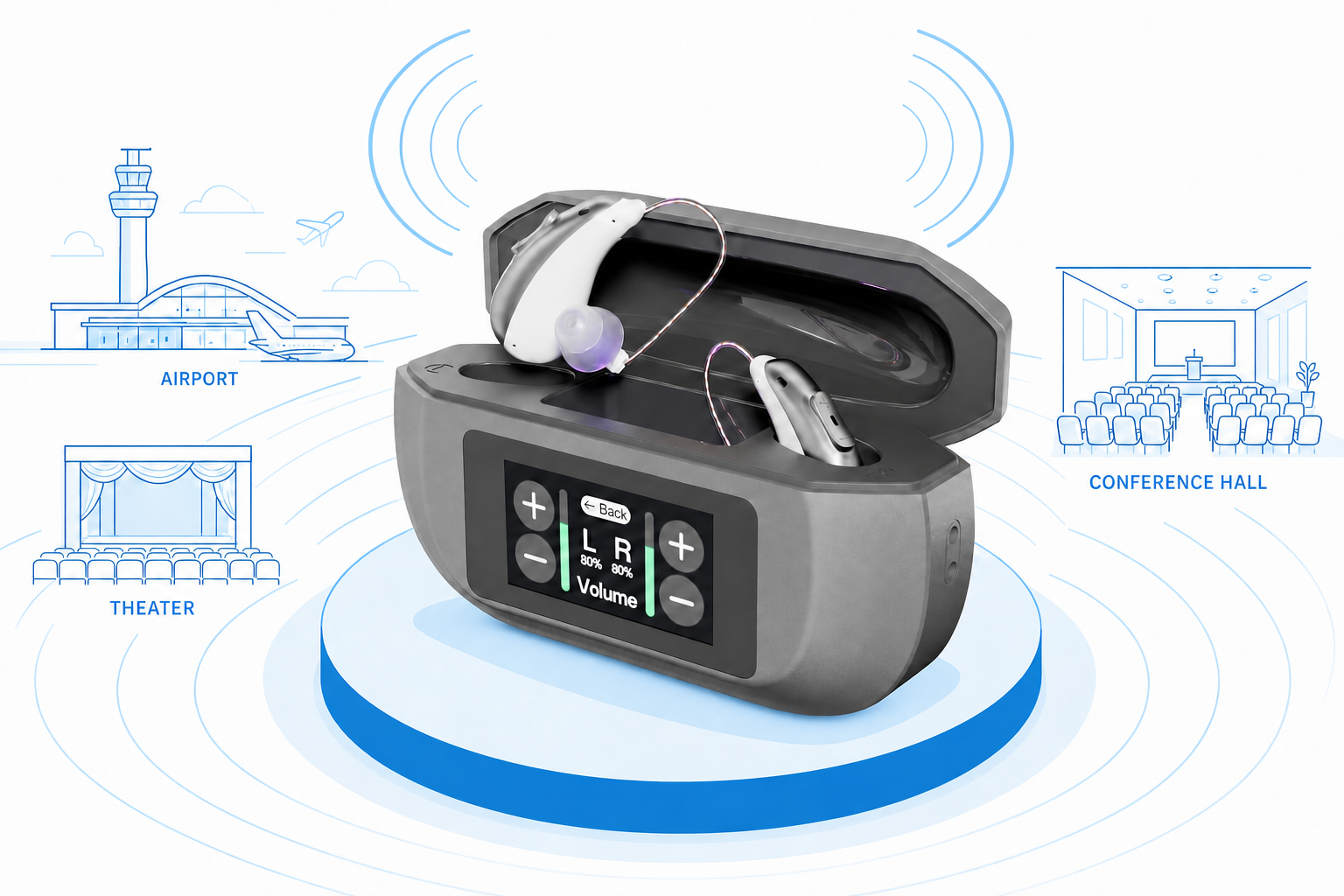
Wireless connectivity has evolved from basic smartphone pairing into a universal public broadcast standard. Integration of Bluetooth® LE Audio and Auracast™ technology redefines how users interact with audio in daily life:
Users can tune directly into public broadcast streams at airports, theaters, places of worship, and conference halls without intermediary hardware.
Low-energy Bluetooth protocols drastically reduce power consumption during continuous streaming, extending lithium-ion battery performance.
Smart Touchscreen Cases and Ergonomic Form Factors
Physical product design is moving firmly away from bulky, clinical aesthetics toward sleek, consumer-centric ergonomics that eliminate social stigma:
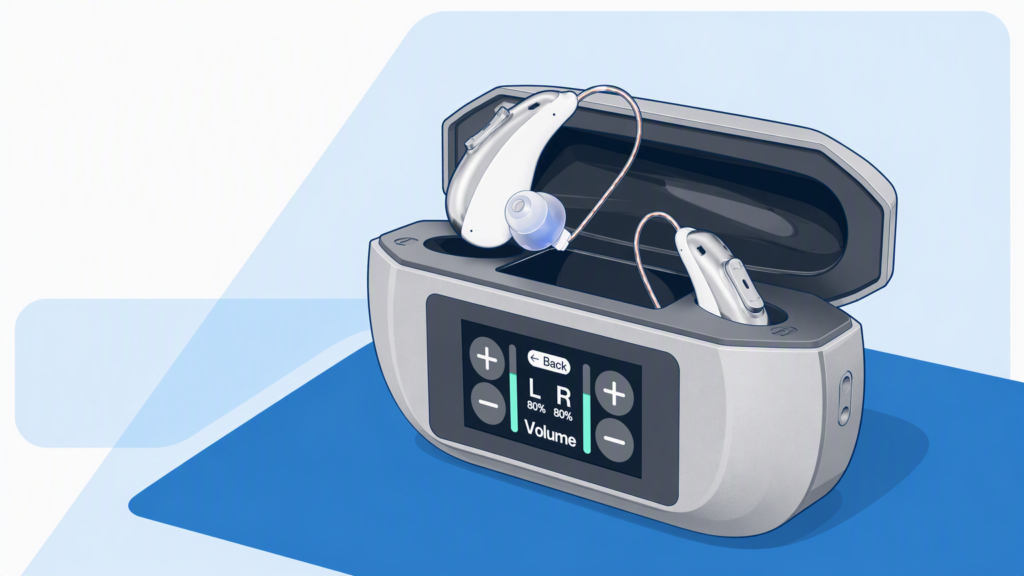
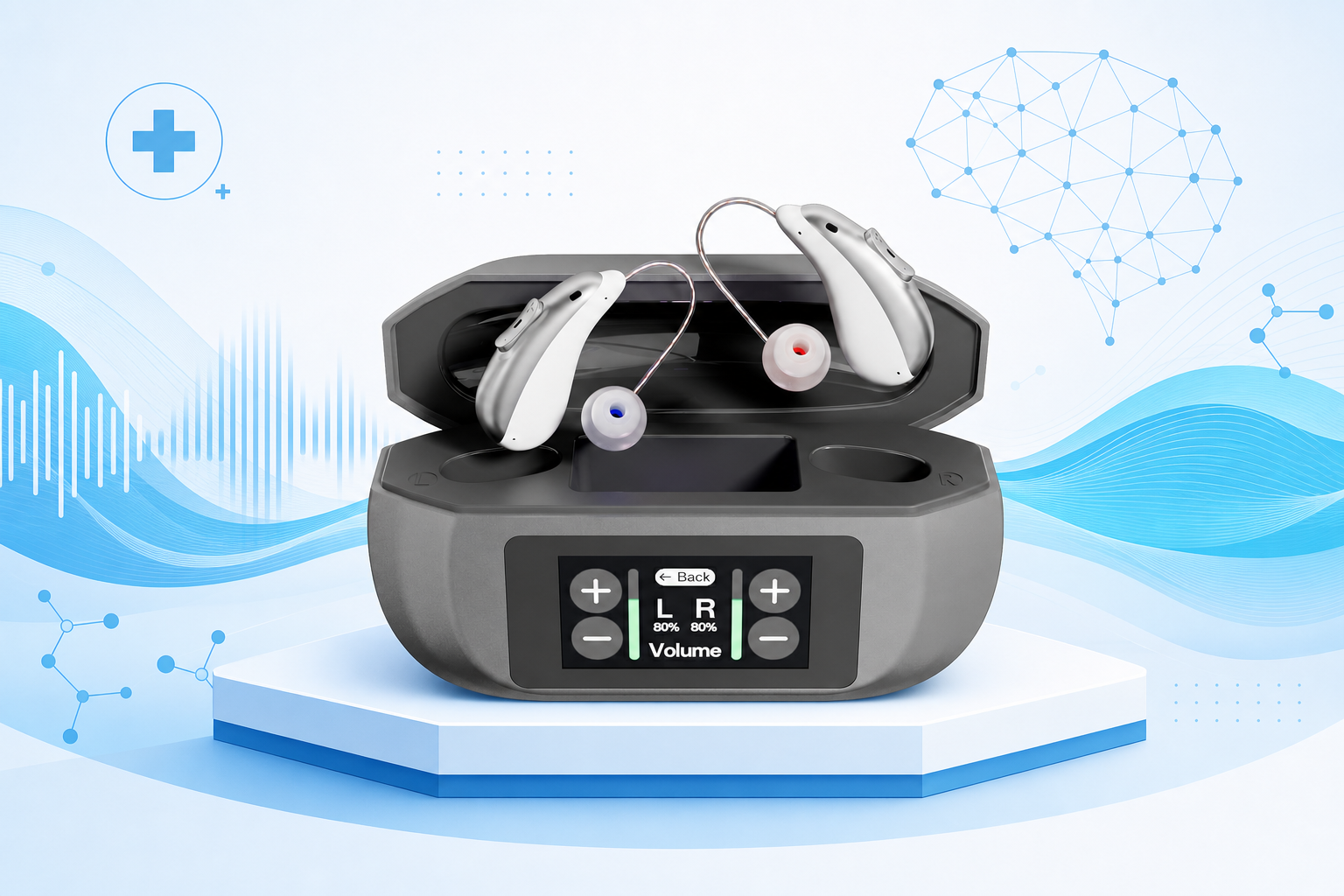
- Smart Touchscreen Charging Cases: Integrated color touch displays allow wearers to adjust volume levels, change noise modes, and check battery life without relying on mobile apps.
- Open-Ear Clip-On Wearability: Ergonomic ear-clip and open-ear designs reduce ear-canal pressure while maintaining a stylish, earbud-like profile for active users.
- Low-Profile Invisible CIC & RIC Units: For users prioritizing maximum discretion, ultra-compact Completely-in-Canal (CIC) and Receiver-in-Canal (RIC) models offer virtually invisible wearability.
The Expansion of Private Label OTC Hearing Devices
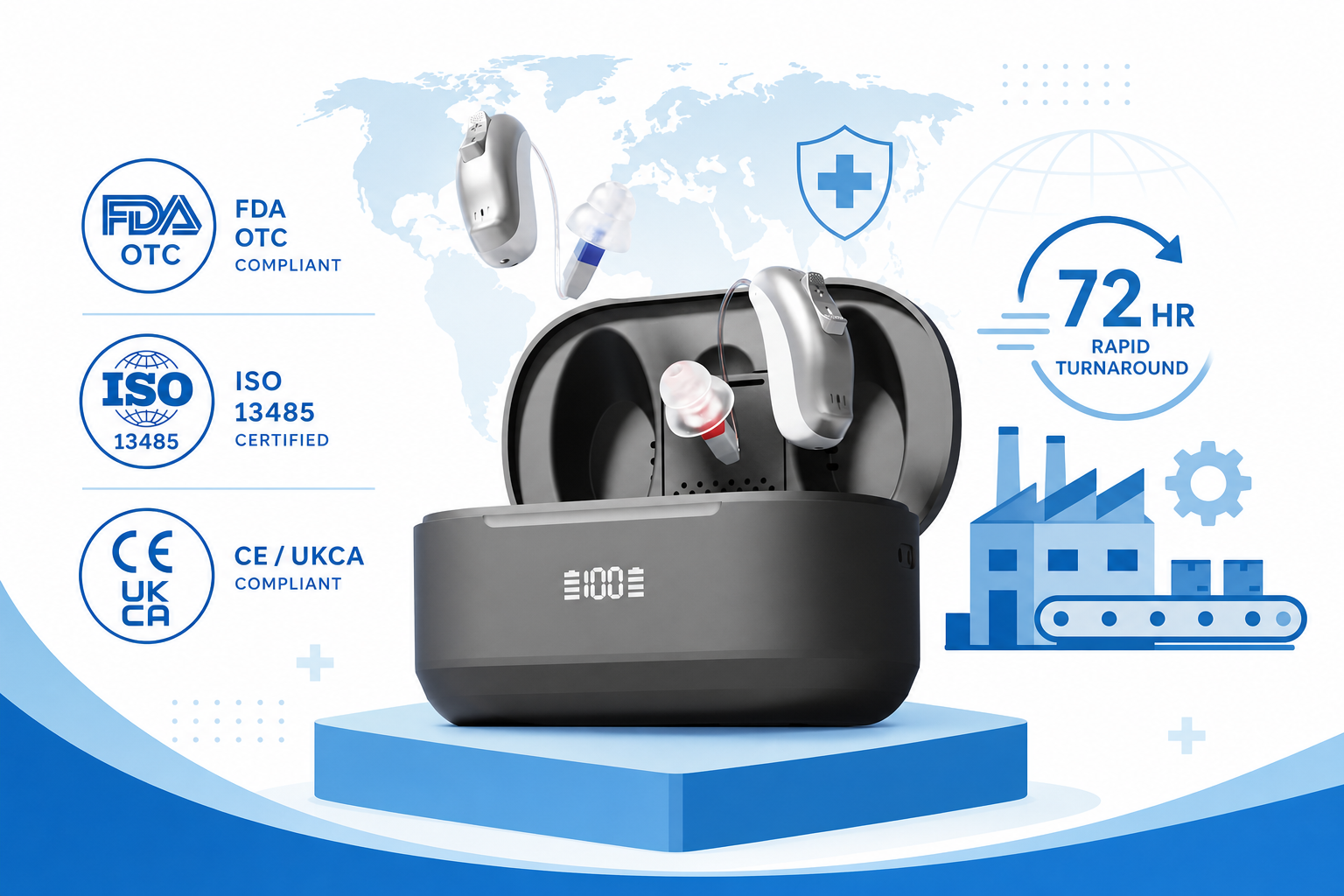
Regulatory frameworks such as the U.S. FDA Over-the-Counter (OTC) regulations have permanently lowered distribution barriers. Retailers and brand owners can now establish high-margin private label hearing lines through certified OEM factories:
| Market Region | Compliance Framework | OEM Turnkey Advantage |
|---|---|---|
| United States | FDA 21 CFR Part 800 (OTC Regulations) | Pre-verified establishment files & compliant retail packaging |
| European Union | CE Medical Directive / ISO 13485 QMS | Audit-ready technical files backed by medical-grade manufacturing |
| United Kingdom | UKCA Marking Requirements | Complete UKCA technical file ready for rapid distribution |
| Global Freight | FCC, RoHS, REACH, UN38.3 & MSDS | 100% compliant lithium battery and transport safety pass rate |
Frequently Asked Questions
What are the key benefits of AI noise processing in modern hearing devices?
AI processing isolates speech from complex background noise in real time, improving voice clarity without amplifying surrounding environmental chatter.
Do OTC hearing aids require audiologist fittings?
No. Certified OTC hearing devices are engineered for self-fitting via intuitive mobile apps or smart charging cases, allowing direct retail distribution without prescriptions.
How fast can a private label OTC hearing aid line be launched?
By leveraging established ISO 13485 OEM partners, virtual 3D renders are ready in 8 hours, physical branded samples ship in 72 hours, and initial production runs complete in weeks.
Partner with an established ISO 13485 medical manufacturer to access 32-channel AI acoustic platforms, factory-direct pricing, and rapid sample prototyping.