For decades, the global hearing aid market has been dominated by a handful of traditional legacy brands. While these legacy manufacturers built the foundation of the industry, their traditional distribution models come with significant drawbacks for modern healthcare distributors, pharmacy chains, and private-label brands: inflated wholesale costs, long product development cycles, and rigid channel restrictions.
As the Over-the-Counter (OTC) market accelerates through 2026, a new generation of Tier-1 medical-grade manufacturers is disrupting the status quo. Leading this shift is Goodmi Intelligent, offering global buyers a highly competitive alternative to expensive legacy suppliers without compromising acoustic precision or regulatory compliance.
At a Glance: Goodmi vs. Traditional Legacy Brands
Before diving into the detailed analysis, review how next-gen manufacturing aligns with modern B2B sourcing requirements compared to legacy supply chains:
| Key Sourcing Metric | Traditional Legacy Brands | Goodmi (Next-Gen OEM/ODM) |
|---|---|---|
| Wholesale Unit Cost | High (Layered markup & brand premium) | Factory-Direct (Tier-1 competitive pricing) |
| Retail Margin Space | Restricted by strict MAP policies | High (Enables flexible pricing strategy) |
| OEM/ODM Flexibility | Very limited or unavailable | Full private-label, packaging & UI customization |
| R&D & Sampling Speed | Months to quarters | 8-hour rendering / 72-hour physical sampling |
| Product Innovation | Slow adoption of consumer tech trends | App & Screen Dual Control, 32-Channel DSP |
| Global Compliance | FDA / CE Certified | FDA-Ready, CE MDR, UKCA, ISO 13485 |
1. Direct Factory Margins vs. Inflated Legacy Markups
The primary barrier when sourcing from legacy hearing aid brands is their complex distribution hierarchy. By the time a device reaches a retail distributor or healthcare chain, its price has been driven up by brand licensing, regional master distributors, and heavy clinical sales overhead.
Goodmi operates a state-of-the-art 3,000 square meter SGS-verified factory with a monthly capacity of 100,000 units. By sourcing directly from a Tier-1 manufacturer, B2B importers eliminate middleman markups. This gives distributors the margin flexibility required to price competitively on Amazon, in retail pharmacies, or through DTC channels while maintaining healthy profit margins.
2. Feature Agility: Consumer-Centric Tech vs. Legacy Rigidity
Legacy brands often iterate slowly, taking years to incorporate features that modern consumers demand. In contrast, Goodmi combines medical-grade acoustic engineering with agile consumer electronics innovation.
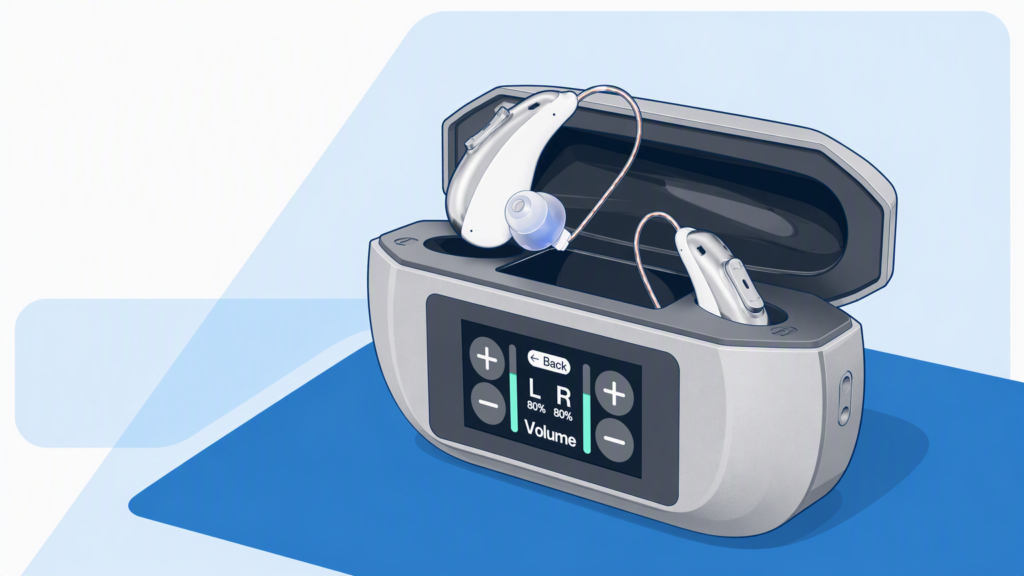
- App & Screen Dual Control: While legacy devices often require standalone fitting equipment or complex audiologist software, Goodmi features interactive touchscreen charging cases paired with intuitive mobile apps for seamless real-time adjustments.
- 32-Channel Digital Signal Processing (DSP): Goodmi integrates advanced multi-channel sound processing and AI noise reduction, delivering speech clarity in complex environments rivaling expensive prescription models.
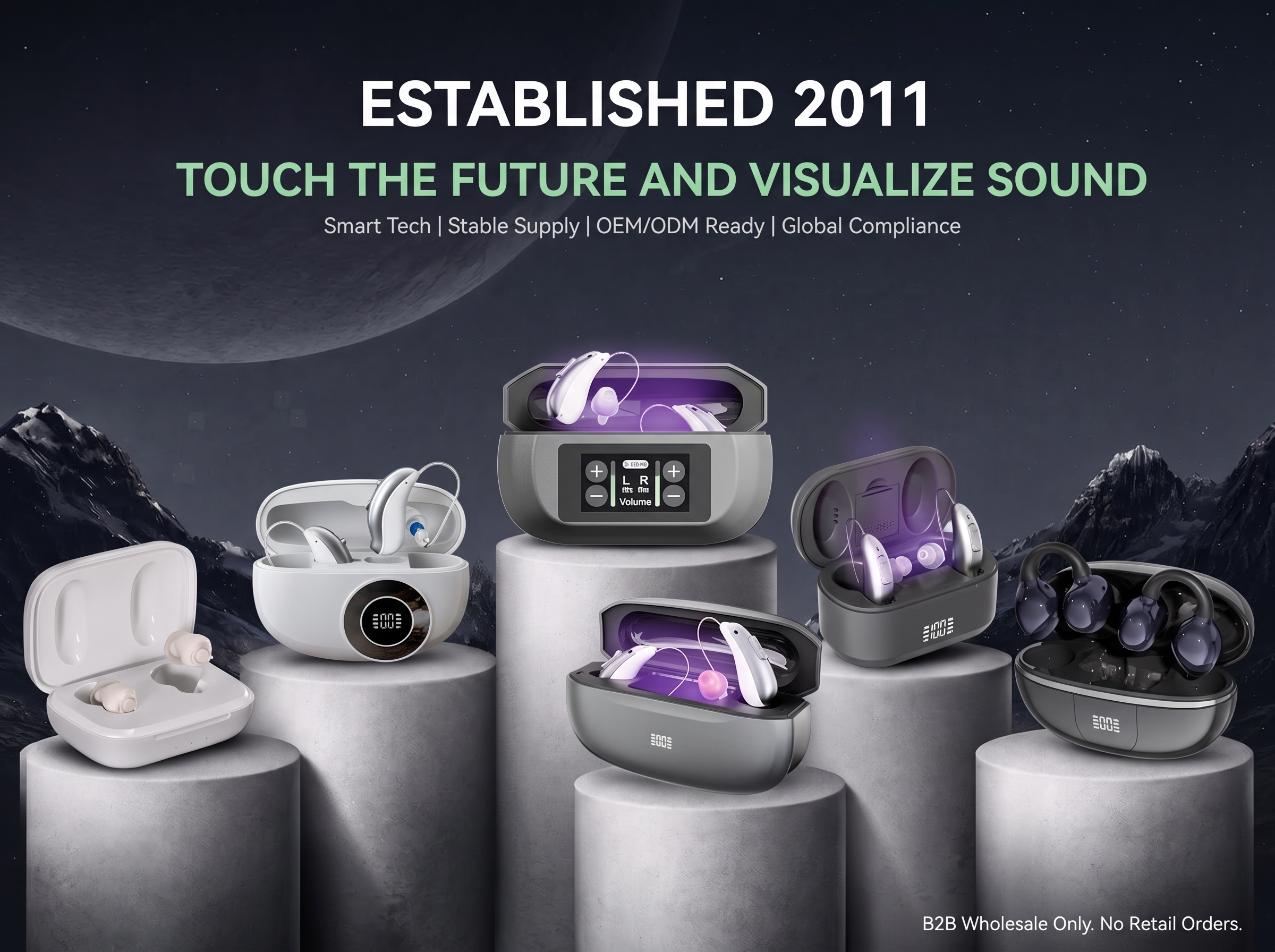
- Ergonomic & Invisible Designs: From open-ear clip-on models to ultra‑compact invisible CIC/RIC units, Goodmi designs address modern aesthetic preferences that reduce wearing hesitation among younger and active seniors.
3. Rapid OEM/ODM Response vs. Bureaucratic Delays
In the fast-moving healthcare e-commerce landscape, timing is everything. Launching a new product line with a traditional manufacturer can take six months to a year due to rigid corporate approval layers.
Goodmi streamlines private-label development with a dedicated team of 10+ senior acoustic engineers:
- 8-Hour 3D Rendering: Rapid visual feedback on custom industrial designs and brand concepts.
- 72-Hour Physical Sampling: Working prototypes delivered fast for client evaluation and testing.
- Flexible Customization: Tailored app UI, custom colorways, customized user manuals, and retail-ready private-label packaging.
4. Uncompromised Medical Compliance & Global Certification
Lower cost should never mean lower quality or regulatory risk. One major reason global distributors switch to Goodmi is our uncompromised commitment to international healthcare standards.
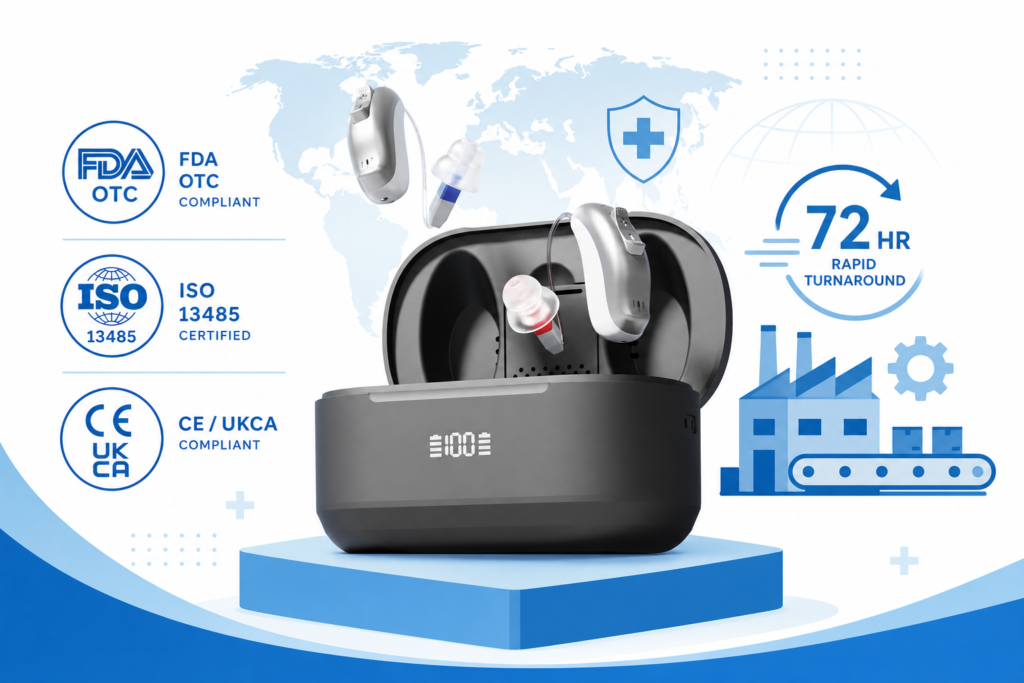
Goodmi operates under strict ISO 13485 (Medical Devices Quality Management Systems) and GMP guidelines. Our full product lineup is fully certified and audit-ready for major international markets:
- United States: FDA-Ready in full compliance with US OTC Hearing Aid Regulations.
- Europe & UK: CE MDR (Medical Device Regulation) and UKCA certified.
- Quality Assurance: Factory audited and verified by SGS, with full FCC and RoHS documentation.
Why Global Distributors Choose Goodmi as Their Sourcing Partner
Since 2011, Goodmi has empowered healthcare brands, medical equipment distributors, pharmacy chains, and top e-commerce sellers across 50+ countries. With North America representing 40% of our global shipment volume, our products are market-tested and proven in the most demanding retail environments.
Whether you are looking to launch your own private-label OTC hearing aid brand or upgrade your current wholesale inventory with touchscreen dual-control technology, Goodmi provides the Tier-1 manufacturing scale, speed, and quality your business requires.
Frequently Asked Questions (FAQ)
How do Goodmi’s wholesale prices compare to traditional legacy brands?
Because Goodmi is a direct Tier-1 manufacturer, our factory-direct pricing is significantly lower than legacy brands. This allows distributors to offer retail prices that are 50% to 70% more affordable to end-users while retaining superior profit margins.
Are Goodmi OTC hearing aids truly medical-grade?
Yes. Goodmi products feature advanced 32-channel digital signal processing (DSP), precision acoustic tuning, and AI sound isolation. Our factory operates under ISO 13485 medical device quality management systems, ensuring full medical-grade performance and reliability.
What is the Minimum Order Quantity (MOQ) for private-label OEM projects?
Goodmi offers flexible MOQ tiers depending on the level of customization required (e.g., custom branding, unique colorways, or app UI modification). Contact our B2B sales team for precise project specifications.
How does Goodmi support customs compliance in North America and Europe?
Goodmi provides complete compliance documentation packages, including FDA registration materials, CE MDR test reports, ISO 13485 certificates, and RoHS/FCC compliance files to ensure smooth customs clearance.
Partner with a Leading OTC Hearing Aid Factory
Ready to boost your retail margins with high-performance, FDA-ready digital hearing aids? Contact Goodmi’s B2B engineering team today for custom quotes and 72-hour sampling support.