Top 3 Hearing Aid Suppliers in China

Table of Contents

Introduction

China has become a major hub for hearing aid manufacturing, offering high-quality and cost-effective solutions to the global market. With advanced technology, strong production capabilities, and competitive pricing, many Chinese suppliers have gained recognition worldwide. In this article, I will introduce the top five hearing aid suppliers in China, detailing their company background, product offerings, and key business scope.

1. Foshan Vimgo Hearing Technology Co., Ltd.

Foshan Vimgo Hearing Technology is an emerging Chinese hearing aid manufacturer known for its innovation and affordability. The company is dedicated to producing high-quality digital and rechargeable hearing aids.

Vimgo’s product lineup includes digital BTE, ITE, and invisible CIC hearing aids, featuring advanced noise reduction and Bluetooth connectivity. The company provides flexible ODM and OEM services, helping businesses customize their products.

2. Goodmi Intelligent (shenzhen) Co., Ltd.

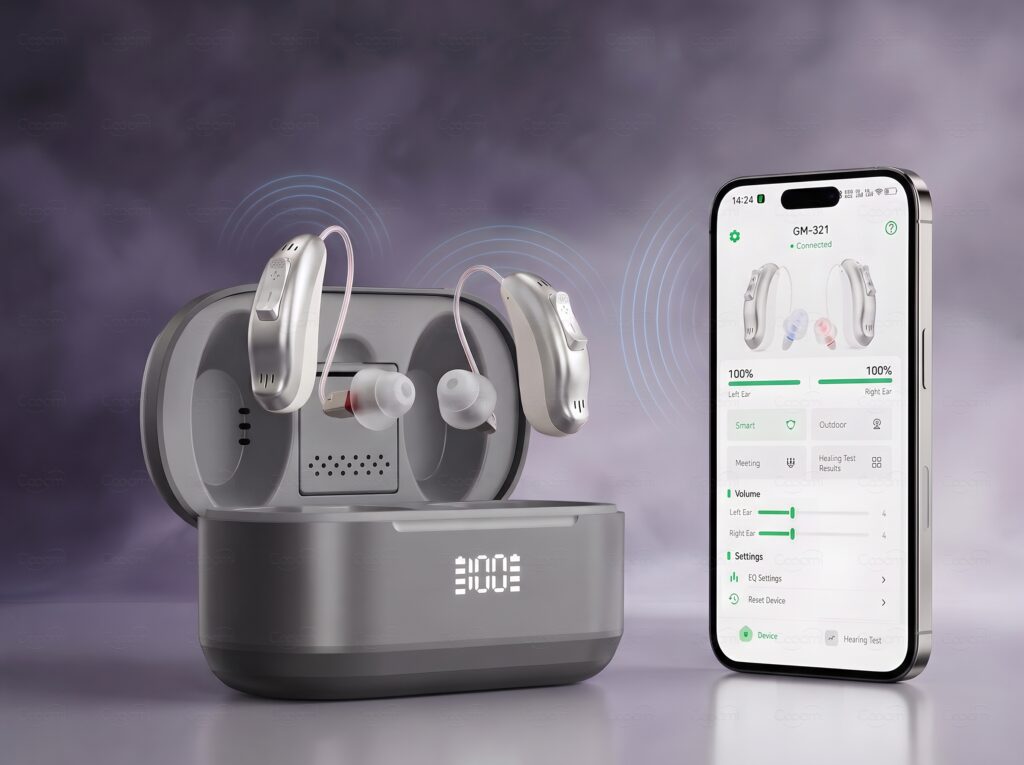
Goodmi Intelligent is a professional hearing aid manufacturer specializing in wholesale OTC hearing aids, CIC hearing aids, BTE hearing aids, and Bluetooth-enabled models. With 14 years of industry experience, Goodmi operates five production lines and exports to Europe, North America, and other global markets.

Goodmi offers high-tech hearing aids featuring DSP intelligent noise reduction, rechargeable battery technology, and UV disinfection charging cases. The company provides full OEM and ODM support, assisting clients in building their own brands with competitive pricing and high-quality production standards. Goodmi’s commitment to innovation and customer satisfaction makes it a trusted supplier in the hearing aid industry.

3. Eargo China (Shenzhen) Co., Ltd.

Eargo China is a subsidiary of the U.S.-based hearing aid brand Eargo. Operating as a major production base in China, the company focuses on high-quality, invisible hearing aid technology.

Eargo specializes in rechargeable and virtually invisible hearing aids, using soft silicone fiber technology to ensure comfort and superior sound performance. Their products cater to users who prioritize discretion and ease of use.

Conclusion

China’s hearing aid industry continues to grow, with companies like Vimgo, Goodmi,  and Eargo China leading the market. These suppliers offer cost-effective, high-quality solutions with strong OEM and ODM capabilities.

If you are looking for a reliable Chinese hearing aid supplier, feel free to contact us. We provide professional customization services to help you succeed in the hearing aid business!

Submit Your Sourcing Request
Related Posts
Senior-friendly OTC hearing aid charging case with glowing LED battery display and magnetic docking
How to Build a Hearing Aid Product Line for the Silver Economy

As global demographics shift toward an increasingly aging population, the Silver Economy has emerged as one of the most lucrative and high-impact sectors in modern health technology. With millions of active older adults entering retirement, the demand for accessible, high-performance wellness devices—particularly Over-the-Counter (OTC) hearing aids—is experiencing exponential growth. For brand owners, pharmacy retail chains, and medical device distributors, establishing a strategic hearing aid product line is no longer just an adjacent market expansion; it is a core commercial necessity. Below is a comprehensive strategic framework for designing, structuring, and launching a successful hearing aid portfolio tailored to the silver economy. 📈 Silver Economy Market Intelligence The modern silver consumer is financially empowered, tech-aware, and lifestyle-driven. They reject clinical stigma and demand consumer-grade aesthetics combined with clinical-grade acoustic performance, reshaping how healthcare brands approach product line architecture. Understanding Silver Economy Demographics and Hearing Health Demand To build a winning product line, market entrants must first understand the psychological and behavioral shifts defining today’s aging population: Erase of Clinical Stigma: Modern seniors view aging as an active, vibrant life phase. They actively avoid bulky, beige medical devices that signal disability, favoring sleek, consumer-electronic styles. Value-Driven Independence: Consumers aged 65+ seek solutions

Read More >>
Active senior woman smiling with discreet invisible OTC hearing aid for silver economy wellness
How to Choose a Hearing Aid: The Ultimate Lifestyle & Needs Buyer’s Guide

Selecting the right hearing aid is a deeply personal decision that extends far beyond simple amplification. With a vast array of styles, digital features, and power options available on the market, finding the ideal match requires evaluating your unique daily lifestyle, acoustic environments, and personal dexterity. Whether you are exploring hearing assistance for the first time or upgrading an older model, this comprehensive buyer’s guide breaks down the essential criteria you must evaluate to ensure long-term satisfaction and seamless daily wear. 🧭 Decision Framework Insight The best hearing aid is not necessarily the one with the highest price tag or the most advanced specifications—it is the device that integrates effortlessly into your daily routine, matches your acoustic challenges, and requires minimal operational friction. Assessing Your Daily Acoustic Environment: Quiet vs. Noisy Settings The primary factor in your selection process should be where you spend the majority of your time: Quiet One-on-One Environments: If your lifestyle primarily involves quiet conversations at home, reading, or small family gatherings, standard multi-channel digital processors with basic feedback suppression will comfortably meet your needs. Complex Noisy Environments: If you frequently attend crowded restaurants, business meetings, or social events, look for advanced digital signal processing (DSP)

Read More >>
OTC hearing aid system with digital charging case and smartphone app control interface
How to Reduce OTC Hearing Aid Return Rates: Acoustic Engineering & OEM Speed

For direct-to-consumer (DTC) brands and Amazon store owners expanding into Over-the-Counter (OTC) health devices, hearing aids represent a high-margin, rapidly growing market. However, e-commerce sellers frequently encounter a devastating operational obstacle: unusually high product return rates, often exceeding 20% to 30%. Unlike standard consumer electronics, hearing devices require complex acoustic fitting. When first-time users experience high-frequency whistling (acoustic feedback), muffled speech, or overly complex smartphone setup, they immediately return the item. Below is an e-commerce engineering framework detailing how advanced 32-channel acoustic platforms and rapid OEM manufacturing workflows eliminate return drivers at the product development stage. 📉 E-Commerce Profitability Metric In DTC sales channels, reducing customer return rates by just 10% can boost net operational margins by up to 25%. Profitability in OTC hearing devices is determined not by initial conversion rates, but by immediate out-of-the-box acoustic comfort and setup simplicity. Deconstructing the Primary Causes of E-Commerce Hearing Aid Returns Analyzing customer return feedback across major online marketplaces reveals four main drivers behind product returns: High-Frequency Feedback Whistling: Improper ear tip fit or delayed phase management causes amplified sound to re-enter the microphone, resulting in sharp, painful squealing. Acoustic Harshness in Noisy Venues: Low-cost broad-spectrum amplifiers increase background noise alongside

Read More >>

We'd like to work with you

Send us a message if you have any questions or request a quote. Our experts will give you a reply within 24 hours and help you select the right hearing aid you want.

Get A Free Quote

All of our products are available for sampling