The global hearing assistance sector is experiencing rapid expansion, driven by an aging demographic, heightened focus on auditory wellness, and groundbreaking advancements in digital sound processing. Navigating the competitive landscape requires a thorough understanding of the key manufacturers shaping global supply chains.
From traditional prescription device leaders to high-capacity B2B manufacturing hubs, this global market overview evaluates the industry dynamics and highlights the primary players operating across international retail and direct-to-consumer (DTC) channels.
While legacy prescription brands dominate specialized clinical channels, certified OEM and ODM manufacturers in Asia are driving the rapid democratization of Over-the-Counter (OTC) devices. By providing high-channel DSP platforms and pre-verified medical compliance, these factory networks enable emerging brands to capture substantial global market share.
Global Hearing Aid Industry Overview and Market Drivers
The global hearing health market is transforming rapidly due to regulatory shifts and technological convergence. Key macroeconomic factors include:
- Expansion of Over-the-Counter (OTC) Channels: Regulatory frameworks such as the U.S. FDA OTC rule permit certified devices to be sold directly through retail pharmacies and e-commerce platforms.
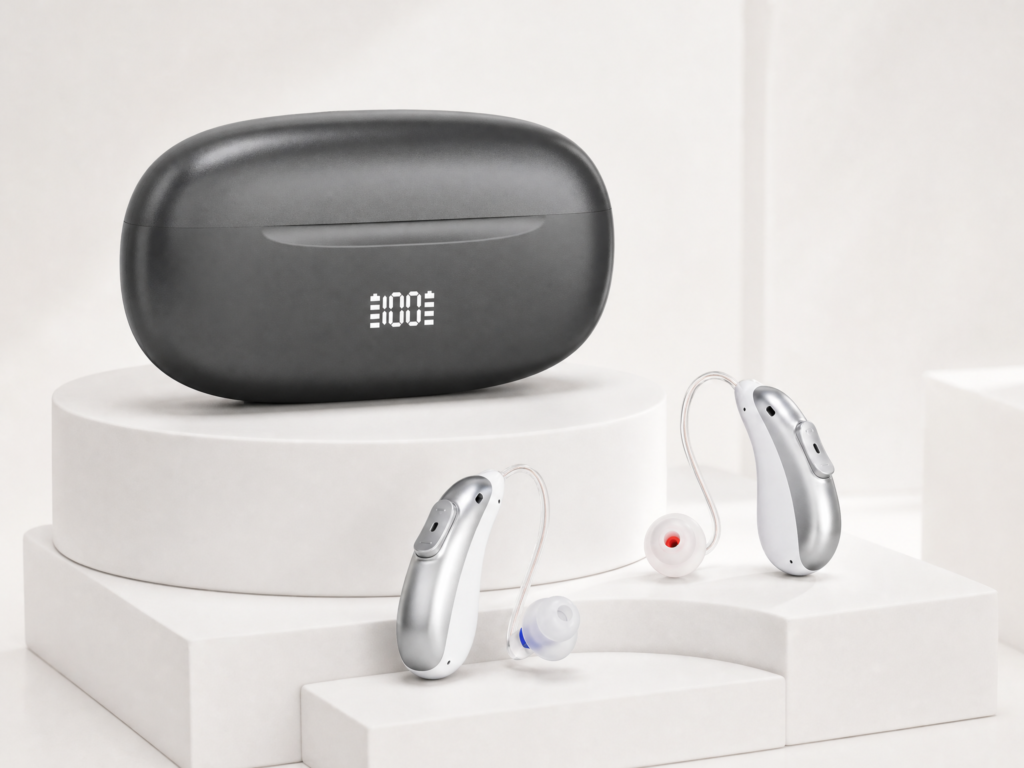
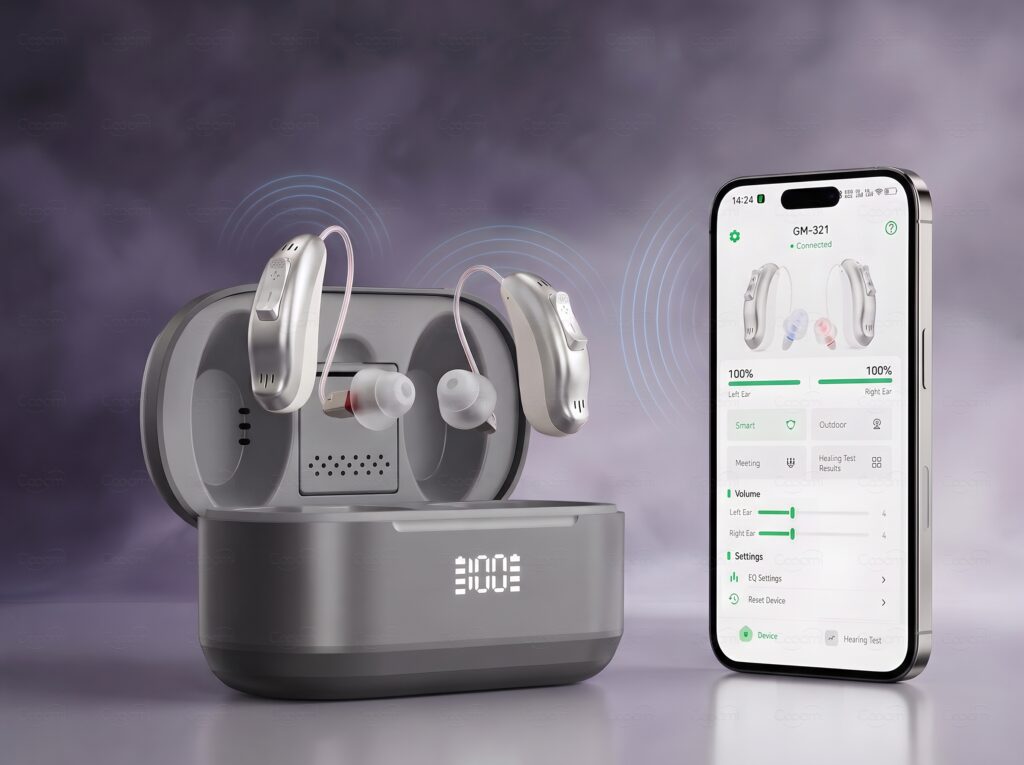
- Integration of Consumer Electronics Features: Modern devices incorporate Bluetooth® LE Audio, touch-control charging cases, and AI-powered environmental noise isolation.
- Shift Toward Private Labeling: Healthcare chains and DTC brands increasingly bypass traditional prescription markups by establishing proprietary private label hearing lines.
Evaluating the Top 10 Hearing Aid Companies in the World
The global manufacturing ecosystem is broadly categorized into legacy medical conglomerates and agile, high-capacity B2B OEM manufacturing specialists:
Major European and North American groups controlling clinical audiologist distribution channels with proprietary fitting software and legacy medical pricing models.
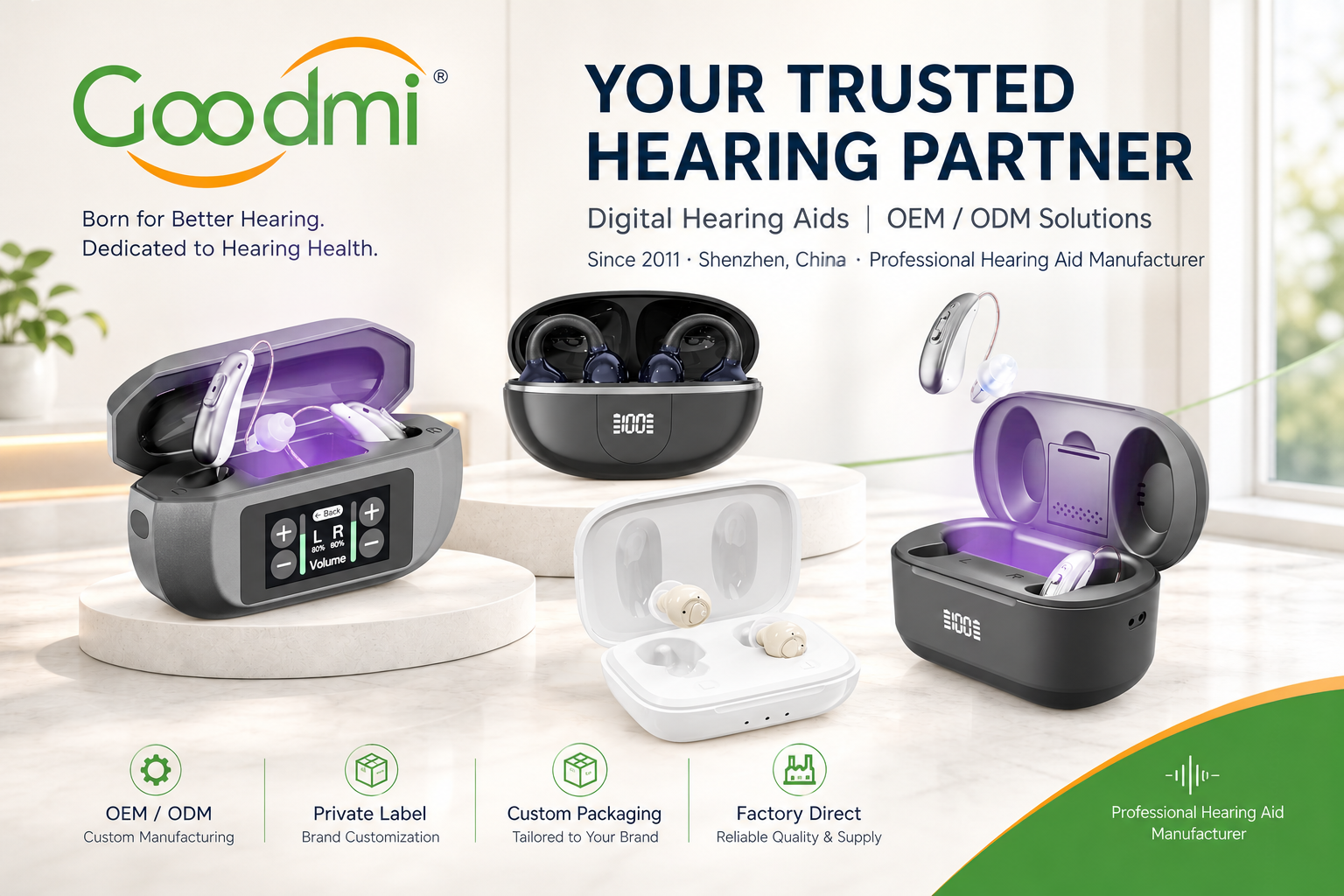
Tier-1 Asian manufacturers specializing in ISO 13485-certified, 32-channel DSP platforms that power private label brands across global OTC retail markets.
Key Capabilities Defining Industry-Leading Manufacturers
When evaluating global manufacturing partners, healthcare retailers and brand managers assess several core operational benchmarks:
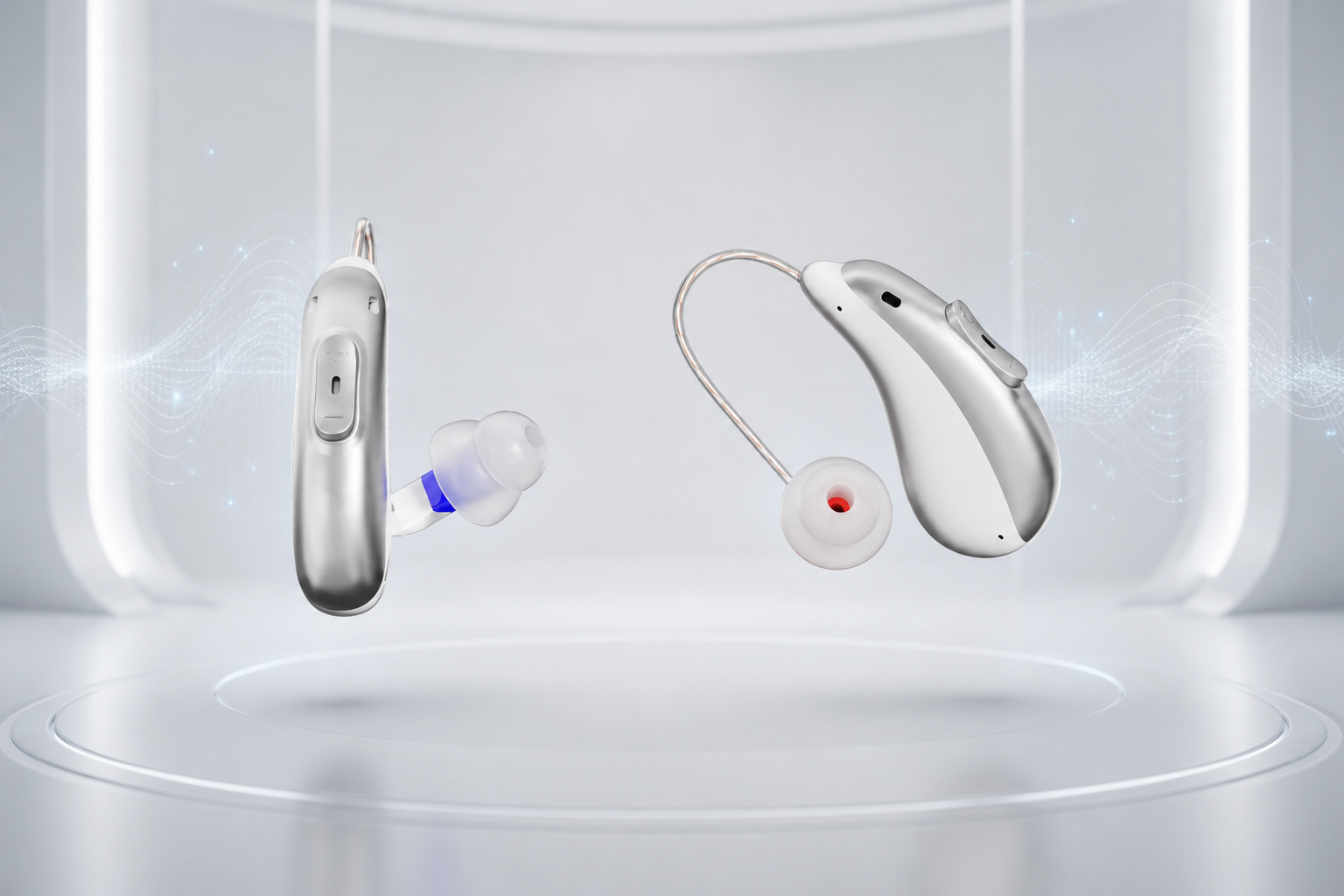
- Advanced Acoustic Architecture: Multi-channel Digital Signal Processing (DSP) paired with AI noise cancellation for real-time speech separation.
- Flexible Hardware Customization: Laser-etched hardware identifiers, custom housing colorways, and multi-language retail packaging.
- Rapid Prototyping Loops: Accelerated 8-hour virtual renderings and 72-hour physical sample deliveries for swift channel validation.

Global Regulatory Standards and Medical Compliance
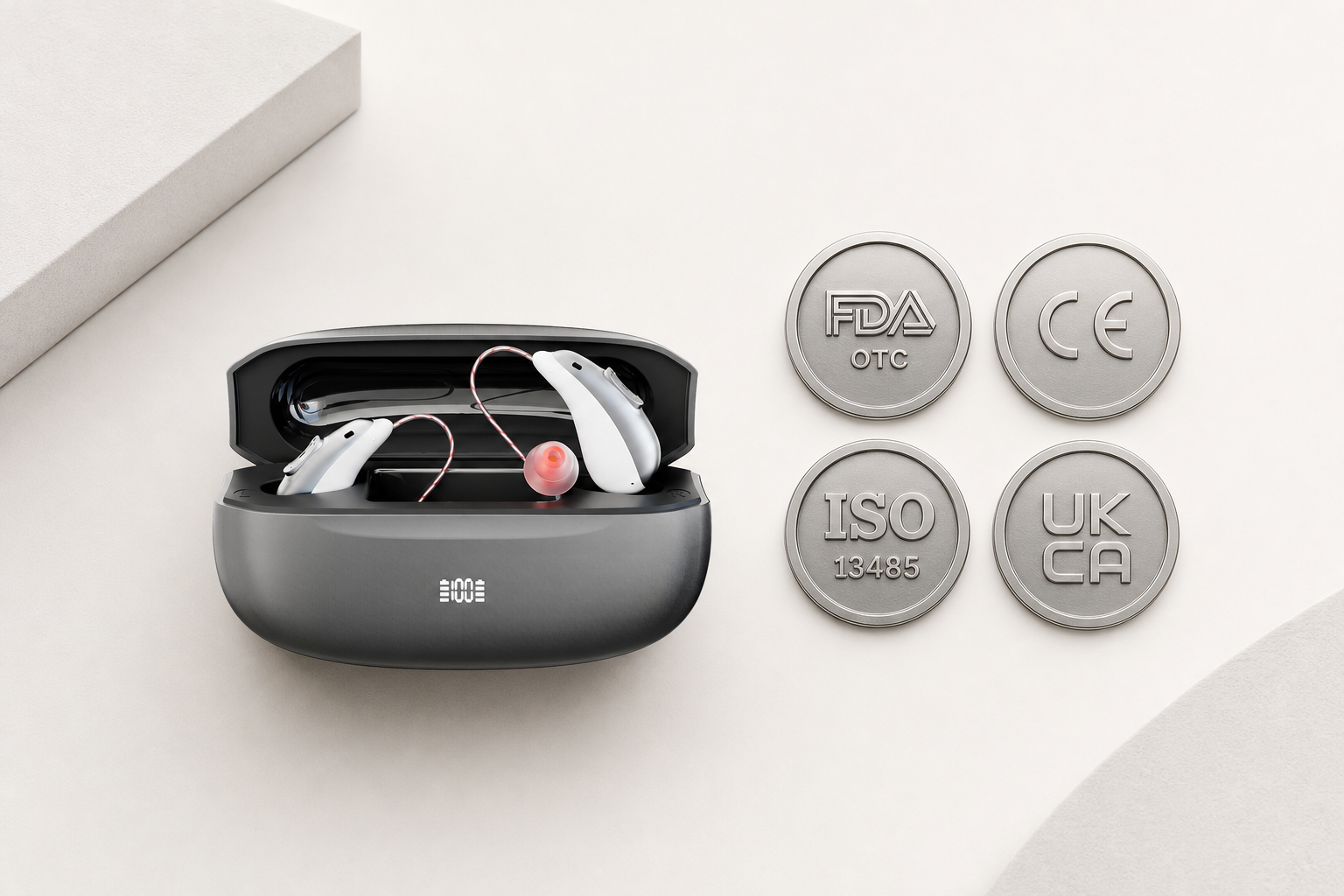
Entering international distribution channels mandates strict alignment with regional medical device regulations. Leading global manufacturers maintain comprehensive compliance dossiers:
| Target Region | Regulatory Standard | OEM Compliance Support |
|---|---|---|
| United States | FDA 21 CFR Part 800 (OTC Regulations) | FDA-ready establishment listing & compliant retail labeling |
| European Union | CE Medical Directive / ISO 13485 QMS | Full CE certification supported by audited medical-grade production lines |
| United Kingdom | UKCA marking requirements | Complete UKCA technical file ready for distribution |
| Global Shipping | FCC, RoHS, REACH, UN38.3 & MSDS | Certified lithium battery safety & environmental compliance |
Frequently Asked Questions
What is driving the growth of OTC hearing aids globally?
Regulatory updates, reduced retail pricing, and the integration of consumer electronics features allow non-prescription sales through retail and e-commerce channels.
How do OEM partners support private label hearing aid creation?
Certified OEM partners provide pre-engineered hardware platforms, medical compliance dossiers, custom packaging, and hardware branding to accelerate market entry.
Are specialized medical licenses required to sell OTC hearing devices?
In key markets such as the United States, certified OTC devices can be sold through standard retail, pharmacy, and online channels without audiologist prescriptions.
Partner with an ISO 13485-certified medical device manufacturer to build your high-margin OTC hearing product line with factory-direct supply and rapid sampling.