Hearing Aids Solution in China | Top 5 Hearing Aid Suppliers

Table of Contents

China has emerged as a global manufacturing hub for hearing aids, exporting millions of units annually. In 2021 China shipped over 15 million hearing aids worldwide, making it a major global producer. Chinese suppliers offer cost-effective solutions, along with a diverse product range spanning all device types. Many Chinese manufacturers provide OEM/ODM services and adhere to international quality standards (CE, ISO, FDA), making them attractive for B2B partnerships. Sourcing from China allows buyers to leverage competitive pricing, cutting-edge R&D and flexibility in product customization while maintaining high quality.

Goodmi Intelligent

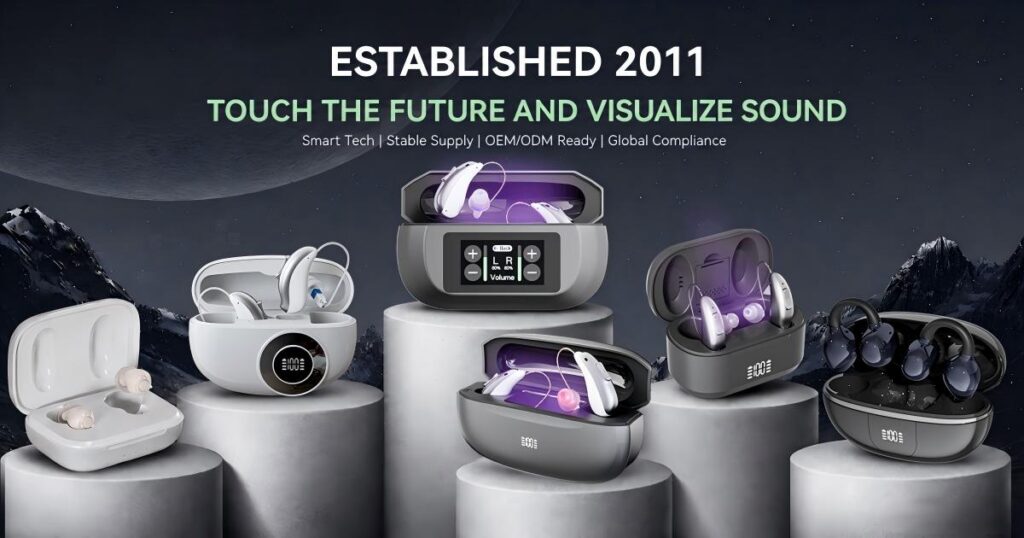
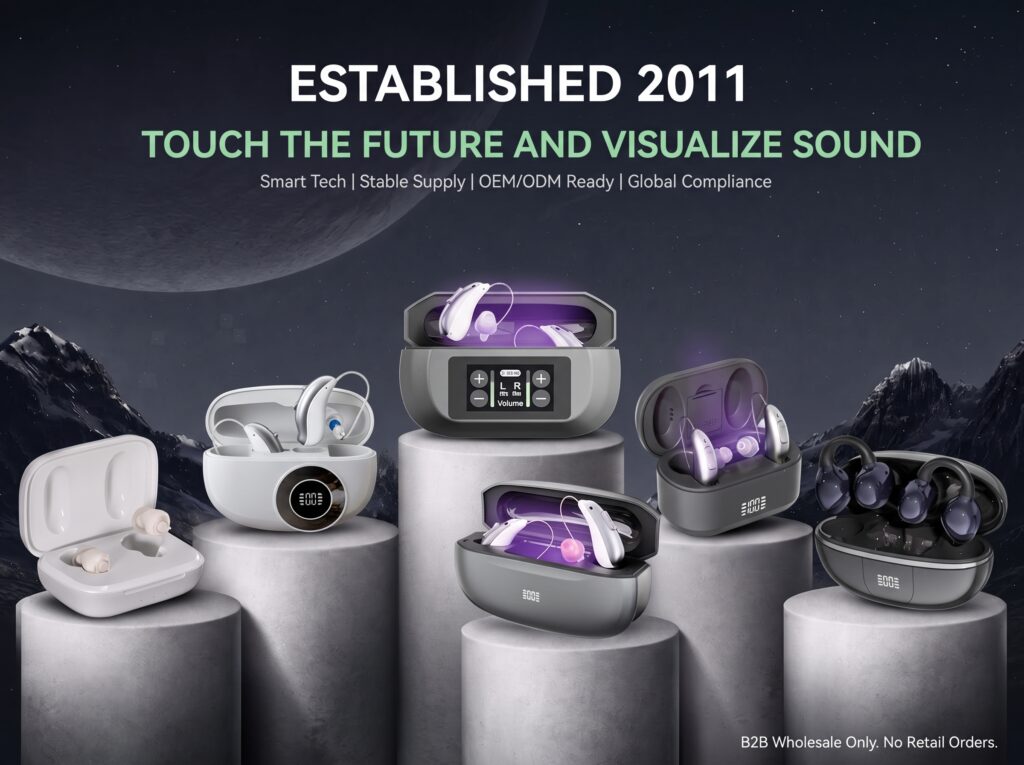
Founded in 2011 in Shenzhen, Guangdong, Goodmi Intelligent (trade name Goodmi) is a national high-tech hearing aid enterprise. It specializes in R&D, production and sales of digital hearing aids (BTE, ITE, CIC, RIC, rechargeable models, etc.). The company has developed multiple patents and flagship products like the GM-303P.

Goodmi operates as both manufacturer and exporter, offering OEM/ODM services for global distributors. The firm emphasizes strict quality control and holds medical device licenses plus ISO13485, FDA, CE, RoHS and other certifications. It currently produces hundreds of thousands of units per year for buyers in the US, EU and beyond.

League Sound 

Xiamen League Sound Technology Development Co. is a Fujian-based hearing device specialist with its own R&D and production. Founded in the 2010s, LeagueSound focuses on high-quality digital hearing aids and audiology instruments. It is classified as a Class II medical device manufacturer in China. The company has built in-house capabilities (app design to molding to assembly) to offer fast, high-volume OEM/ODM production. LeagueSound holds an ISO 13485 quality certificate and obtained its Chinese medical-device production license in 2017. Notably, all its ITE and BTE hearing aid models gained FDA approval in 2018 and CE certification in 2019. This underlines LeagueSound’s compliance with international standards and its suitability as a B2B supplier.

AZ Hearing

Xiamen AZ Hearing Technology Co., Ltd. (est. 2018) is a professional hearing aid manufacturer and exporter. AZ Hearing designs and produces digital hearing aids, sound amplifiers and related accessories.

Retone

Xiamen Retone Hearing Technology Co., Ltd. (est. 2012) is a fast-growing OEM/ODM provider for wireless hearing solutions. Retone specializes in manufacturing hearing aids (BTE, ITE, CIC), PSAPs and portable sound amplifiers for global brands.

Tingoton

Hangzhou Tingoton Technology Co., Ltd. (est. 2018) is a Zhejiang-based manufacturer and trading company focused on hearing care products. Tingoton’s core products include custom ear mold materials and a variety of hearing aids (BTE, ITE, CIC) as well as fitting tools and audiometric equipment. It also produces hearing aid hygiene and battery products (e.g. under the Tingoton brand).

China’s hearing aid industry offers a wealth of opportunities for international buyers. Top Chinese suppliers combine advanced R&D, diverse product lines and stringent quality standards at very competitive prices. Many provide turnkey OEM/ODM manufacturing, enabling custom branding and fast market entry. These partners are globally certified (CE, FDA, ISO) and experienced in export, ensuring reliable supply for B2B customers. The competitive landscape in China means buyers can source innovative devices or bulk amplifiers while maintaining margins. For further details, product catalogs or to discuss tailored solutions, interested parties are encouraged to contact these suppliers directly and send inquiries. Building a partnership with a reputable Chinese hearing aid manufacturer can give your business a strategic advantage in the growing global hearing care market.
Submit Your Sourcing Request
Related Posts
Goodmi digital OTC hearing aids compared with traditional legacy hearing aid brands for B2B sourcing
Goodmi vs. Legacy Hearing Aid Brands: Why Next-Gen OTC Manufacturers Are Winning in 2026

For decades, the global hearing aid market has been dominated by a handful of traditional legacy brands. While these legacy manufacturers built the foundation of the industry, their traditional distribution models come with significant drawbacks for modern healthcare distributors, pharmacy chains, and private-label brands: inflated wholesale costs, long product development cycles, and rigid channel restrictions. As the Over-the-Counter (OTC) market accelerates through 2026, a new generation of Tier-1 medical-grade manufacturers is disrupting the status quo. Leading this shift is Goodmi Intelligent, offering global buyers a highly competitive alternative to expensive legacy suppliers without compromising acoustic precision or regulatory compliance. Key B2B Value Proposition: Partnering with a next-gen wholesale medical grade hearing aid manufacturer like Goodmi allows distributors to capture higher retail margins, accelerate time-to-market, and offer cutting-edge features like App & Screen Dual Control. At a Glance: Goodmi vs. Traditional Legacy Brands Before diving into the detailed analysis, review how next-gen manufacturing aligns with modern B2B sourcing requirements compared to legacy supply chains: Key Sourcing Metric Traditional Legacy Brands Goodmi (Next-Gen OEM/ODM) Wholesale Unit Cost High (Layered markup & brand premium) Factory-Direct (Tier-1 competitive pricing) Retail Margin Space Restricted by strict MAP policies High (Enables flexible pricing strategy) OEM/ODM Flexibility

Read More >>
Touchscreen charging case and mobile app dual control smart OTC hearing aid by Goodmi
App & Screen Dual Control: The Next Big Trend in OTC Hearing Aid Sourcing for 2026

The Over-the-Counter (OTC) hearing aid market continues to grow, while distributors, private-label brands, and e-commerce sellers face a familiar challenge: many products look and operate in very similar ways. In a crowded category, buyers need features that are easy for end users to understand and meaningful enough to support product differentiation. One increasingly relevant direction in 2026 is the combination of a touchscreen charging case and a mobile companion app. Unlike a display-only case, a touchscreen case can provide direct access to supported controls as well as status information, while an OTC hearing aid with app control can offer deeper adjustment and personalization. Key B2B Takeaway: Dual control combines simple, phone-free daily operation with more detailed app-based adjustment—giving different users more ways to interact with the same product. Why Usability Differentiation Matters in OTC Hearing Aids OTC hearing aid users have different levels of comfort with technology. Some prefer quick, direct controls, while others value the flexibility of smartphone-based adjustment. A product that depends entirely on one control method may not fit every user equally well. For B2B brands, usability is therefore more than a consumer-experience issue. Clearer controls, visible device status, and easier adjustment can help reduce setup confusion,

Read More >>
Guide to choosing a hearing aid manufacturer for OEM and private label projects
How to Choose a Hearing Aid Manufacturer for OEM and Private Label Projects

Choosing a hearing aid manufacturer for an OEM or private label project is a business decision, not just a price comparison. The right partner should be able to provide consistent product quality, appropriate regulatory documentation, clear customization boundaries, reliable production planning, and responsive support after delivery. This guide explains how distributors, importers, hearing clinics, medical device companies, and private label brands can evaluate a hearing aid manufacturer before moving from product research to samples and bulk orders. Key Takeaways Request model-specific specifications and compliance documents instead of relying only on a factory presentation. Evaluate samples, packaging, labeling, manuals, and after-sales support together with the device itself. Separate OEM, ODM, and private label requirements before requesting a quotation. Confirm MOQ, sample policy, lead time, production changes, inspection, warranty, and spare-parts support in writing. Choose a manufacturer that can support your target market and expected order growth, not only your first order. 1. Define Your OEM or Private Label Project Before Contacting Manufacturers The first step is to define what you are actually buying. An OEM project may use an existing hearing aid platform with your brand identity, packaging, documentation, or approved configuration. A private label project usually focuses on selling an

Read More >>

We'd like to work with you

Send us a message if you have any questions or request a quote. Our experts will give you a reply within 24 hours and help you select the right hearing aid you want.

Get A Free Quote

All of our products are available for sampling