Top Features Buyers Want in OTC Hearing Aids in 2025

Table of Contents

As the global demand for affordable hearing care continues to surge, the over-the-counter (OTC) hearing aid market is evolving faster than ever. In 2025, buyers—from large distributors to local retailers—are prioritizing feature-rich, user-friendly, and tech-integrated devices. For procurement professionals, understanding what end users value most can make or break the success of your product lineup. Below, we explore the key features shaping purchasing decisions in this dynamic sector.

Bluetooth Connectivity: Wireless Convenience is Now Essential

For European and American buyers, Bluetooth has become a must-have feature in OTC hearing aids, enabling seamless audio streaming from smartphones, tablets, and TVs. Buyers are particularly drawn to hearing aids that offer:

  • Stable wireless pairing with both Android and iOS
  • Hands-free calling with high voice clarity
  • Dual-mode functionality—supporting both hearing enhancement and audio entertainment


The GM-903BT and GM-350BT in our products are both hearing aids with Bluetooth functionality. Bluetooth + hearing aid integrated device, allowing for seamless switching between call and hearing modes, with multiple functions in one unit.

Rechargeable Batteries: Goodbye to Tiny Button Cells

Rechargeable hearing aids have significantly improved in 2025, with better battery life and faster charging. These features reduce user frustration and improve long-term cost savings. The most in-demand specifications include:

  • Long battery life—up to 30-40 hours per charge
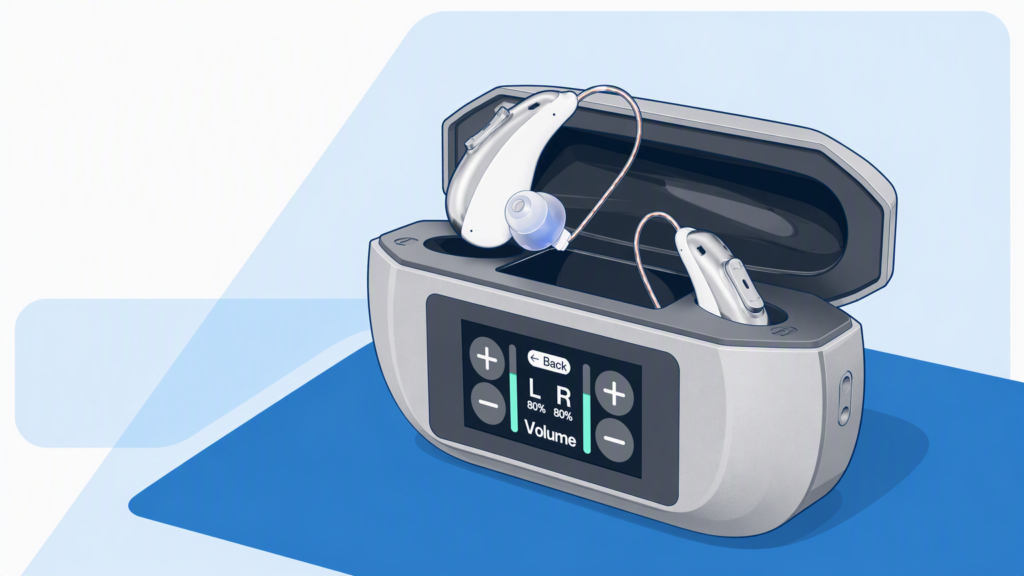
  • Fast charging cases with digital displays
  • Type-C or magnetic charging for modern convenience


Most of Goodmi’s products are rechargeable hearing aids. They have an extremely long battery life, allowing users to say goodbye to the worry of running out of power.

Advanced Noise Reduction: Clarity in Every Environment

Noise filtering technology is a top priority for users seeking comfort in social settings, crowded areas, or outdoor environments. Key features buyers look for:

  • Multi-channel DSP chips with intelligent background noise suppression
  • Adaptive feedback cancellation to prevent whistling
  • Automatic volume adjustment based on sound environment

Invisible or Discreet Design: Small Size, Big Impact

Discretion is a major purchase driver in 2025, especially among first-time users. The trend toward ultra-compact designs includes:

  • Completely-in-Canal (CIC) or Invisible-in-Canal (IIC) formats
  • Skin-tone options to blend with various complexions
  • Lightweight and ergonomic form factors


The CIC hearing aids of Goodmi are small in size, invisible to the naked eye, and easy to operate.

Easy Self-Fitting and User Controls

OTC hearing aids must be easy for non-clinical users to configure and operate. Devices with companion apps or physical controls are now mainstream. In-demand attributes include:

  • Mobile app compatibility for volume, mode, and EQ
  • One-button or touch-sensitive controls on the device
  • Smart reminder systems (e.g., low battery alerts)


Goodmi also has very advanced hearing aids that can be controlled via an app. Their sales are usually very good as well.

Hygiene and UV Sterilization Features

Post-pandemic consumer habits have raised expectations for hygiene. Buyers increasingly value devices that integrate UV disinfection or antibacterial features, including:

  • Charging cases with built-in UV light
  • Moisture-proof and dust-resistant designs
  • Replaceable ear tips for long-term hygiene

Certification, Compliance & Global Standards

Procurement teams are under pressure to source products that meet regional safety and performance regulations. Key certifications include:

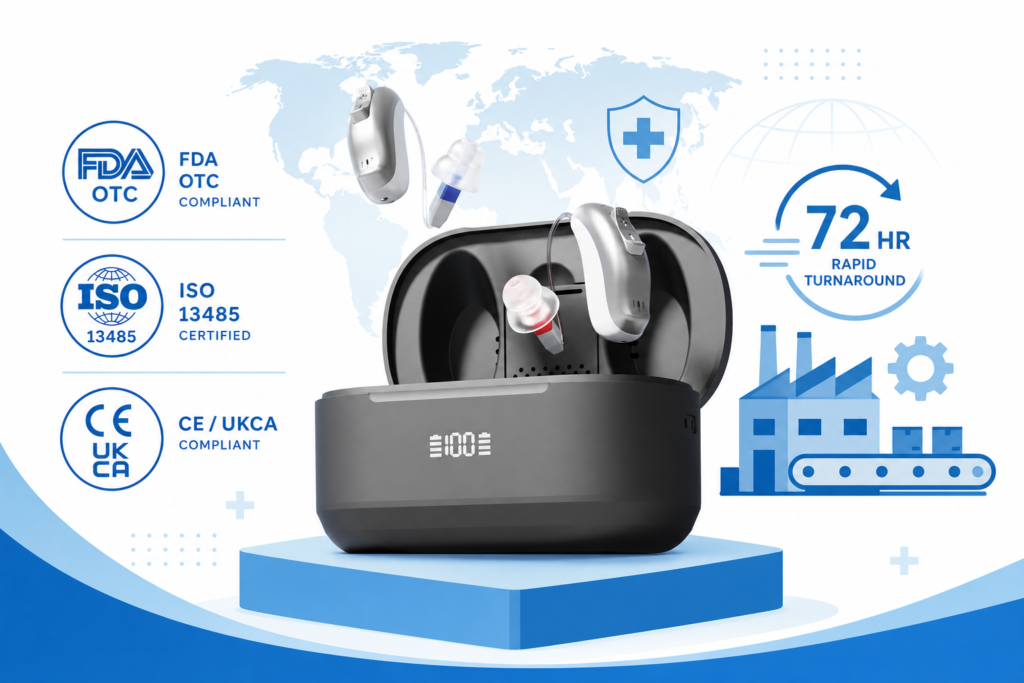
  • FDA registration for the U.S. market
  • CE certification for the EU
  • RoHS/REACH compliance for environmental safety

Matching Features to Market Demands

For wholesalers and project procurement leaders, selecting OTC hearing aids that align with 2025’s top consumer expectations can mean stronger brand loyalty, fewer returns, and increased sales. Whether your customers prioritize discreet wear, seamless connectivity, or rechargeable convenience, focusing on the features outlined above ensures your product offering stays ahead of the curve.

If you would like to learn more about our products, please fill out the form on the right and get in touch with us!

Submit Your Sourcing Request
Related Posts
Goodmi digital OTC hearing aids compared with traditional legacy hearing aid brands for B2B sourcing
Goodmi vs. Legacy Hearing Aid Brands: Why Next-Gen OTC Manufacturers Are Winning in 2026

For decades, the global hearing aid market has been dominated by a handful of traditional legacy brands. While these legacy manufacturers built the foundation of the industry, their traditional distribution models come with significant drawbacks for modern healthcare distributors, pharmacy chains, and private-label brands: inflated wholesale costs, long product development cycles, and rigid channel restrictions. As the Over-the-Counter (OTC) market accelerates through 2026, a new generation of Tier-1 medical-grade manufacturers is disrupting the status quo. Leading this shift is Goodmi Intelligent, offering global buyers a highly competitive alternative to expensive legacy suppliers without compromising acoustic precision or regulatory compliance. Key B2B Value Proposition: Partnering with a next-gen wholesale medical grade hearing aid manufacturer like Goodmi allows distributors to capture higher retail margins, accelerate time-to-market, and offer cutting-edge features like App & Screen Dual Control. At a Glance: Goodmi vs. Traditional Legacy Brands Before diving into the detailed analysis, review how next-gen manufacturing aligns with modern B2B sourcing requirements compared to legacy supply chains: Key Sourcing Metric Traditional Legacy Brands Goodmi (Next-Gen OEM/ODM) Wholesale Unit Cost High (Layered markup & brand premium) Factory-Direct (Tier-1 competitive pricing) Retail Margin Space Restricted by strict MAP policies High (Enables flexible pricing strategy) OEM/ODM Flexibility

Read More >>
Touchscreen charging case and mobile app dual control smart OTC hearing aid by Goodmi
App & Screen Dual Control: The Next Big Trend in OTC Hearing Aid Sourcing for 2026

The Over-the-Counter (OTC) hearing aid market continues to grow, while distributors, private-label brands, and e-commerce sellers face a familiar challenge: many products look and operate in very similar ways. In a crowded category, buyers need features that are easy for end users to understand and meaningful enough to support product differentiation. One increasingly relevant direction in 2026 is the combination of a touchscreen charging case and a mobile companion app. Unlike a display-only case, a touchscreen case can provide direct access to supported controls as well as status information, while an OTC hearing aid with app control can offer deeper adjustment and personalization. Key B2B Takeaway: Dual control combines simple, phone-free daily operation with more detailed app-based adjustment—giving different users more ways to interact with the same product. Why Usability Differentiation Matters in OTC Hearing Aids OTC hearing aid users have different levels of comfort with technology. Some prefer quick, direct controls, while others value the flexibility of smartphone-based adjustment. A product that depends entirely on one control method may not fit every user equally well. For B2B brands, usability is therefore more than a consumer-experience issue. Clearer controls, visible device status, and easier adjustment can help reduce setup confusion,

Read More >>
Guide to choosing a hearing aid manufacturer for OEM and private label projects
How to Choose a Hearing Aid Manufacturer for OEM and Private Label Projects

Choosing a hearing aid manufacturer for an OEM or private label project is a business decision, not just a price comparison. The right partner should be able to provide consistent product quality, appropriate regulatory documentation, clear customization boundaries, reliable production planning, and responsive support after delivery. This guide explains how distributors, importers, hearing clinics, medical device companies, and private label brands can evaluate a hearing aid manufacturer before moving from product research to samples and bulk orders. Key Takeaways Request model-specific specifications and compliance documents instead of relying only on a factory presentation. Evaluate samples, packaging, labeling, manuals, and after-sales support together with the device itself. Separate OEM, ODM, and private label requirements before requesting a quotation. Confirm MOQ, sample policy, lead time, production changes, inspection, warranty, and spare-parts support in writing. Choose a manufacturer that can support your target market and expected order growth, not only your first order. 1. Define Your OEM or Private Label Project Before Contacting Manufacturers The first step is to define what you are actually buying. An OEM project may use an existing hearing aid platform with your brand identity, packaging, documentation, or approved configuration. A private label project usually focuses on selling an

Read More >>

We'd like to work with you

Send us a message if you have any questions or request a quote. Our experts will give you a reply within 24 hours and help you select the right hearing aid you want.

Get A Free Quote

All of our products are available for sampling