Why Our Bluetooth Hearing Aids Are Perfect for Seniors

Table of Contents

As the global population ages, hearing loss is becoming increasingly common among seniors. With the rise of smart health solutions, Bluetooth hearing aids are now at the forefront of innovation, offering elderly users enhanced connectivity, better sound quality, and more control over their listening environments. But not all Bluetooth hearing aids are created equal. For project procurement managers sourcing reliable hearing care products, it’s essential to understand what sets our solutions apart.

Understanding the Needs of Senior Hearing Aid Users

Senior users have specific needs when it comes to hearing aids, including:

  • Comfort: Lightweight and ergonomic devices that don’t cause ear fatigue
  • Ease of use: Intuitive controls and simple app interfaces
  • Sound clarity: Enhanced speech recognition, especially in noisy environments
  • Battery life: Long-lasting power to avoid frequent recharging
  • Discreet design: CIC and RIC models that blend seamlessly

What Makes Our Bluetooth Hearing Aids Ideal for the Elderly

We design our Bluetooth hearing aids with seniors in mind, balancing high performance with practicality. Here’s what makes our products stand out:

1. Seamless Bluetooth Connectivity

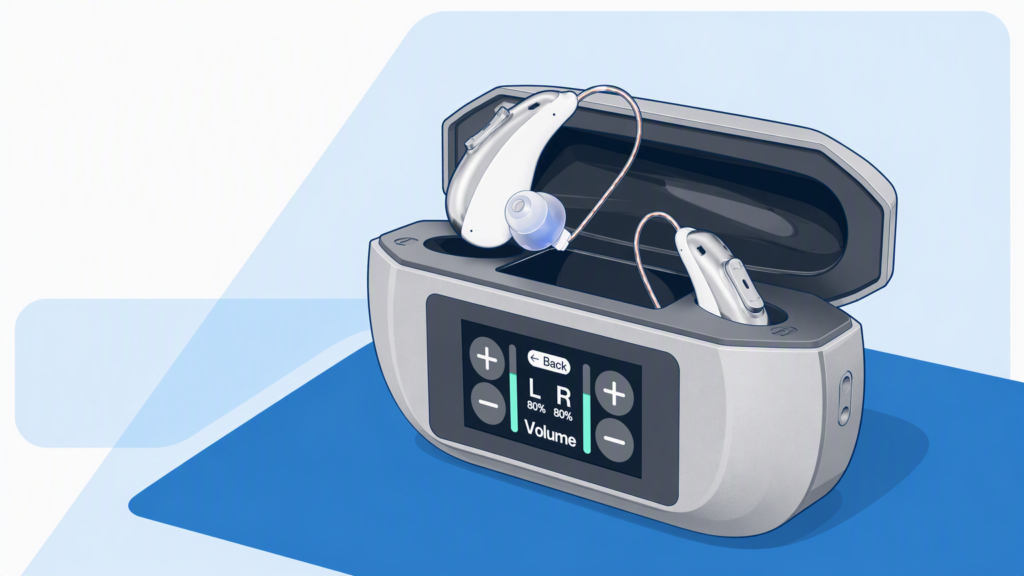
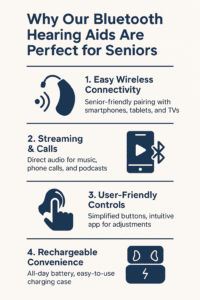
Our hearing aids connect effortlessly with smartphones, TVs, and tablets. Elderly users can answer calls, stream music, and adjust volume levels directly through their mobile devices, eliminating the need to fiddle with tiny buttons or manual dials.

2. Intelligent Noise Reduction Technology

Using advanced DSP chips, our hearing aids filter background noise and amplify speech in real time—crucial for seniors who struggle in group conversations or crowded places. This feature is essential for maintaining social engagement and cognitive health.

3. Rechargeable Battery with Extended Life

Our models support Type-C charging or charging cases that last up to 30 hours per cycle, reducing the need for seniors to replace small batteries or worry about power running out during outings.

4. One-Touch Control and App Support

Whether through physical buttons or app-based interfaces, we provide large, senior-friendly controls with clear labeling and visual feedback. Some models also support remote fitting and hearing test features via app.

5. Comfortable and Discreet Fit

From BTE to ultra-mini CIC designs, our hearing aids are built to be worn for long durations without irritation. Seniors appreciate the nearly invisible design, especially in social settings.

Comparison: Bluetooth Hearing Aids vs. Traditional Models

FeatureBluetooth Hearing AidsTraditional Hearing Aids
Mobile Phone Streaming✅ Yes❌ No
App Control✅ Yes❌ Manual Only
Rechargeable Battery✅ Available❌ Disposable Only
Speech Clarity✅ Enhanced by DSP✅ Basic

Why Procurement Managers Trust Us

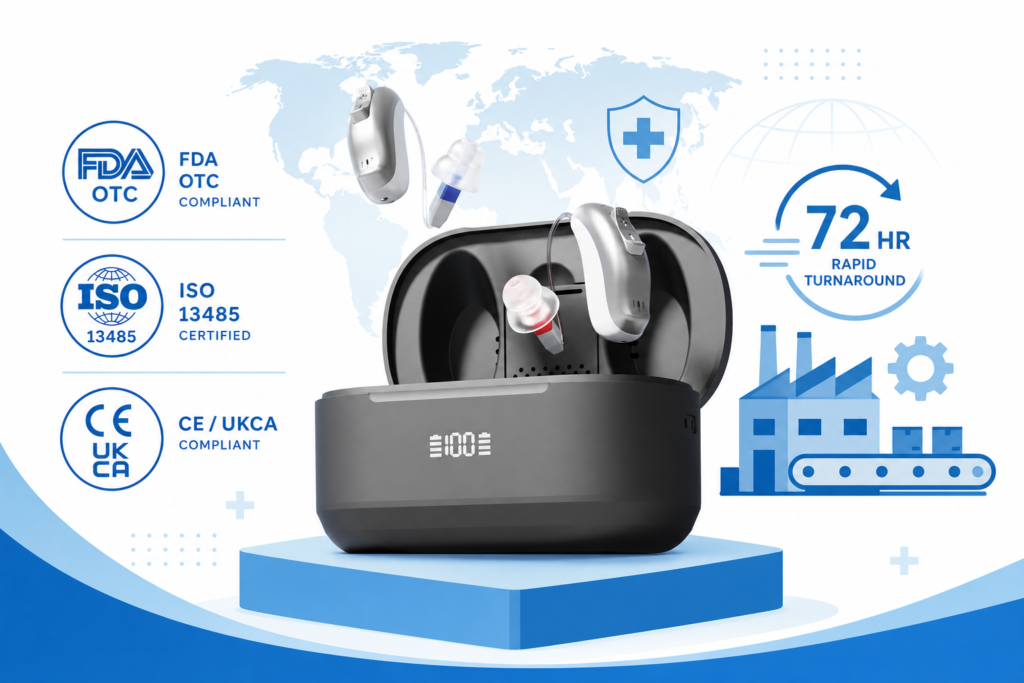
  • ISO 13485 & GMP certified facility
  • FDA & CE-approved product lines
  • 14+ years of hearing aid manufacturing experience
  • OEM & ODM service with custom branding
  • Low MOQ and stable monthly capacity of 100,000 units

Use Cases: How Bluetooth Hearing Aids Help Seniors Daily

  • Phone calls: Hands-free conversations via Bluetooth
  • Watching TV: Clear sound streamed directly to ears
  • Outdoor walks: Wind noise suppression
  • Doctor consultations: Easy volume adjustment during visits
  • Remote family support: Some models allow app support by family members
Conclusion: Smarter Hearing for a Healthier Senior Life

Our Bluetooth hearing aids aren’t just devices—they are tools that empower elderly individuals to stay connected, independent, and socially engaged. For procurement professionals, sourcing from a proven manufacturer means ensuring reliability, usability, and satisfaction in every order.

📩 Want to try a sample or request a quote?
Contact our Bluetooth hearing aid experts today to explore your options.

Submit Your Sourcing Request
Related Posts
Goodmi digital OTC hearing aids compared with traditional legacy hearing aid brands for B2B sourcing
Goodmi vs. Legacy Hearing Aid Brands: Why Next-Gen OTC Manufacturers Are Winning in 2026

For decades, the global hearing aid market has been dominated by a handful of traditional legacy brands. While these legacy manufacturers built the foundation of the industry, their traditional distribution models come with significant drawbacks for modern healthcare distributors, pharmacy chains, and private-label brands: inflated wholesale costs, long product development cycles, and rigid channel restrictions. As the Over-the-Counter (OTC) market accelerates through 2026, a new generation of Tier-1 medical-grade manufacturers is disrupting the status quo. Leading this shift is Goodmi Intelligent, offering global buyers a highly competitive alternative to expensive legacy suppliers without compromising acoustic precision or regulatory compliance. Key B2B Value Proposition: Partnering with a next-gen wholesale medical grade hearing aid manufacturer like Goodmi allows distributors to capture higher retail margins, accelerate time-to-market, and offer cutting-edge features like App & Screen Dual Control. At a Glance: Goodmi vs. Traditional Legacy Brands Before diving into the detailed analysis, review how next-gen manufacturing aligns with modern B2B sourcing requirements compared to legacy supply chains: Key Sourcing Metric Traditional Legacy Brands Goodmi (Next-Gen OEM/ODM) Wholesale Unit Cost High (Layered markup & brand premium) Factory-Direct (Tier-1 competitive pricing) Retail Margin Space Restricted by strict MAP policies High (Enables flexible pricing strategy) OEM/ODM Flexibility

Read More >>
Touchscreen charging case and mobile app dual control smart OTC hearing aid by Goodmi
App & Screen Dual Control: The Next Big Trend in OTC Hearing Aid Sourcing for 2026

The Over-the-Counter (OTC) hearing aid market continues to grow, while distributors, private-label brands, and e-commerce sellers face a familiar challenge: many products look and operate in very similar ways. In a crowded category, buyers need features that are easy for end users to understand and meaningful enough to support product differentiation. One increasingly relevant direction in 2026 is the combination of a touchscreen charging case and a mobile companion app. Unlike a display-only case, a touchscreen case can provide direct access to supported controls as well as status information, while an OTC hearing aid with app control can offer deeper adjustment and personalization. Key B2B Takeaway: Dual control combines simple, phone-free daily operation with more detailed app-based adjustment—giving different users more ways to interact with the same product. Why Usability Differentiation Matters in OTC Hearing Aids OTC hearing aid users have different levels of comfort with technology. Some prefer quick, direct controls, while others value the flexibility of smartphone-based adjustment. A product that depends entirely on one control method may not fit every user equally well. For B2B brands, usability is therefore more than a consumer-experience issue. Clearer controls, visible device status, and easier adjustment can help reduce setup confusion,

Read More >>
Guide to choosing a hearing aid manufacturer for OEM and private label projects
How to Choose a Hearing Aid Manufacturer for OEM and Private Label Projects

Choosing a hearing aid manufacturer for an OEM or private label project is a business decision, not just a price comparison. The right partner should be able to provide consistent product quality, appropriate regulatory documentation, clear customization boundaries, reliable production planning, and responsive support after delivery. This guide explains how distributors, importers, hearing clinics, medical device companies, and private label brands can evaluate a hearing aid manufacturer before moving from product research to samples and bulk orders. Key Takeaways Request model-specific specifications and compliance documents instead of relying only on a factory presentation. Evaluate samples, packaging, labeling, manuals, and after-sales support together with the device itself. Separate OEM, ODM, and private label requirements before requesting a quotation. Confirm MOQ, sample policy, lead time, production changes, inspection, warranty, and spare-parts support in writing. Choose a manufacturer that can support your target market and expected order growth, not only your first order. 1. Define Your OEM or Private Label Project Before Contacting Manufacturers The first step is to define what you are actually buying. An OEM project may use an existing hearing aid platform with your brand identity, packaging, documentation, or approved configuration. A private label project usually focuses on selling an

Read More >>

We'd like to work with you

Send us a message if you have any questions or request a quote. Our experts will give you a reply within 24 hours and help you select the right hearing aid you want.

Get A Free Quote

All of our products are available for sampling